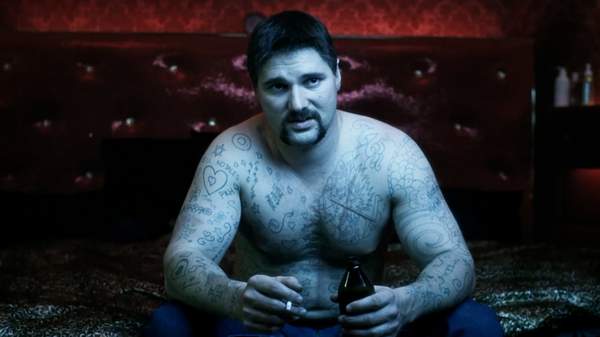
Overview
"Those books were around at the time and they were just incredibly funny. And they had scenes in them. It just seemed like the kind of thing that could get done," explains Andrew Dominik. "It seemed to express a particular aspect of the Australian character that everyone recognised. The books were just really funny, and it was that kind of larrikin — I mean, Chopper always had the perfect line for any occasion, and he'd make you laugh."
A stack of tomes penned by Mark Brandon "Chopper" Read about his underworld life, criminal activities and incarceration. A director embarking upon his first feature. From there, an Australian classic sprung. Of course Chopper took its own path. Indeed, there's far more to the film than just bringing the eponymous figure to the screen; however, it began with filmmaker Dominik (Bono: Stories of Surrender) taking inspiration from Read's own words, then being pointed towards more detail for a deeper interrogation by the very same. "When I started working on it, I think the first draft very much just took the books verbatim — I took them as though they were real, and there was something about it, it just felt a bit thin. So I started to do a bit of research into his life," the writer/director tells Concrete Playground. "I basically went through, he had his arrest docket in the back of one of the books, so we just rang up every cop that arrested him."
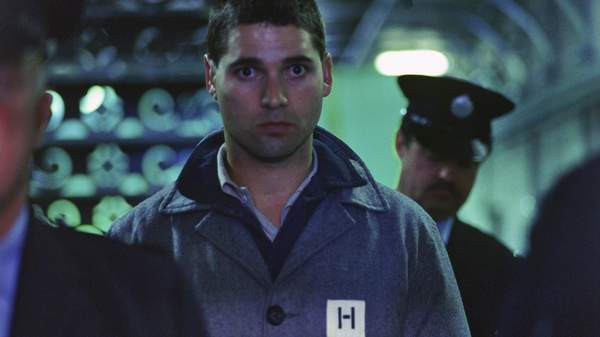

"There were these two cops that he accused of corruption and, as a result of that, they'd done an inquiry into these two policemen. And because of that, they had to account for Mark's life for every day for a six-month period that he was out of jail. And it was extraordinary. One of them still had the hand-up brief and it was like 4000 pages. Sitting through and reading that, a very different picture of a person emerged," Dominik advises.
"So all of the stuff from the books at that point just became the fireworks, if you like — his style of presentation, how he handled dialogue, basically. But the behaviour that's in the film largely comes from that, trying to make sense of this person who would shoot someone and drive them to the hospital. Like, what's going on there?"
"And that's when it got really interesting. And at that point, I don't know, you just sort of muddled through it. I had to teach myself how to write when I was writing Chopper, because I'd never really written anything before. It took a while."
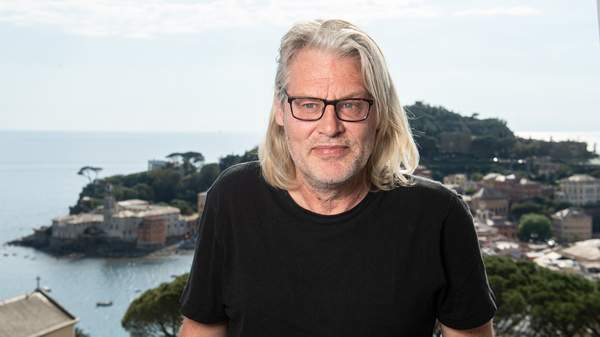
Alessandro Levati/Getty Images
There's no sign of Dominik merely getting by in the finished film. Evident in every frame of the Eric Bana (Untamed)-starring crime dramedy — its guiding force considers it a comedy — is proof that this is one of Australian cinema's very best movies. Chopper kickstarted Dominik's feature career as a result, transformed Bana's from its Full Frontal and The Castle beginnings, and set the standard for every plunge into the Aussie underbelly that's followed. Twenty-five years on, it's still as much of a must-see as it was when it initially reached cinemas.
The balancing act that the now-The Assassination of Jesse James by the Coward Robert Ford, Killing Them Softly, One More Time with Feeling, This Much I Know to Be True and Blonde filmmaker had to manage — one the one hand, boasting a wealth of material from Read himself to draw upon; on the other, also knowing how much of a grain of salt to take Chopper's own words with — is one of the reasons that it is the movie it is. How do you approach attempting to unpack someone as a character when they are, very famously and prolifically, spinning their own story about themselves as a character? And when they're really performing that character themselves? While we all tell, unfurl and consume narratives to make sense of the world, how do you dig into that when someone relays tales in such a dedicated, almost larger-than-life way, as Read did? Wrestling with these questions was also Dominik's task.
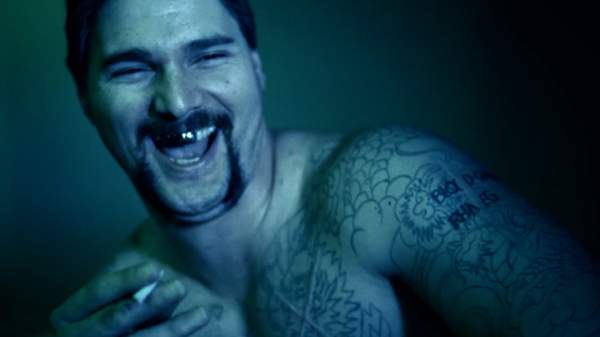
Casting a lead actor that Read himself suggested, the impact of meeting Chopper's central figure on both the feature and Bana's performance, embracing the comic side, exploring human nature via a film about someone who was such a bundle of contradictions: these are all baked into Chopper's story, too, on its route to becoming an Australian classic.
With the film back in Australian theatres since Thursday, August 21, 2025 to mark its 25th anniversary, we also chatted with Dominik about the above, whether there was ever anyone else in mind to play Read, digging into well-known figures across the filmmaker's career since — see: Jesse James and Robert Ford, Nick Cave and Warren Ellis, Marilyn Monroe, Bono, Mindhunter's serial killers — and what you learn when you make a feature like Chopper, plus more.

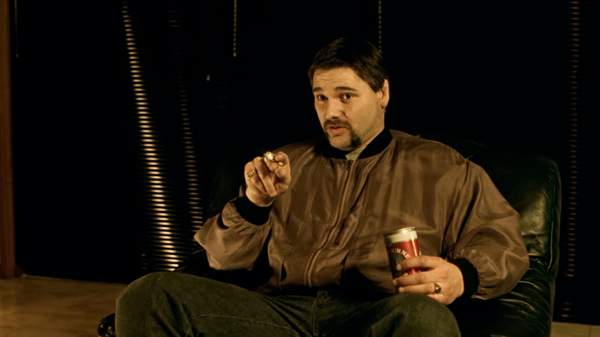
On Balancing Read's Fondness for Storytelling — Including About Himself — with Reality and an Outside Perspective
"Well, he's presented as somebody who has a passing relationship to truth anyway, that's a fantasist, in the film.
I think most of the incidents in the film have some sort of counterpart in real life. There might be different people in them, but as far as the behaviour, it's all pretty —it doesn't come from nowhere. It's not made up in the sense that you might think.
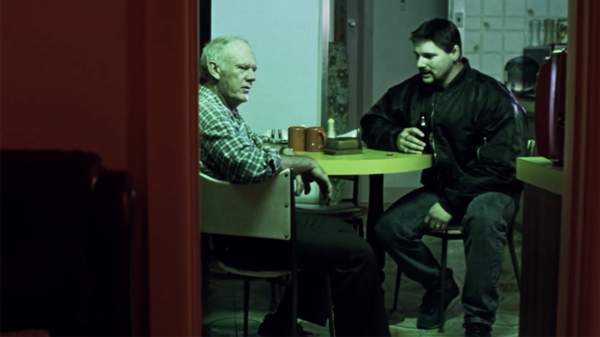
Even stuff like the dialogue between him and Jimmy Loughnan [Simon Lyndon, Troppo] in the courtroom is straight out of the court transcripts. And the stabbing is straight out of all of the statements that were taken at the time.
So a lot of stuff is pretty accurate."
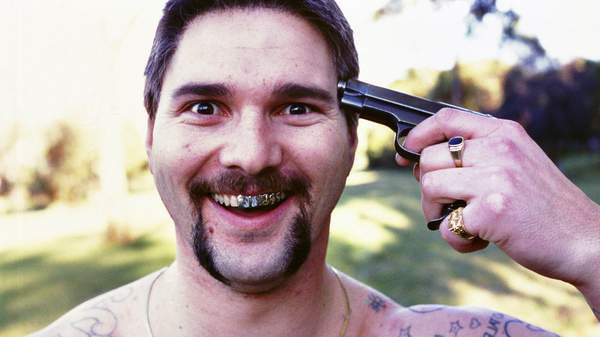
Scanned by Oscans Imaging in July 2021 on authority of Michele Bennett
On How Crucial Meeting with Read, After He Initially Declined, Was to the Film
"It was amazing. It was kind of like I'd been dealing with something that was completely theoretical. I'd seen videotape of him. I'd exchanged letters with him. But to actually see the man himself and get a sense of him, and to get a sense of his emotional forcefield, if you like, it changed everything.
It became a flesh and blood thing. And that first time I met him, I think I got more out of that conversation, Michelle and I went to Risdon Prison, and I just got more out of that than — it was extraordinary.
That was where it really came to life, I think."
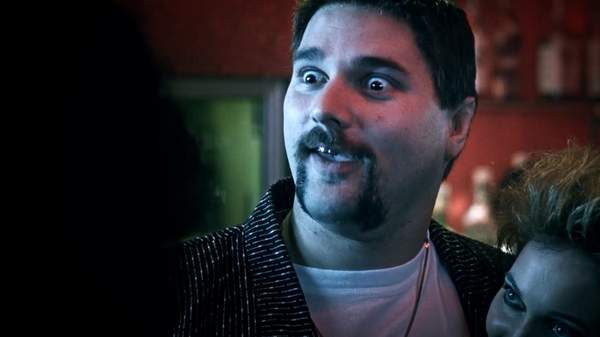
On Whether It Was Always the Intention for Chopper to Have a Sense of Humour
"I think of Chopper as a comedy. It's just that sort of thing of a human being a release valve is closer to the knuckle in Chopper, maybe. But he is, he's hilarious.
I had a videotape of him from when Eric and I went and met him in Tasmania just before we started shooting, and it was about four hours long. And I remember I would put it in for people. They'd say 'what was it like?'. I'd say 'I'll show you'. And I'd just put it in for them, thinking 'okay, they're going to watch a few minutes of it' — and people would just sit there riveted for four hours watching the guy.
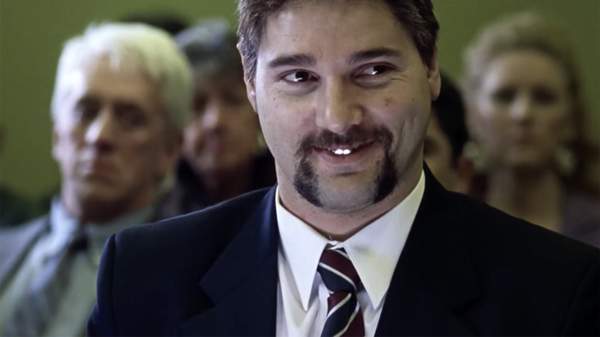
He was such a great storyteller and so fucking hilarious. The stuff he would say.
So it's just who he was. He can't help it. But even when you read police reports and stuff, the cops would be writing about how it was difficult to keep a straight face, 'he was hilarious as usual', that kind of thing."
On Whether Dominik Had Anyone Else in Mind to Play Read, Apart From Chopper's Own Suggestion of Eric Bana
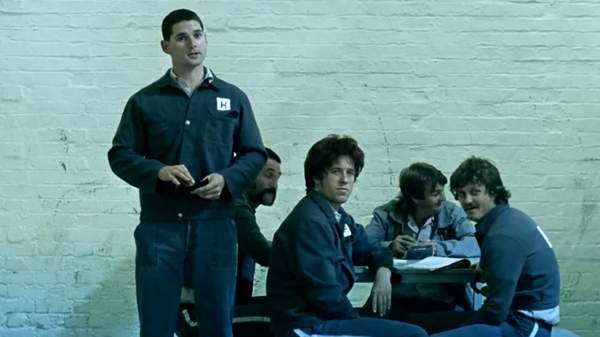
"Not really. We must have seen over 300 people for the part. And there were a lot of actors who came in that were great and they could do a good performance and all that sort of stuff, but they weren't Mark. You needed somebody who could do the sort of anthropological aspects of character, too.
And it was Mark who suggested him. I don't know what it was. He must have been watching Full Frontal or something, and thought 'maybe that guy could do me?'. And it just seemed like a ridiculous idea, like suggesting casting Martin Short or something.
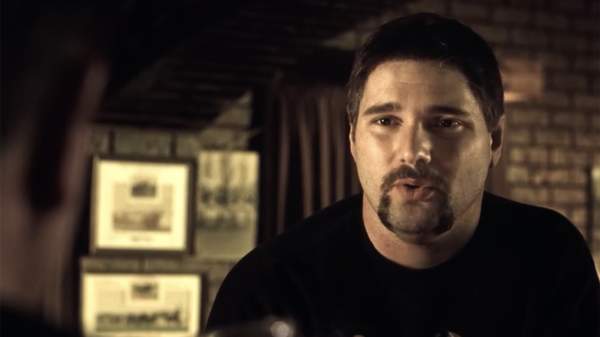
But Eric came in. We got him to come in: 'fuck it, we'll give it a go'. And the film, you could see it now. You could see it with him. He was very still. And Eric understood that he needed to create this person. It wasn't about doing a scene well, which is what all the other actors come in and want to do — a good job acting.
Eric was creating a person that we could see, that we knew. By this stage, Mark was a public figure. There were various notorious interviews and stuff that he'd done."
On Whether It Felt Like a Risk Casting Bana at the Time
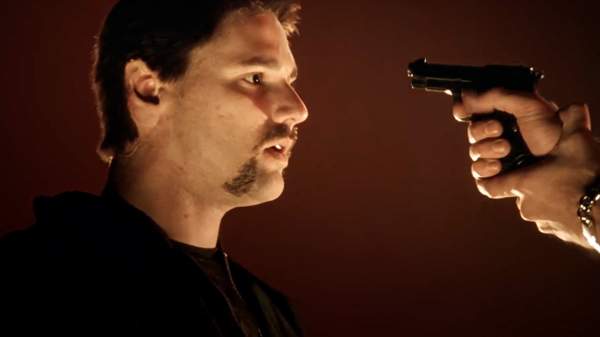
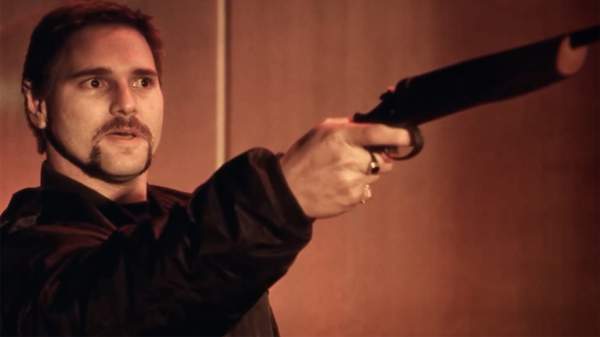
"I remember telling people that I was casting Eric Bana in the movie and they'd just look at you and feel embarrassed for you little bit. That, I guess, conjured up a picture of what the film was going to be based on what he'd done.
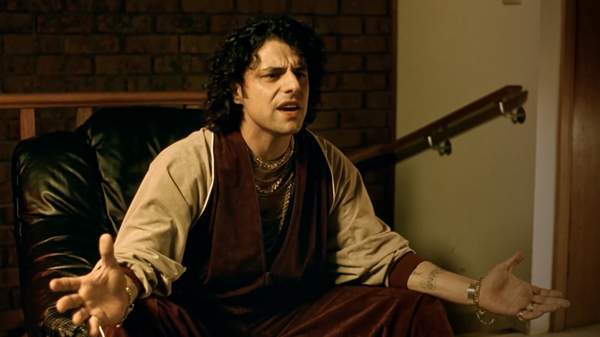
But I'm always surprised with the actors I end up with. I didn't think I'd make a movie with Eric Bana and Vince Colosimo [The Family Next Door]. Vince, I just knew from like Street Hero. But he walked in the door and started talking, and it was just obvious.
So I try not to be too — if anything, it just taught me to forget your expectations, just to take each person as you find them."
On If There's Something That Draws Dominik to Digging Into Well-Known Figures
"Well, I think so. I like people who are extreme, that seem to express something about human nature.
But it's hard to say. I think that the real lure of a film is its emotional underpinning. The thing with Chopper was that he did stuff and felt bad about it. He seemed to be stuck in this kind of weird cycle of explosion and remorse, like he was trying to work some internal problem out.
And I think the real attraction to it was just to show somebody being violent and then all of a sudden being conciliatory — and the conciliatory part is more alarming than the violence.
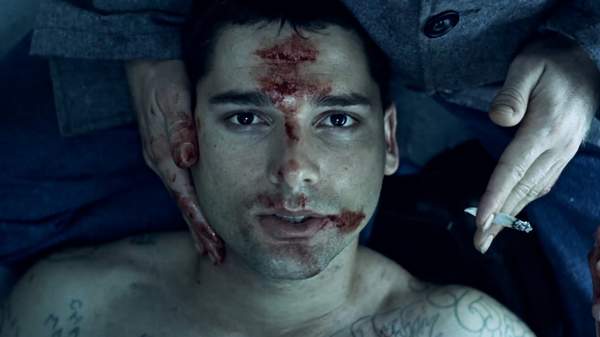
I remember the first time seeing Chopper with an audience, and when he tries to give Keithy George [David Field, Spit] a cigarette after he stabbed him, you could really feel the bottom drop out of the room. The audience just didn't know where they were.
And that's how I felt when I read about it. And that to me was just fascinating. And it's not intellectual ‚ it's a kind of a feeling.
So with everything that I've done, there's always been some kind of — it gives me a feeling that I wanted to see if I can make manifest when you watch the film."
On Getting Across the Film's Juxtaposition of Emotions — and Read's Contradictions
"You shoot it until you believe it.
He goes through such a wide range of emotions in that sequence [the Keithy George scene]. He's furious, and then he's upset with himself, and then he's looking for some kind of absolution or forgiveness from Keithy. And then he's just cracking jokes. Then he's completely callous about it, and just puts the whole thing away. It was just fascinating to watch it, to watch somebody in that state.
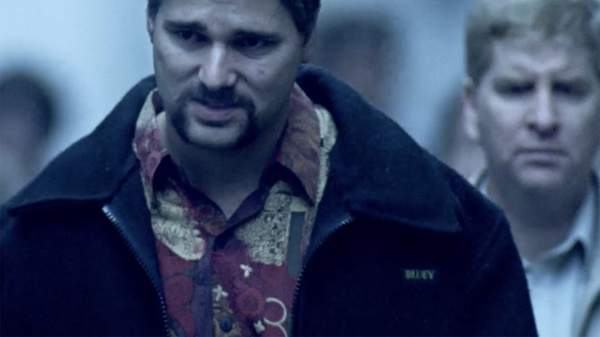
But there's beats. You understand 'it's got to be like this and it's got to turn into that, and it's got to turn into this' — and it's all got to happen in a way that surprises you.
So you shoot it and you come up with different ways of — when you're dealing with an actor, you come up with different jobs for them to try with each take until you get the one that works.
But that was the whole process of making Chopper, it was that: how to bring it to life."
Simon Aubor
On What Dominik Learned From Making Chopper
"I think you always want to be dealing with something that you don't know what you're doing, you don't know how you're doing it. Once you start playing to your strengths, then all of the energy goes out of the thing.
So it's not like I have a set process about how to approach something. I'm always looking to stretch, if you like, or to be dealing with something that I don't know how to do it.
It seems to me that when I do something that scares me or I'm not sure how I'm going to pull it off, that something much more interesting happens than when I'm doing something where I feel like I know what I'm doing.
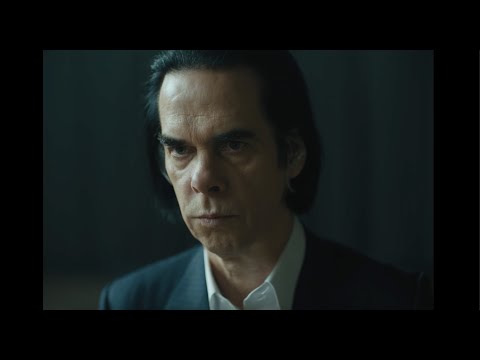
So I used to have various methodologies about how to approach shooting something or how to approach a performance or how I think should be. It was a very interesting thing when I started doing the documentaries, with Nick. It was the first time I went to work and I had no idea what I was going to do, because it's documentary — you turn up and you've got to make something happen.
And I started to really follow my instincts, because there was no choice. I had to do something. So I just did whatever seemed right at the time. And what I discovered was that those instincts actually added up to something. Even if you couldn't see where it was going at the time, if you just kept following them to their logical conclusion, they would take you somewhere. And that really changed my approach to filmmaking.

I used to be somebody who would do take after take after take, and the camerawork was very controlled, and there was a definite plan as to how the thing was going to be put together. And now I prefer to work faster, and I'm less interested in doing it well. I just want to do it.
And there's a certain energy that comes from that that I really like, where I feel like the thing is more its own thing, and it's less an extension of me. It sort of gives back more — the process gives to me more than me just giving to the process."

Chopper reopened in Australian cinemas for its 25th anniversary on Thursday, August 21, 2025.