A Guide to Vanuatu: Where to Stay, Eat and Explore Across Efate and Espiritu Santo
Just two and a half hours flight from Brisbane, Vanuatu trades resort strips for blue holes, volcanic peaks and kastom villages.
Aside from crystal-clear waters and ostensibly untouched landscapes, the strongest case for a trip to Vanuatu is its proximity to Australia — specifically, Brisbane. At just two and a half hours’ flight away from the Queensland capital, you’d be hard-pressed to find a tropical holiday that feels so foreign, while being so close. Convenience aside, Vanuatu is criminally underrated for its natural beauty — it’s been named one of the happiest places on Earth for a reason.
The country is made up of 83 islands strung in a loose Y-shape across roughly 1,300 kilometres of the South Pacific, and most of them owe their looks to the Pacific’s Ring of Fire. Several volcanoes are still active (Mt Yasur on Tanna is one of the most accessible on the planet), and centuries of eruptions have left behind the rich volcanic soil that keeps everything so green. It’s why rainforest grows thick right down to the waterline, why the markets overflow with taro, yam, papaya and island cabbage, and why the cattle grazing beneath Santo’s coconut plantations produce some of the most tender beef in the Pacific. Underground, rainwater filters through limestone caves and resurfaces as the spring-fed blue holes the country is famous for.
Virgin Australia flies direct from Brisbane to Vanuatu up to seven times a week, ramping up to 12 return services over the spring school holidays, and lands you in the capital, Port Vila, on the island of Efate. From there, Air Vanuatu’s domestic network covers the outer islands, with Espiritu Santo, the country’s largest, an hour’s hop north. Consider what follows your starting point for splitting a trip between the two islands.
Stay
Accommodation in Port Vila can take one of two routes: stay closer to the (still very relaxed) central port, or venture out further from the town centre for something more secluded. For the former, the recently revamped (by the team behind Aussie-local regional escapes Milton Park Bowral and Wildes Boutique Hotel) Grand Hotel & Casino puts you right on the waterfront, around 15 minutes from the airport. All 74 rooms were renovated in 2025, and each comes with floor-to-ceiling windows, a harbour-facing balcony and a bathtub. The casino is billed as the country’s best, and the must-visit Mamas Market House is a two-minute walk away.
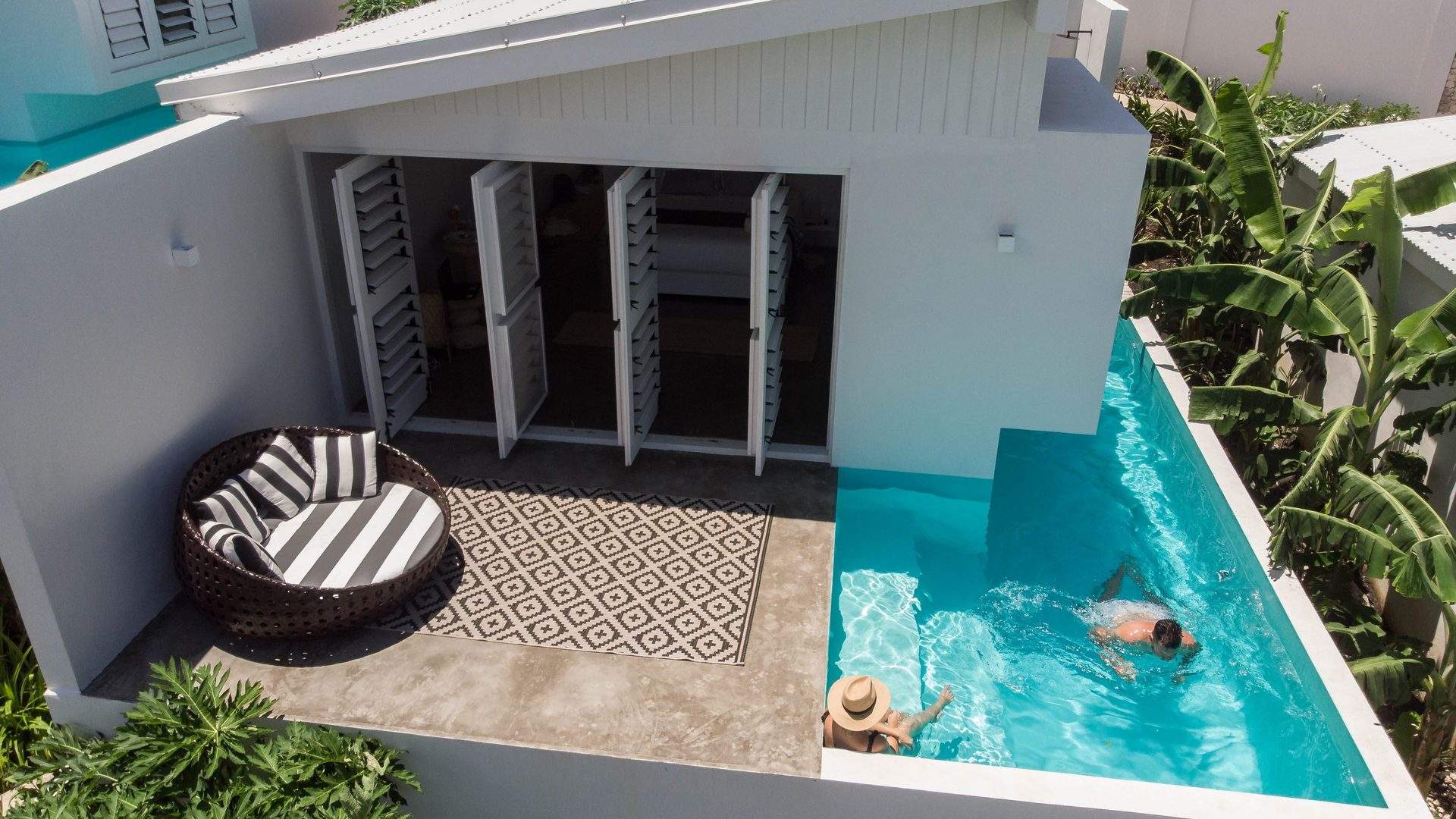
If off-grid serenity is more what you’re in the market for, stunning island retreat The Moso is a 40-minute drive north-west of Port Vila and a short boat hop across the Namoso Passage to reach. Sydneysiders Joel Slattery and Antoun Jabbour bought the property on Moso Island in 2014 and spent the following years building it into an adults-only retreat of whitewashed villas, polished concrete floors and louvred windows. Beachfront villas sit metres from the water, while hillside villas come with private plunge pools and views across Port Havannah.
Over on Espiritu Santo, Barrier Beach Resort sits on the island’s east coast, around 20 minutes from Luganville and the airport. The architect-designed resort is made up of ‘fares’, traditional-style bungalows, each with a private deck facing the beach or the gardens, and the reef-protected lagoon out front stays calm enough to swim in year-round. Between excursions, there are sundecks over the sand and a day spa set in the tropical gardens.
Eat and Drink
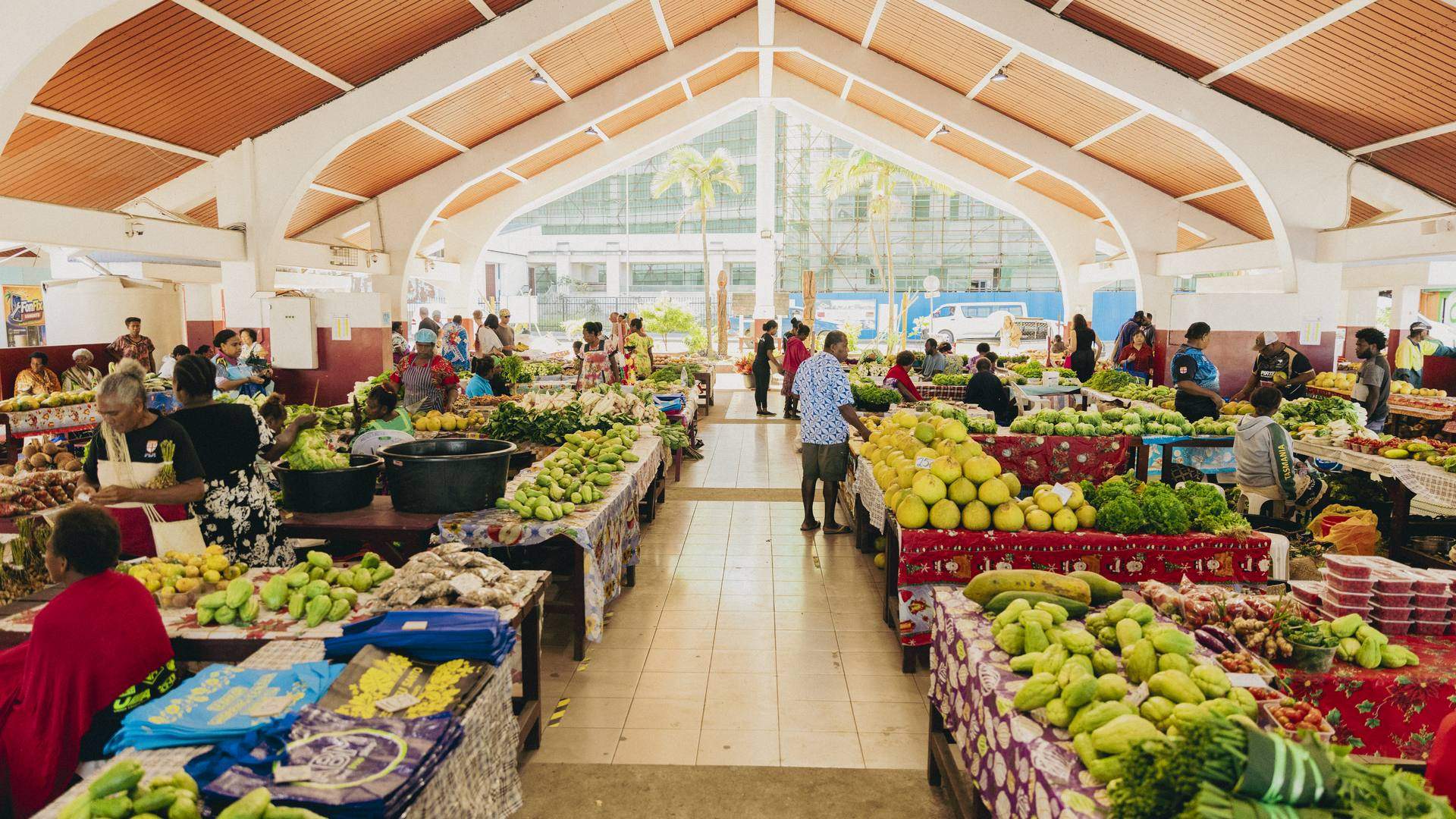
Vanuatu’s food reads like a short history of the country. The Melanesian base is root crops (taro, yam, cassava and sweet potato), plus breadfruit, island cabbage and coconut in more or less everything, traditionally wrapped in banana leaves and cooked in an earth oven of hot stones. The national dish is laplap, grated root crop topped with coconut cream and baked in those leaves. On Santo, look for tuluk, its pork-filled street-food cousin. The French half of the colonial arrangement left baguettes and pastries just about everywhere, while the Chinese general stores and bowls of Vietnamese pho trace back to plantation workers brought over in the 1920s.
At The Moso, the Bistro and Bar is built on the site of a WWII soldiers’ bar (allied troops were stationed on the island during the war), and its menu changes daily depending on what’s come in — omelettes and tropical fruit at breakfast, seafood and Asian-style salads at lunch. Keep an eye on the seagrass off the bistro beach, where dugongs come to graze. Back on Efate’s mainland, K2 Kitchen is a family-owned ni-Vanuatu cafe on the road to Mele that builds its menu around locally grown produce, with plenty for vegetarians and vegans.
On Santo, Waves Restaurant and Bar at Barrier Beach Resort mixes traditional Vanuatu dishes with international ones and is open to non-guests. You also can’t leave the island without trying Santo beef, from grass-fed cattle raised under the coconut plantations. The Salty Dog at Turtle Bay Lodge, just outside Luganville, makes it the star of a waterfront menu built on organic local fruit and vegetables and fish from local fishers. And if you’re up at Port Olry, award-winning beachside restaurant Chez Louis is known for its seafood platter.
And, for the all-important beachside cocktail, Banyan Beach Bar on Fatumaru Bay bills itself as the only white-sand beach bar in town. Claim a bean bag on the sand, order tapas and a drink, and watch the sky turn gold over the water.
At some point, you’ll likely be offered kava. The mildly sedating drink, made from the root of the kava plant, is traditionally shared at dusk in a nakamal (a village meeting house), and Vanuatu’s is known as some of the strongest in the Pacific. Pace yourself accordingly.
Do
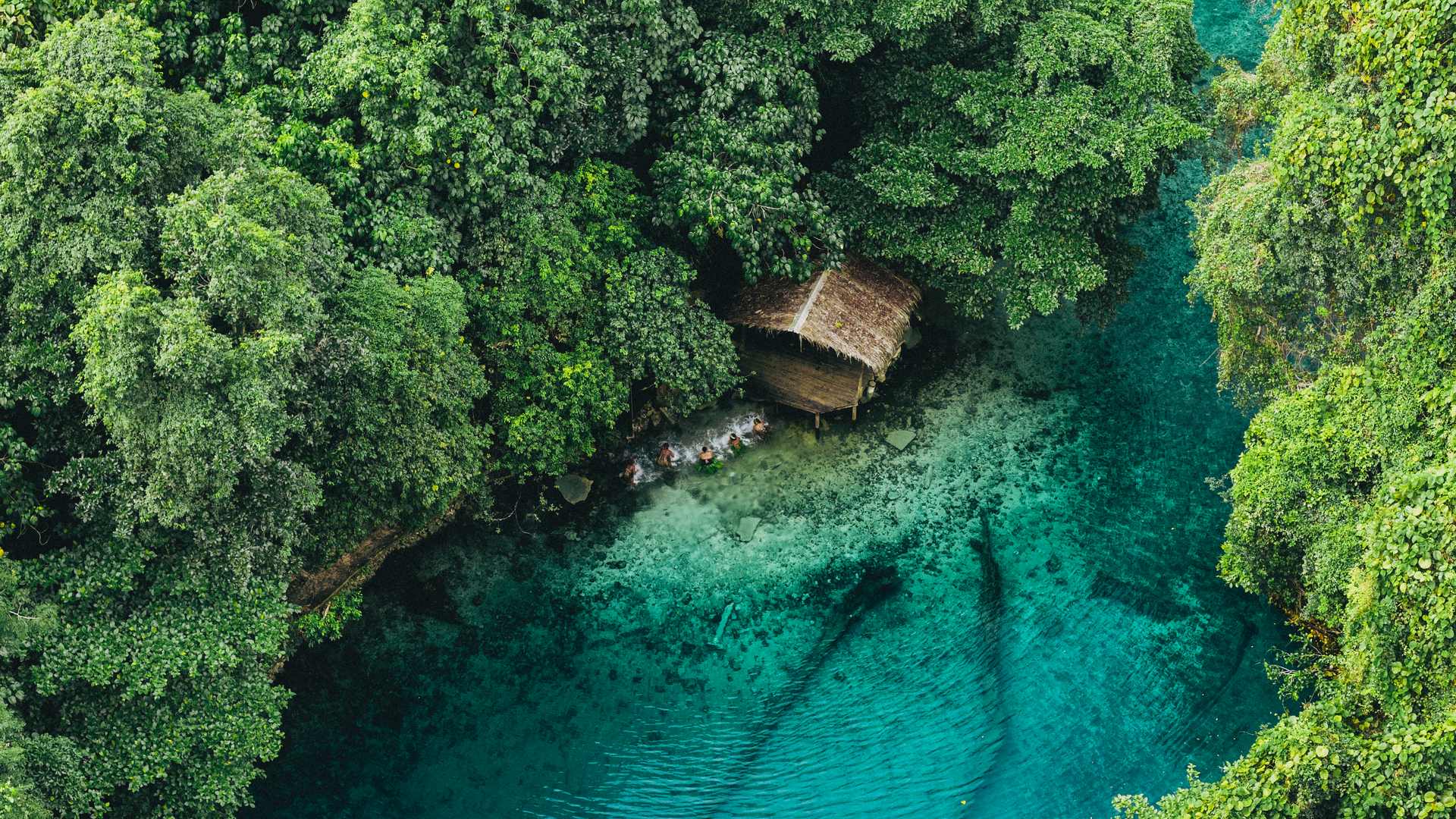
Most of Vanuatu’s best days end in the water. On Santo, local guides paddle you up the Riri River in a dug-out outrigger canoe to the Riri Blue Hole, often called the prettiest on the island and far less developed than its neighbours. Santo Heritage Tours pairs it with the nearby Matevulu Blue Hole, the largest of Santo’s freshwater blue holes, which comes with a rope swing and rock platforms to launch yourself from. That colour comes from rainwater filtering down from the volcanic mountains through limestone caves, then rising back up as remarkably clear springs.
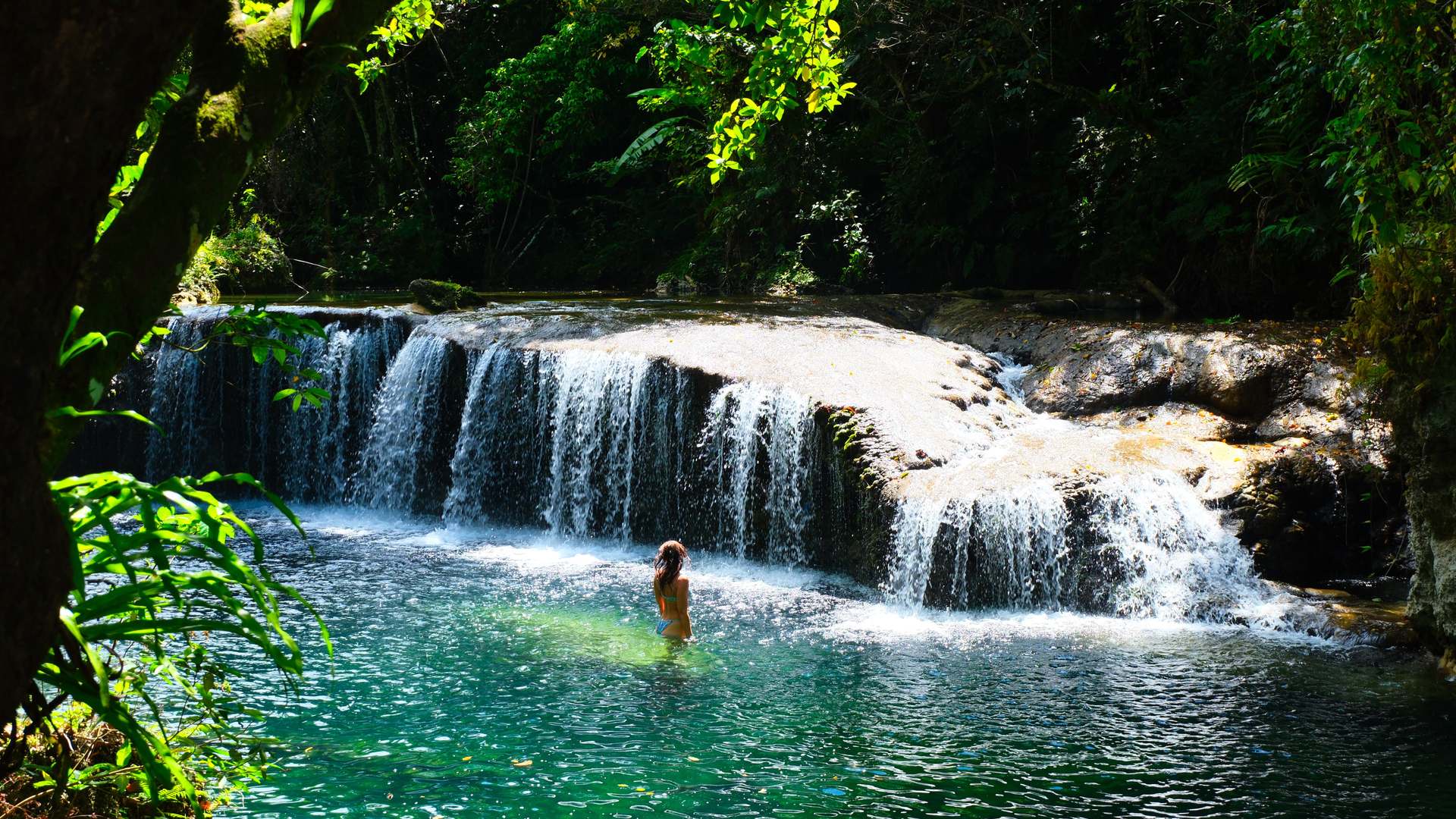
Back on Efate, the Blue Lagoon, around 30 minutes from Port Vila, is the country’s most accessible blue hole. Go early to beat the cruise-ship crowds, then carry on to Rarru Cascades near Teouma village, a community-run string of natural pools and falls where you can rope swing, float down in an inner tube and swim behind the waterfall. Entry fees go straight back to the village.
Champagne Beach, on Santo’s east coast, takes its name either from its curved shoreline, said to resemble an old-fashioned champagne coupe, or from the gases that bubble up through the sand at low tide and make the shallows look like they’re fizzing. Either way, the powdery white sand and shallow turquoise lagoon make for excellent snorkelling. The beach is custom-owned and run by the Theiaos family, so bring cash for the small entry fee, then continue north to the village of Port Olry to snorkel around its offshore islets.
For something more strenuous, Vanuatu Ecotours runs half-day hikes on Nguna, a short boat ride from Emua Wharf on north Efate. The trail climbs through villages, starting at Taloa and its white-sand beach, before a very steep final push to the crater rim of an extinct volcano. The island sits inside the Nguna-Pele Marine Protected Area, managed by 16 local communities, where critically endangered hawksbill turtles are often spotted.
Make room for the cultural experiences, too. At Ransuck Cultural Village, just outside Luganville, a community originally from the island of Pentecost performs the customs of their home island: a traditional welcome, a walk through the food gardens, kava preparation, dancing in custom dress, sand drawing (which is UNESCO-listed intangible heritage) and, finally, the fire walk itself. Back on Efate, The Making Place at Havannah Boat House runs workshops with ni-Vanuatu artisans in weaving, pottery, woodcarving and more.
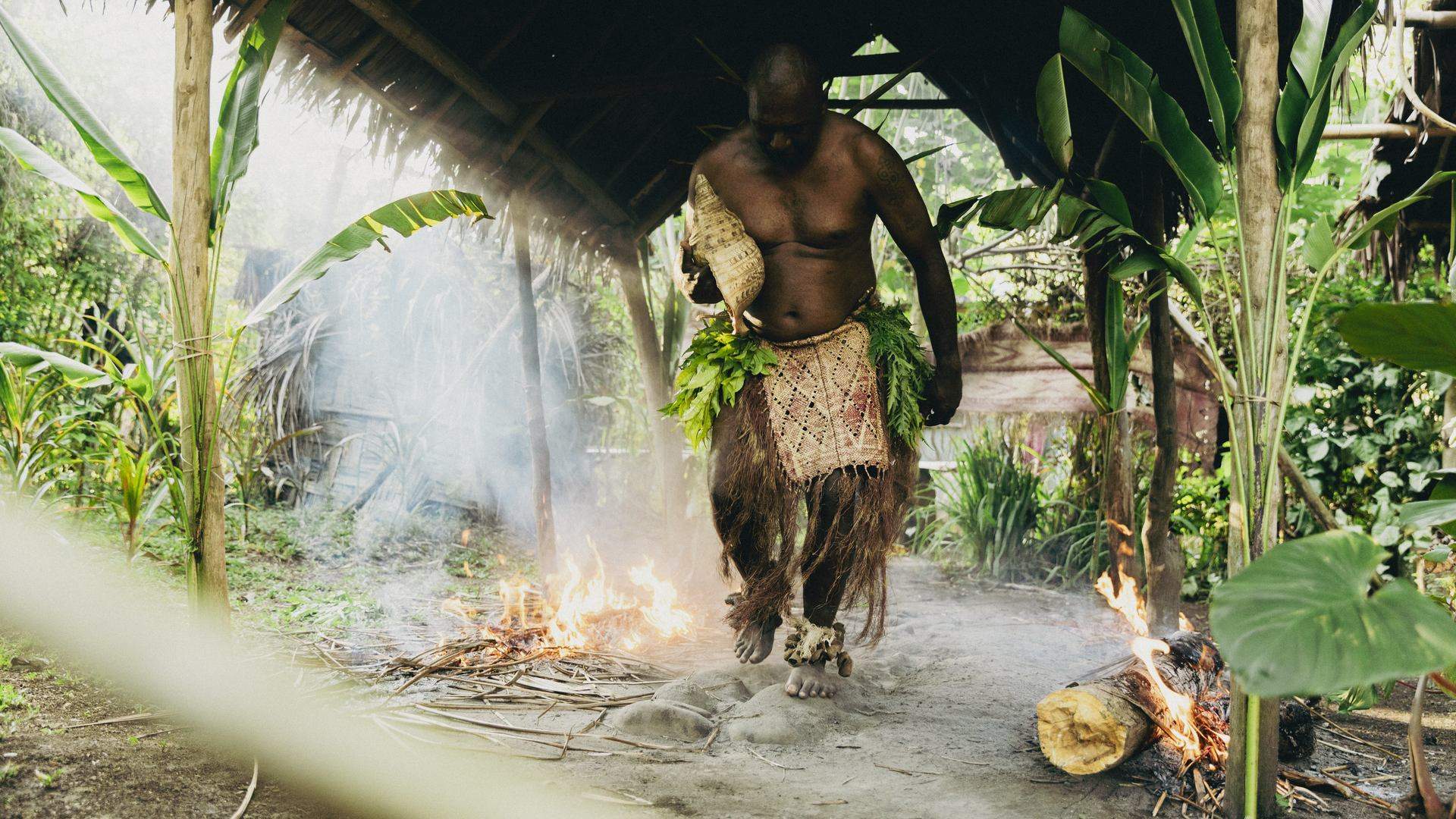
A note on manners: ask before photographing people, dress modestly in villages and expect a small custom fee when visiting kastom sites. And carry cash, since most attractions outside Port Vila don’t take cards. Oh, and expect a deliberately slower-paced lifestyle — locals call it “island time”. Give it a couple of days and you’ll be running on it too.
Concrete Playground visited Vanuatu as a guest of Vanuatu Tourism Office and Virgin Australia.
Images: Vanuatu Tourism Office | Eliza Campbell.