Overview
2025's Melbourne International Film Festival unveiled its initial titles in early June. A month later, the year's full program arrived with hundreds more movies on its slate, ready to play to the Victorian capital's cinephiles across 18 busy August days. Before July was out — so, well ahead of the Thursday, August 7–Sunday, August 24 fest kicking off — Pasa Faho had already sold out every one of its MIFF sessions, becoming the first film to do so this year.
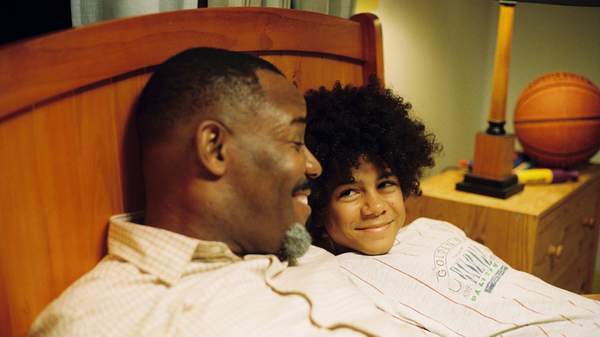
Igbo Australian filmmaker Kalu Oji's debut feature deserves that warm, hearty, enthusiastic embrace; it offers the same to the Adelaide-born writer/director and visual artist's own community, thoughtfully and tenderly so. Pasa Faho shot "over a year and a half ago now, and it feels like it's been quite a long time since we've been in the real thick of the project", Oji tells Concrete Playground; however, Melbourne's response to the world-premiere screenings of the movie, sellouts included, "brings a whole new life to your relationship with the film". He continues: "as soon as it's out in the world and the audience embraces it and becomes part of that process, it's a reinvigoration of all those feelings and all that excitement that was so rich and so present a little while ago".
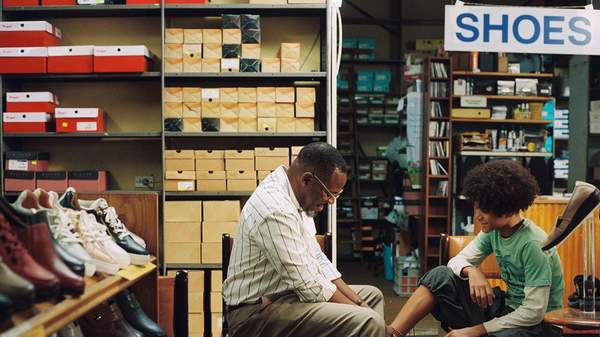

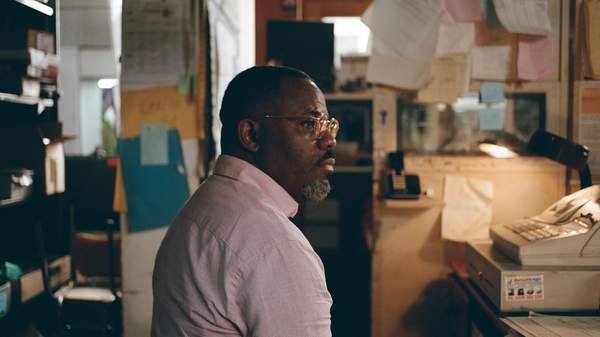
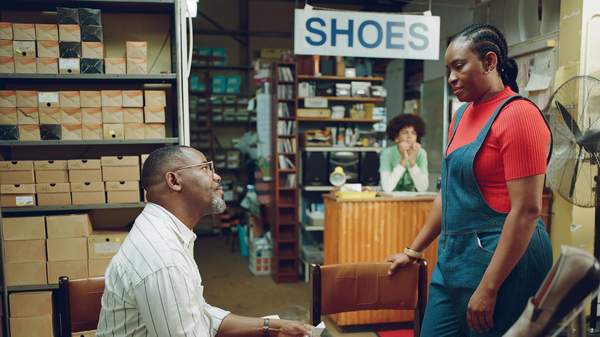
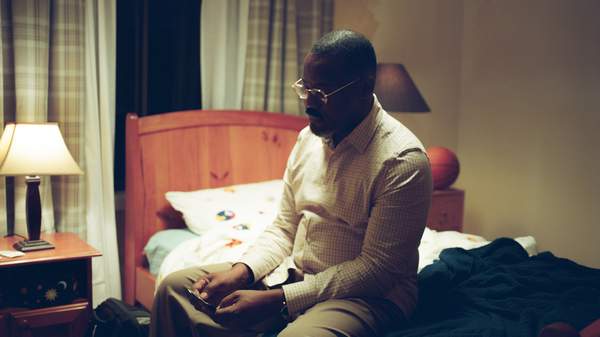
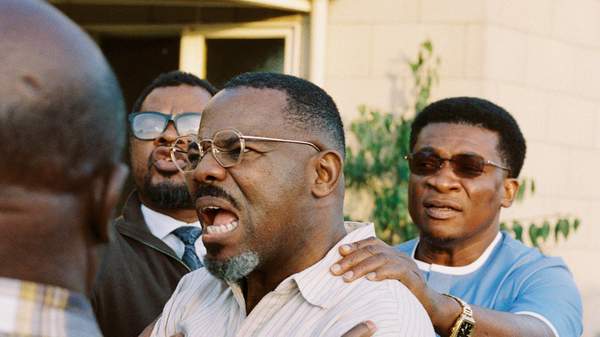
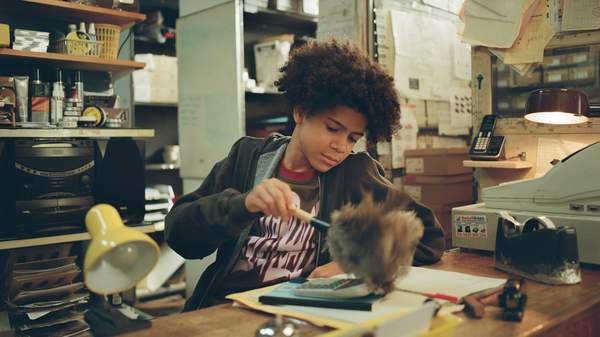
Oji has channelled his own passion into a feature that sprang from him wanting to ask questions — a picture that moulds his queries into a father-son story, an exploration of African Australian life, an unpacking of family structures as well as communities, a musing on what it means to be an Igbo man today, an examination of expectations and clashes around them, an interrogation of straddling two cultures, and more. As it tells of Melbourne shoe salesman Azubuike (Nigerian stand-up comedian Okey Bakassi, Bank Alert) and his 12-year-old son Obinna (Tyson Palmer, Young Rock), Pasa Faho steps into their relationship, and also the existences of those around them, in a heartfelt yet equally clear-eyed manner. The film's title, a play on words stemming from "parts of a whole", is a clue to its emotional journey and tone.
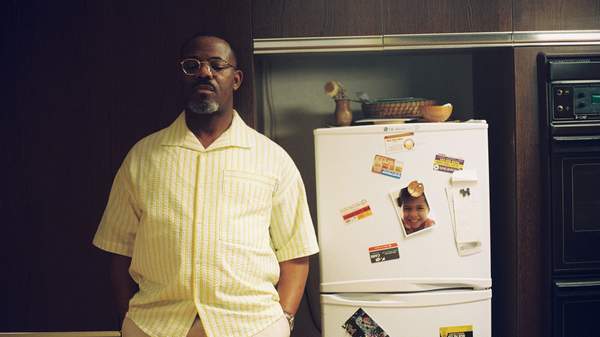
Two changes shake up Azubuike's routine: Obinna's move from interstate, which is initially cause for elation more on the former's part than the latter's; and the discovery that the store that Azubuike manages is being sold to developers. Oji's protagonist is caught, then, between trying to provide a solid foundation for his child, including fighting for the job, the paycheque and the proudly hardworking sense of himself that he believes is pivotal to that life, and being able to spend time and be open with Obinna — and between his perspective and ideals, as shaped by his upbringing far from Australia, and the experience of a son whose childhood couldn't be more different.
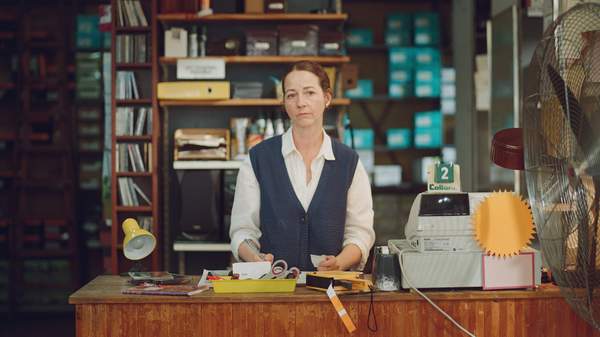
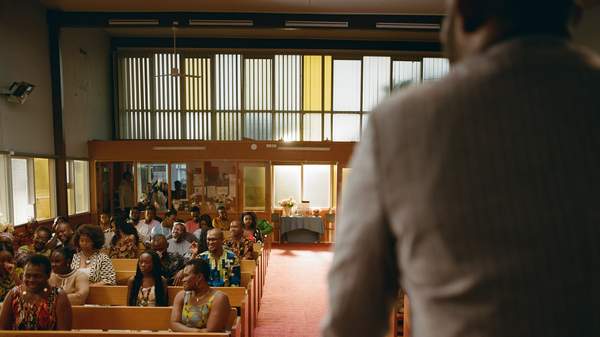
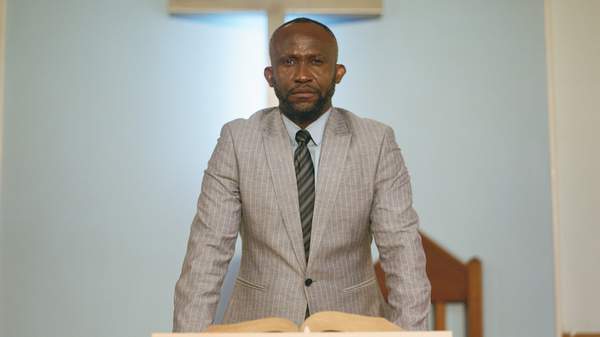
Pasa Faho also spreads its focus to Amaka (first-timer Laureta Idika Uduma), Azubuike's sister and Obinna's aunt, and her tale of sacrifice to do what's expected — and to Yorgos (Kostas Makrygiannakis, The Slap), aka Bogo, the septuagenarian European florist whose own store adjacent to Azubuike's is equally under threat. And, it sees Azubuike's colleague Yrsa (Tardif Hélène, The Industry), a friend impacted by the impending building sale. In its sights as well: Nigerian preacher Edward (fellow newcomer Idika Mba Uduma), too, as he balances his ambitions with his responsibilities as a leader in Melbourne's Igbo community.
Oji's filmmaking journey began at the Victorian College of the Arts, with his 2019 graduate film Blackwood making its way to the likes of Palm Springs Shortfest and the BFI London Film Festival, and winning awards at Flickerfest and the Atlanta Film Festival. 2021's The Moon and Me was acquired by San Francisco's Museum of the African Diaspora, while 2023's What's in a Name? picked up another Flickerfest accolade, plus the Craft Award at Sydney Film Festival. Each is "an essential part of series of steps" leading him to Pasa Faho, he explains. "They gave me experience in terms of being on set, and how I like to direct actors and direct, and what I find works when I've got a vision or an idea — and how I get close to that or 'if I do X and I get Y, do I like Y and would I apply that to my practice?'. And there's all those practical tools and practical experiences I think it gave me as a director."
"And then mentally and emotionally — I guess energetically — how I like to be on set and the kind of environment I want to make films in, and the kind of space I want to create on the set. It gave me a very firm idea of that that we took into the feature film. And tonally, stylistically, I think if you watch the short films we made from Blackwood, they're all different stories but I think you'll see they're all very, very, very similar-ish tonally. I think that those years of making those shorts helped me find my style, helped me find the things I'm interested in — even though it's ever-changing — and helped me find the tools and the lens that I wanted to approach Pasa Faho through."
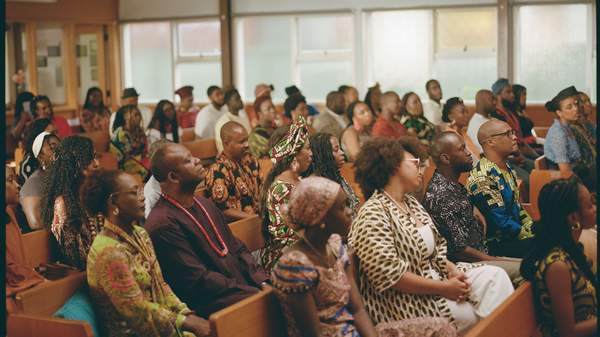
That Paso Faho is personal, and also intimate — that it brings an insight into the Melbourne's Igbo community, too — was always key. Did that come with a sense of responsibility for Oji? "Many, many hands helped make this film, and many minds went toward what you see on-screen. And I think there is a responsibility for sure, and as a writer, as a director, I lead that in some way and I carry that," he notes. "But working in collaboration, I think, is always the best way to do justice to those ideas."
What it means for this Melbourne-set and movie to have world-premiered in Melbourne, the questions that the film arose from, fleshing out the narrative from there, key elements that were always part of the filmmaker's vision for the feature, the consultation and casting processes: we also discussed all of the above and more with Oji.

On the Significance of Premiering the Melbourne-Set and -Made Paso Faho in Melbourne
"The crew had been working together for quite a long time, and we've built somewhat of a film family over the last nearly a decade now. I think so many of the people that have supported that journey and have made it possible for us to continue that journey are here in this city, and in our families and our communities and all those circles.
So I think to be able to launch the film with everyone who's made it possible for us to even be at this point feels like a blessing. It feels really really appropriate."

On Pasa Faho Springing From Wanting to Ask Questions
"I had started writing the script in 2020, towards the end of 2020. And I've made quite a number of shorts, and been wanting to step into the feature filmmaking space — while being aware and listening to what people were telling me in terms of 'it could take five, ten, 15, 20 years to get a film up'.
So when I sat down to start writing, I was looking at 'what are the themes, what is the material that is most present in my mind that I feel like I'm going to be wanting to explore if it takes as long as it takes?'. And so for me, that's the place I started writing from.
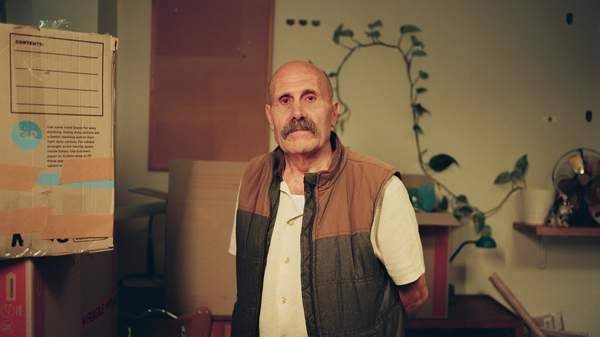
In terms of the questions and what I was wanting to explore in the film, obviously it's a world that's very, very close to me and characters that are very, very close to me. And I think a lot of the time, I think I've often felt — and this is for Azubuike, Obinna, Amaka, Bogo, for all these people, for all the characters that existed in my mind — I guess it was me wanting to go behind the curtains of these people's minds.
I think these are characters, and the problems the characters face in the film are problems, that I've felt like I've seen versions of from the outside. And I think the film was me wanting to understand what's behind all of that, and what does that weight feel like, and what does that joy feel like?
It was me wanting to understand these characters."
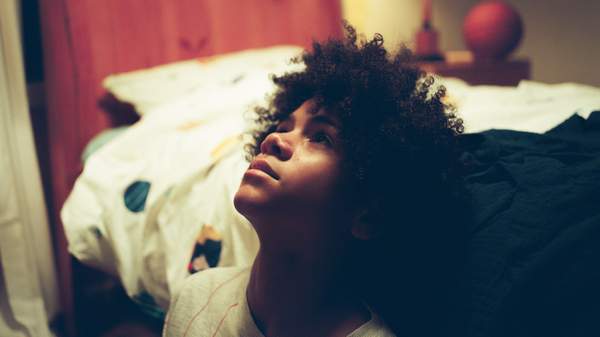
On Fleshing Out the Film's Narrative From Those Initial Queries
"I think it started, the way I wrote this film, I wrote a vomit draft and then refined it from there. I think the vomit draft was much more themes and ideas and character-based, and probably less of a plot.
I think once I had those pieces, and once I became aware that 'okay, I'm wanting to explore fatherhood; I'm wanting to explore the relationship between a father and a son, and when you have these two people who look at the world through two different lenses; I'm wanting to explore expectation and the pressures, and the familial pressures that a character like Amaka receives whether directly or indirectly; I'm wanting to explore regret and how one comes to terms with decisions that they would have made differently in the past through the character of Bogo'; I'm wanting to explore religion, with the church and the church's relationship with my community, with the Nigerian community, and this relationship between church and land and ownership and all those things — once I had all those ingredients on the page in some way, I think I began to look for a thread and look for a plot that allowed me to speak about them.
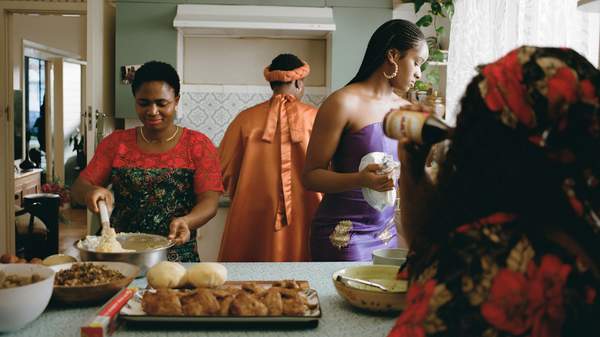
And, to explore them in the way I want to explore them, while also being very aware — and becoming more aware for our production as well — that I'm wanting to make a piece that is entertaining. And it's got twists and it's got turns, and there's stakes.
And for an audience, it's not purely just an observational character piece, but it's a plot that the audience dig their teeth into as well."
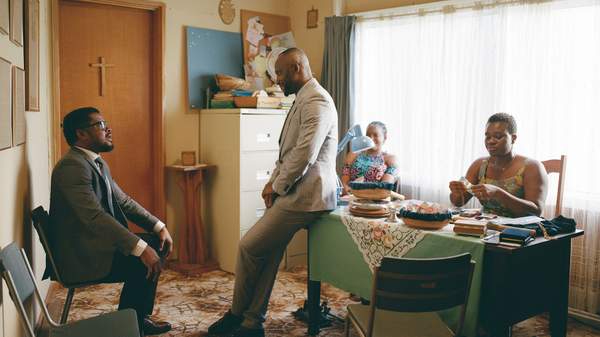
On Making a Work of Fiction That's Also a Very Personal Film — for Oji and for the Community
"It's tricky. I think because you're not writing from a completely blank slate, it takes a very conscious effort to try to shake off any reservations or baggage that comes from these characters being abstractions of things that are really close to you in real life.
And I think that work is a lot more active and conscious and tricky than if you're writing characters that are completely distant from you. So I think I probably felt that most in the development phase."

On Pasa Faho Being Both Deeply Specific and Also Universally Relatable
"In terms of making a film that felt it was very, very specific, while at the same time feeling universal, I think on the surface it's about a father and a son, and a father undergoing this set of trials and this reckoning which pushes him to ask questions about how he relates to his son, and brings them closer or further together — and I think that relationship between parent and child is inherently relatable. Everyone has had or has a parent, and lots of us also have children.
So I think that, whether you set this story in the Igbo Nigerian community here in Melbourne, whether you set it in the Polish community in Warsaw, you set it wherever in South Africa, I think there's a relatability that is embedded in the exploration of that relationship."
On Whether There Were Specific Elements About Being an Igbo Man in Melbourne Today and Straddling Two Different Cultures That Oji Wanted to Explore and Convey in the Film
"Yeah, big, big time. I think a lot it, I wanted to capture this pressure that I feel like is often felt almost universally by people who are in the diaspora, and more specifically people who have been born and raised on the continent and moved abroad, especially moved to 'the west' — but the pressure that comes along with finding yourself in that position.
You never exist in isolation. You're never just living for yourself. And that's a beautiful thing. And the fact that community and family and all those values are held so strongly in a culture such as ours, such as Igbo culture, is a beautiful thing. But there's also a lot of pressure that comes along with that, especially financially.
And the weight of that pressure, I think, is often not talked about. I think there's an expectation you often just keep your head down and you move forward. I think those sacrifices that people also find themselves in — a character like Amaka, who, in another life, maybe she wanted to be a zookeeper or a painter or a football player or whatever she wanted to do. Someone in her position, you have very limited options in terms of what you're expected to do.
And to feel the way that she feels in the film, it's a taboo thing. It's unspoken. So I definitely wanted to explore that.
And I also very much wanted to capture the push and pull of being in a country like Australia, with your roots of family in Nigeria, and trying to raise a child in your shadow or in your values — where Nigeria and Australia are very, very different places, and it's hard when you have a child that is raised to look at the world through one certain way, but you've never had that lens or that vision because you were raised to look at a world in a very different kind of way.
There can be a lot of tension in that experience, and I want to capture that."
On Consulting and Engaging with Melbourne's Igbo Community to Help Shape Pasa Faho
"Yeah, yeah, 3000 percent. All throughout the process, it's quite — I've forgotten at what point in development, but quite early on. I live here and these people I've known from before they were involved in the film.
But at a certain point in development, we formalised workshops and meetings and sitdowns, and especially getting that perspective — because I don't have Azubuike's perspective, and we're trying to understand him as a character. Meeting with people of that generation of men, with men of that generation with children as well, who've moved here.
We wanted to get a richness and authenticity. And also, it's very much I wrote and directed the script and the seed of it came from my heart, for lack of better words, but this character is crafted to be a depiction of that experience in general. And so what came from those meetings, and what came from those sitdowns and workshops, were a lot of the details that make up the film.
The tension between Obinna and Oscar, and him taking on a different name, came from an anecdote that someone had told me while just sitting down and chatting. The inner workings of his character and his pride, and I guess where he draws that line, that came from sitting down and speaking to people who have lived more of that experience than I have lived.
So yeah, definitely. It was intrinsic. It was essential to making this film."
On the Importance of Casting, Especially Finding the Right Azubuike and Obinna
"It was massive. It was massive. And I think I'm, as a director and the way I've worked in the past, and the way I worked with this film and the way I want to work in the future even more so, it's so actor-focused. I love, I love — I might say I'm an actor's director.
I love getting people involved in the process early. I love bringing a blueprint of a character to an actor and letting them take it with both hands and build them together, and they're bringing their perspective, and their whole set of experience and expertise, to that character — and together we make that person, that character, as rich as possible.
So for casting it, because it was language-specific, we started our process quite early for the character of Azubuike and for the character of Amaka. And it was long and it was extensive. And we were aware that this person, especially for Azubuike, he needed to carry the film. The film relied on him and Obinna and their relationship, but especially on Azubuike.
So eventually we got to a point of process where we felt it made sense to reach out to Okey, especially as he's got a lot of experience and a lot of charisma as a performer. But it was also this material, I think, was also asking him to step into a space that he frequents less so. And so we thought it was exciting, it was a bit of an exciting opportunity.
And then for Tyson, it was less specific — we cast the net more broadly. He didn't need to speak the language. It wasn't language-specific. But as soon as we found Tyson throughout the process, he was great, we knew it from two minutes into the audition."
On What Oji Hopes Audiences Will Leave the Cinema Thinking and Feeling About, and Having Discovered From Pasa Faho
"I hope they're there for the journey. The film is a domestic film and it's drama, but it's a ride, and we've tried to craft strong characters on-screen who the audience can really settle in next to and beyond that.
I hope people laugh. I hope people cry. I hope it offers a broad range of emotions. And I think I also hope it brings up feelings and thoughts for the audience's own relationships with people in their life — whether that's a parent, whether that's a child, whether that's whoever is close to them.
I hope that it opens up a door to a certain tenderness that exists and is important in those relationships, but it's not always voiced. I hope that's what it brings."

Pasa Faho screens at the 2025 Melbourne International Film Festival.
MIFF 2025 runs from Thursday, August 7–Sunday, August 24 at a variety of venues around Melbourne; from Friday, August 15–Sunday, August 17 and Friday, August 22–Sunday, August 24 in regional Victoria; and online nationwide from Friday, August 15–Sunday, August 31. For further details, visit the MIFF website.