A Weekender's Guide to Visiting Hobart for Dark Mofo
Dark Mofo bathes Hobart in red light, fire and ritual every winter solstice. Here's where to stay, what to eat and how to do the long nights properly — from the Winter Feast to Night Mass.
Tasmania’s concentration of novel arts, world-class wine, sustainable and produce-driven dining, and jaw-dropping landscapes is, frankly, kind of unfair. It’s a place where things thrive — the end of the world, somewhere slightly less civilised than Melbourne and Sydney, in the best way possible. None of this is more apparent than during Dark Mofo.
The festival is MONA’s firelit winter counterpart — an annual midwinter takeover, built around the southern solstice, the longest and darkest nights of the year. It runs almost entirely after dark: large-scale light and sound installations, late music, communal feasting and a clutch of community rituals that have become folklore, from the Ogoh-Ogoh burning to the dawn Nude Solstice Swim in the Derwent. To understand why a whole city agrees to this, you have to understand MONA. The Museum of Old and New Art is the work of David Walsh, a Hobart-raised professional gambler who made a fortune on mathematical betting systems and poured it into a subterranean museum carved into a sandstone peninsula, dedicated, in his words, to sex and death. MONA opened in 2011 and promptly became Tasmania’s biggest drawcard, and Dark Mofo, launched in 2013, was conceived to pull people south in the cold months. It worked.
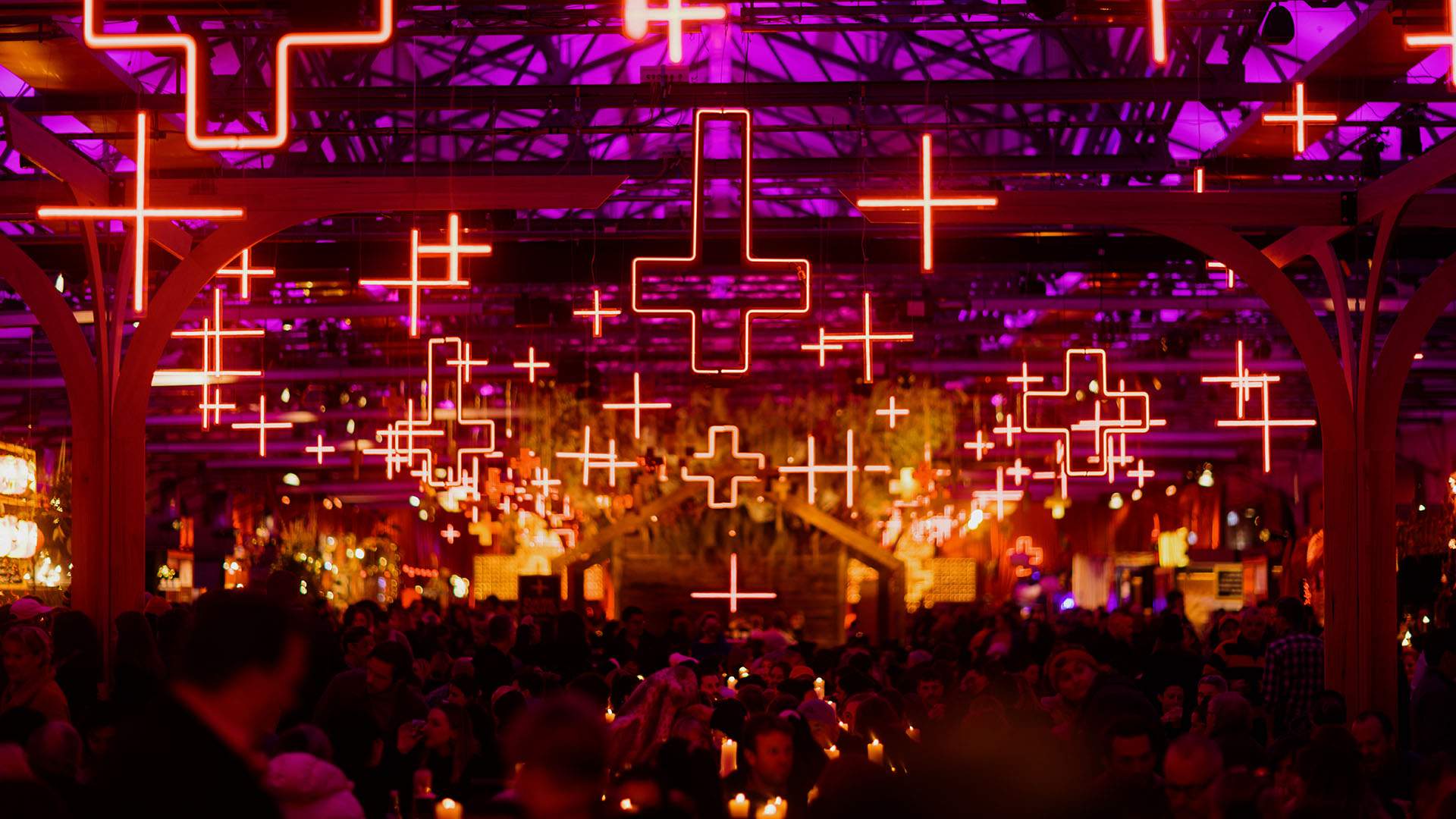
The satanic overtones, the inverted crosses, the whole city bathed in a red glow: Dark Mofo is permission to express yourself, to stay out too late, to immerse yourself in something surprising. The program shifts every year and sells out in patches, so use the official planner to map your nights before you go, and leave ample time to simply wander. The best discoveries here are the ones you didn’t book.
Dark Mofo runs each June, across roughly a fortnight, bookended by the winter solstice. Exact dates and the lineup shift every year, so check the program before booking flights.
Where To Stay
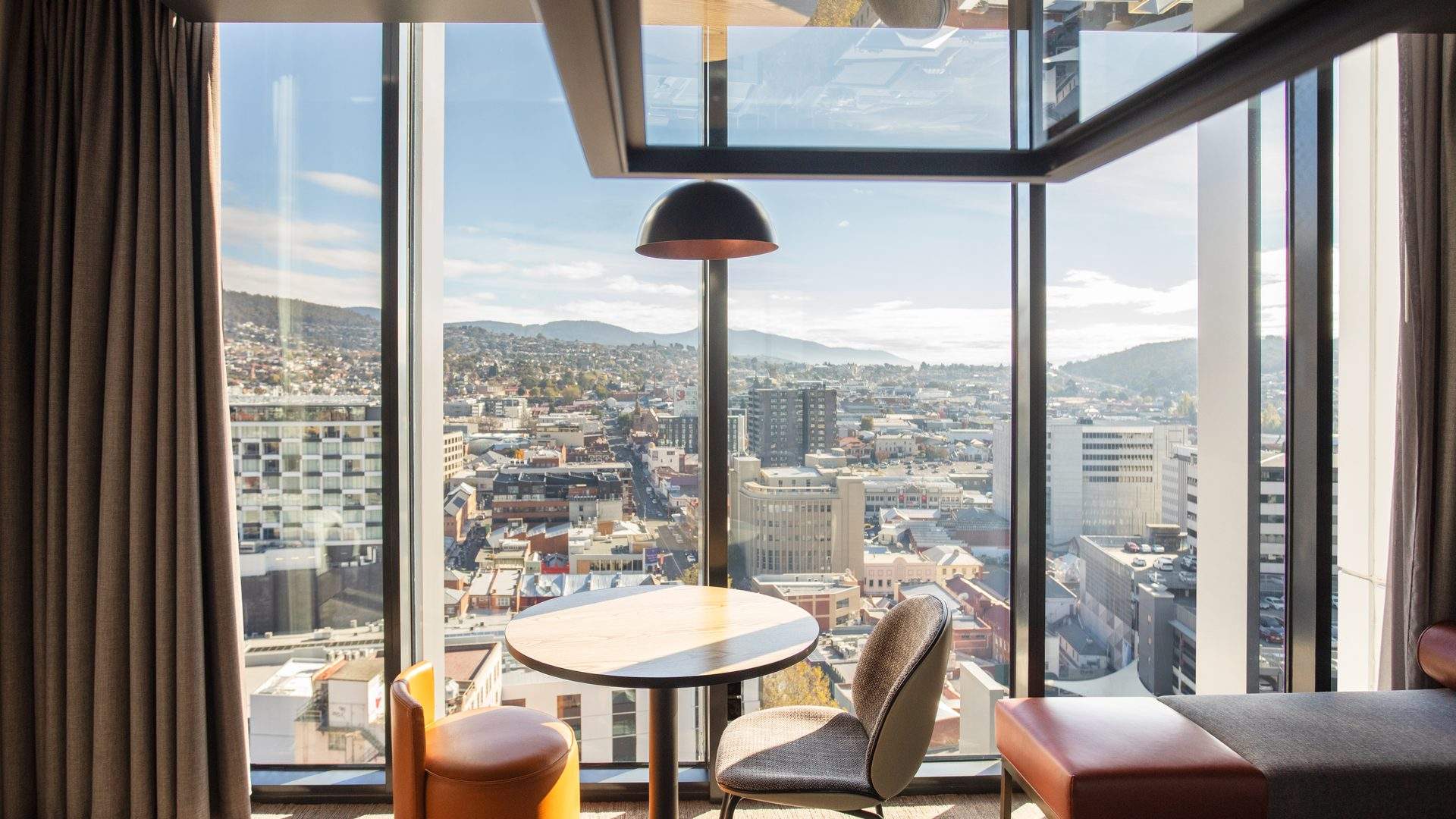
For a festival that runs on late nights and cold walks home, location is everything — and the Mövenpick Hotel Hobart sits squarely in the middle of town. Australia’s first Mövenpick is also Hobart’s third-tallest building, which means harbour views on one side and kunanyi/Mount Wellington on the other, and a short, walkable line back from most of the action. Rooms are done in a pared-back, Tasmanian-inspired palette, and the included à la carte breakfast is a genuinely useful thing when you’ve surfaced late and need a slow, proper start.
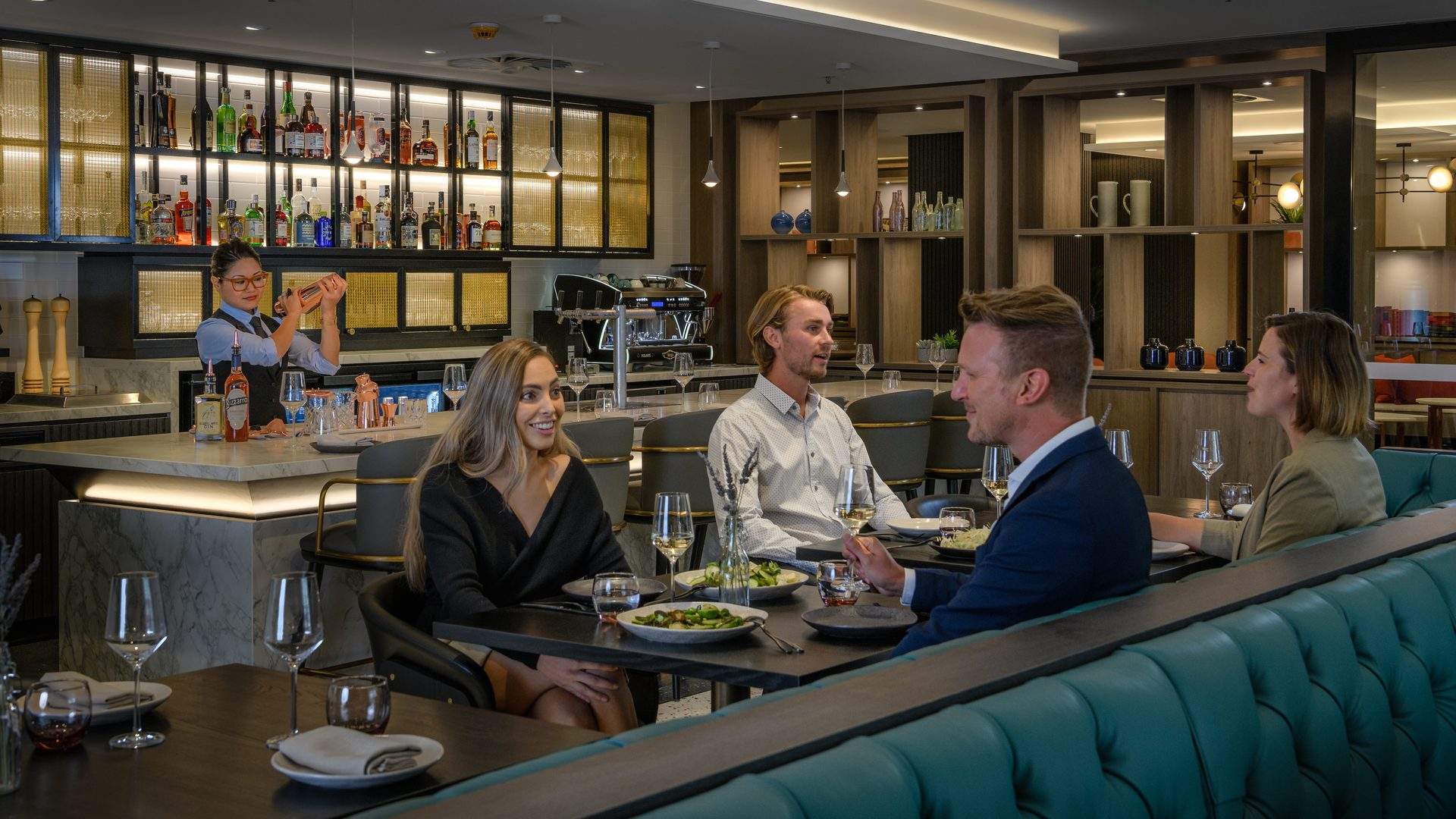
Downstairs, Tesoro is the strongest argument for not leaving the building before you have to. The hotel’s modern-Italian restaurant cooks Tasmania onto an Italian template — 50-day dry-aged Cape Grim beef, Marion Bay chicken, Tasmanian rock lobster, pasta and pizza made by hand each day. And because this is a Mövenpick, there’s a free hour of unlimited Swiss chocolate every single day, which lands somewhere between absurd and essential after a long night out.
What To Do Before Dark
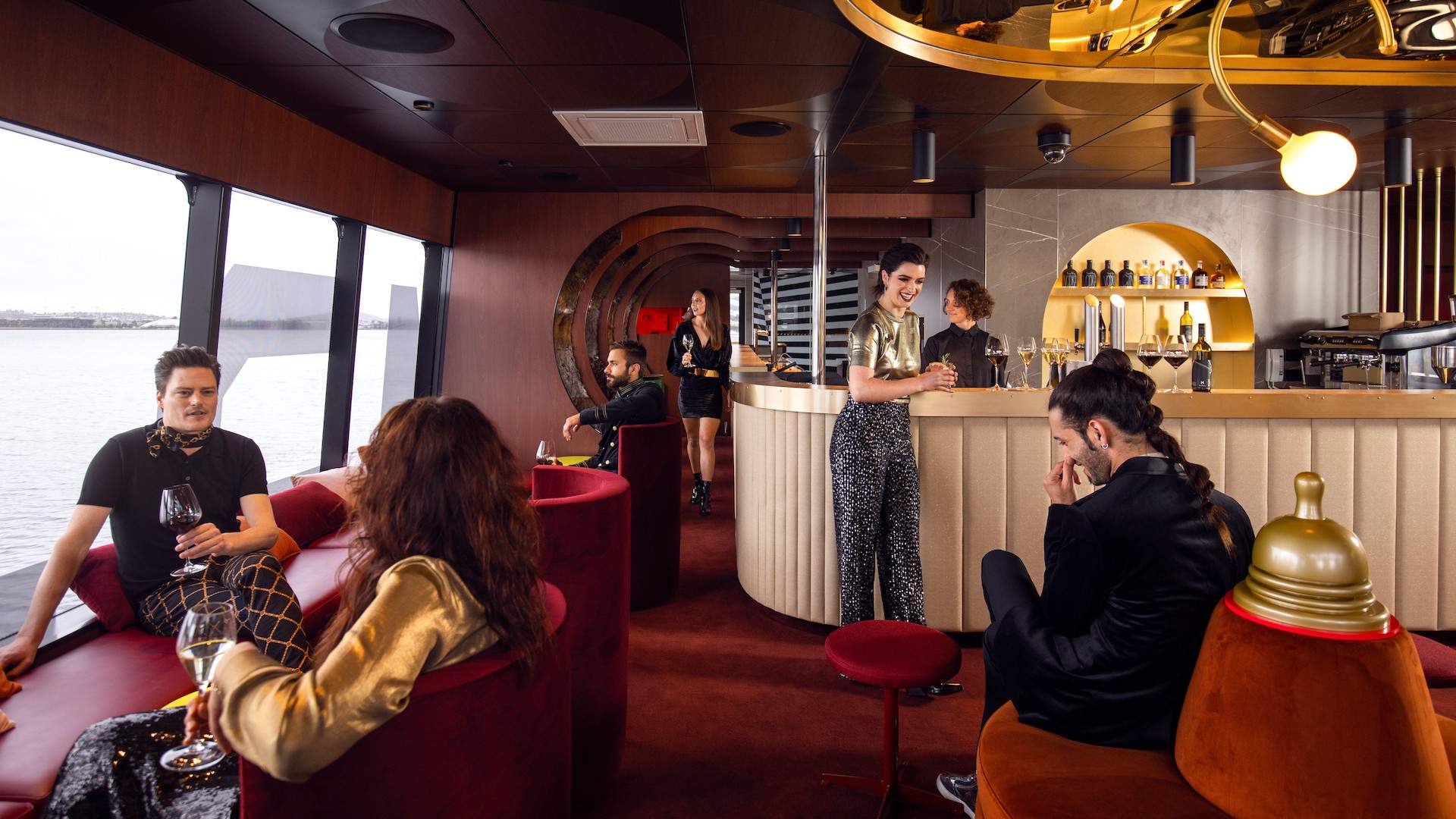
Give the mothership a full day of its own — MONA is unlike any gallery you’ve been in.You can drive, but the right way to arrive is by water: the MONA ferry leaves from Brooke Street Pier on the waterfront and runs the river in about 25 minutes, camouflage-painted and stocked with sheep-shaped seats. Book the Posh Pit — it’s a must. For a little extra you get a private deck, a welcome glass of something cold that keeps getting topped up, and canapés served savoury on the way out and sweet on the way back. It turns the commute into the first event of the day.
Once you’ve arrived, enter at the top and spiral down through sandstone tunnels, there are almost no wall labels (the ‘The O’ app tells you what you’re looking at, and what other people made of it), and the collection swings from ancient antiquities to the deliberately confronting. Above ground there’s the Moorilla winery, the Moo Brew brewery and bars with river views, so a visit stretches easily from late morning into the afternoon.
Beyond the museum, leave room to roam. Salamanca’s sandstone warehouses, the working waterfront, the city’s small bars and galleries — Hobart rewards an unstructured afternoon, and our essential guide to Hobart and our roundup of unexpected things to do in Tasmania are good places to start plotting. If you’ve got an extra few days, the island keeps giving: see our weekender on Tasmania’s wild west coast.
Where to Eat
Hobart punches above its size when it comes to eating, and the cold only serves to sharpenen your appetite. Start at Salamanca Market on a Saturday morning, when the sandstone warehouses fill with Tasmanian producers — come hungry and graze your way through local cheese, just-baked pastries and a strong coffee before the chill sets in. For a night you don’t feel like going far, Tesoro, the modern-Italian restaurant inside the Mövenpick, cooks Tasmanian produce onto an Italian template and is right downstairs.
When you want to settle in properly, Sonny is a tight, 20-seat natural wine bar on Elizabeth Street pouring low-intervention bottles alongside oysters, house-made pasta and whatever’s on the turntable — walk-ins only, so get there early. Over in Battery Point, the Shipwright’s Arms has been a neighbourhood pub since 1846 and does the Tasmanian seafood and open-fire warmth a winter night calls for. For lunch with a view, Aloft sits on the top floor of Brooke Street Pier with window seats over the Derwent. And if you’re already heading up the river, build your MONA day around lunch at The Source, the gallery’s restaurant at Moorilla, where chef Vince Trim cooks seasonal Tasmania under a John Olsen ceiling with the vineyard out the window.
Exploring the Dark Arts
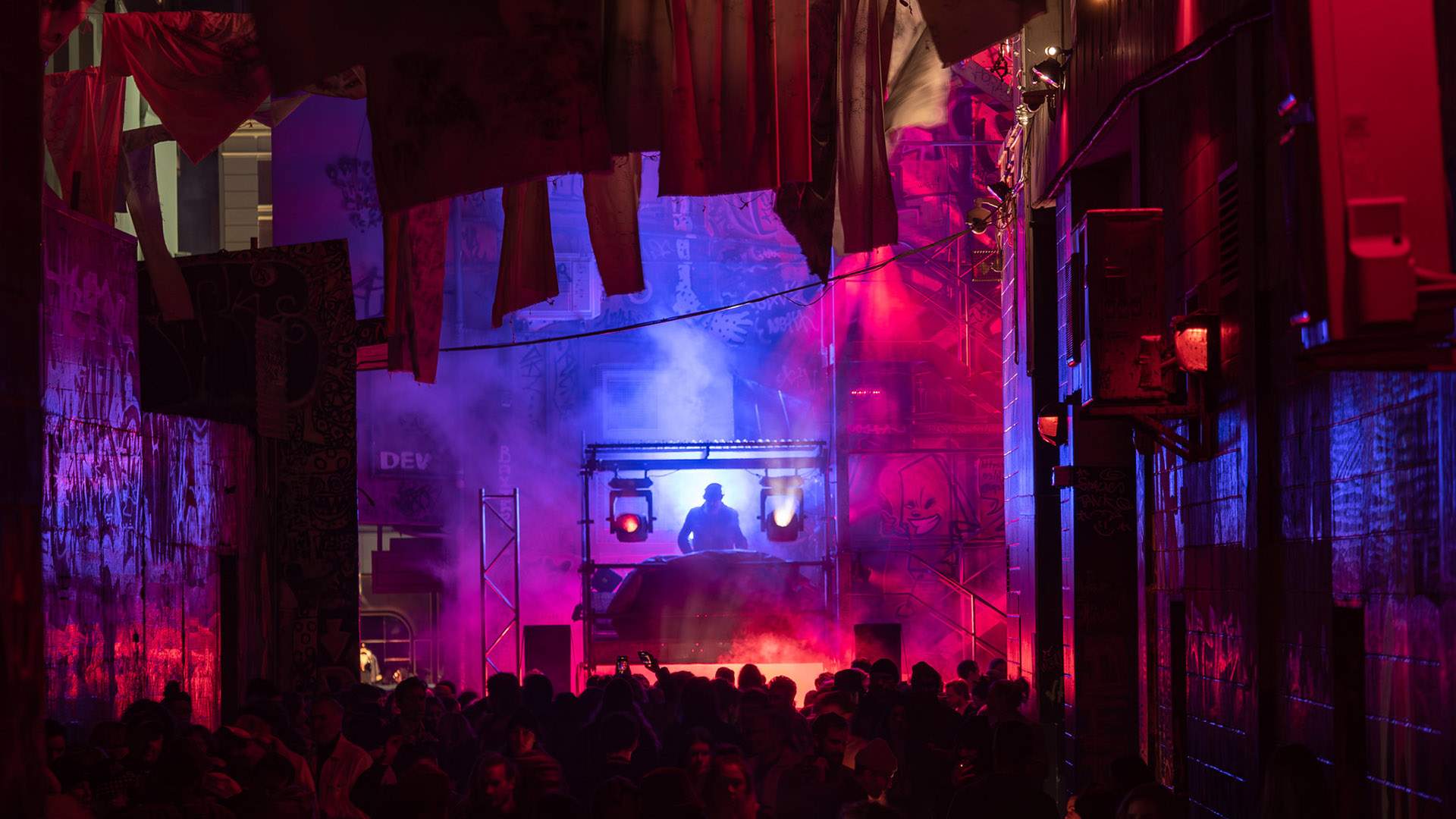
Dark Mofo is much more of a choose-your-own-adventure type of situation than something to be conquered entirely. The smartest way to proceed is via the official planner. But, if you do nothing else, do the Winter Feast and Night Mass. The Feast is the festival’s warm heart — a pagan-inspired, fire-lit banquet of long communal tables under cross-shaped chandeliers, open-flame kitchens, and dozens of Tasmanian stallholders pouring local wine and cooking over coals. It’s the most accessible thing on the program and the easiest to love. Check each year’s Dark Mofo lineup for the headline chefs and ticketing, which change every edition.
Night Mass is the other beast entirely: a shapeshifting, multi-venue, late-night labyrinth of bars, hidden stages and installations that takes over a whole city block until the small hours. There are deliberately no maps. The point is to get lost. One piece of hard-won advice — you won’t be using your phone much in there, so sort out how to get yourself home on foot before you go in. Knowing the walk back to your hotel, cold and mapless, is a genuine win. This is where a central base earns its keep.
Around those two sit the rituals that come back every year, and they’re worth building your nights around. The towering Ogoh-Ogoh — a monstrous effigy stuffed with the community’s written-down fears — is paraded and then burned to close the festival; Ryoji Ikeda’s Spectra throws a 15-kilometre column of light over the city; and large-scale fire and sound installations turn the waterfront into something genuinely otherworldly. For the truly committed, the Nude Solstice Swim sees more than a thousand people strip off and plunge into the Derwent at dawn on the shortest day of the year.
And give the mothership a full day of its own — MONA is unlike any gallery you’ve been in. Enter at the top and spiral down through sandstone tunnels, there are almost no wall labels (a handheld device tells you what you’re looking at, and what other people made of it), and the collection swings from ancient antiquities to the deliberately confronting. Above ground there’s the Moorilla winery, the Moo Brew brewery and bars with river views, so a visit stretches easily from late morning into the afternoon — which makes the ferry up the Derwent the natural centrepiece of a daylight session before the night kicks off.
The Morning After
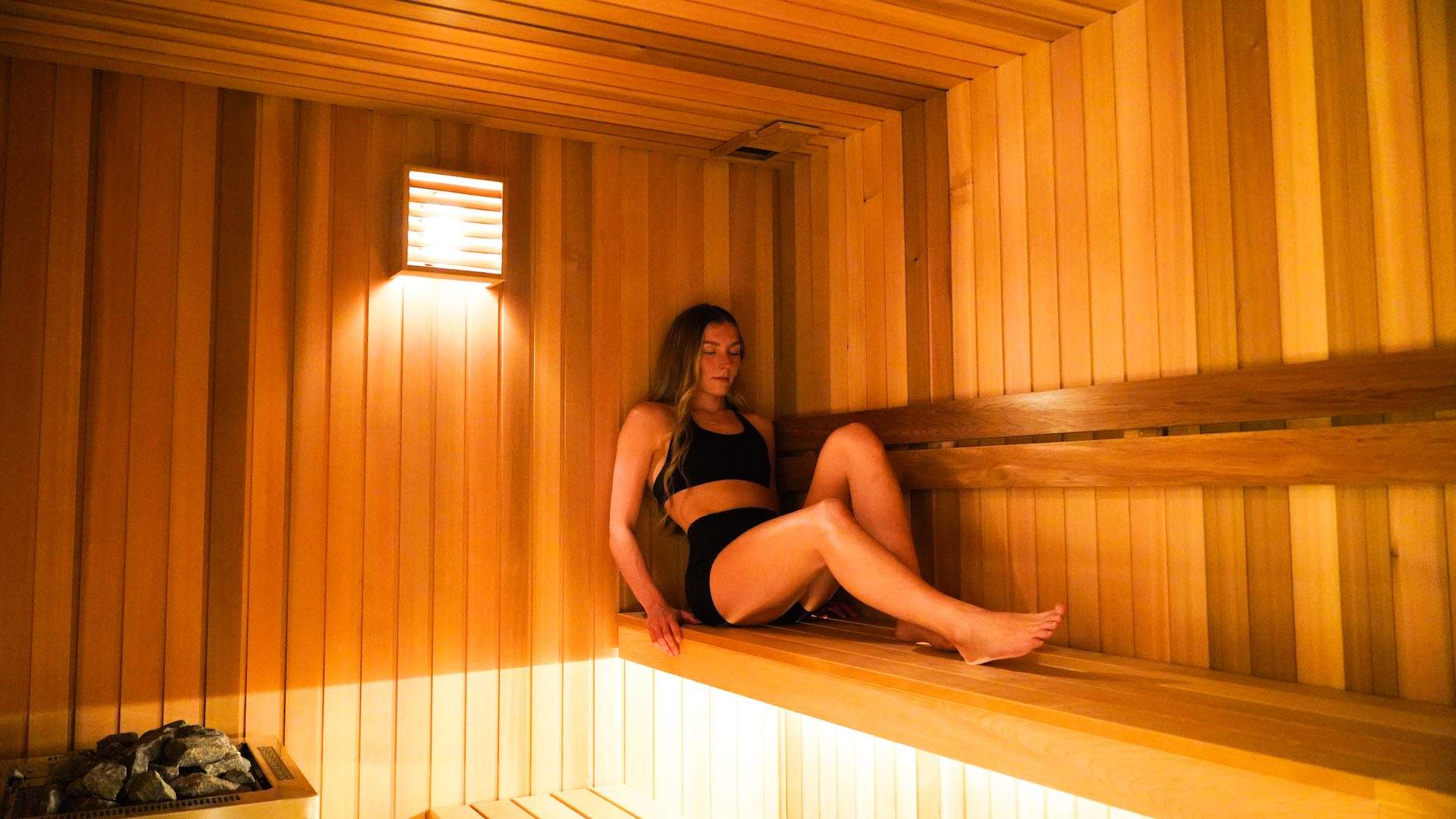
Dark Mofo is a marathon of hedonism dressed as a festival, so build in slow mornings — that included breakfast at the hotel, a long coffee, no alarm. When you’re ready to feel human again, the Savoy Day Spa bathhouse is all of a few doors down on Elizabeth Street. Below ground, it runs two spas heated to 38°C, a magnesium pool at 28°C, a Finnish sauna and a steam room — a proper hot-and-cold reset for legs that danced too long and a body that forgot it was winter. Do a cycle, drink some water, and go again.
If you’d rather ease in horizontally, the State Cinema in North Hobart is built for it — a grand old independent with a clutch of screens and a bar, and an afternoon matinee is exactly the low-effort plan a Dark Mofo recovery day wants.
Concrete Playground travelled as a guest of Mövenpick Hotel Hobart.
Dark Mofo returns to Hobart each June — check the program and dates before booking.