Everything You've Always Wanted to Know About the Lost Art of Mushroom Foraging
As expert forager Diego Bonetto puts it: "Don't assume any knowledge when foraging, you must be willing to let the forest teach you".

On a brisk April morning, the busiest destinations in countryside New South Wales aren't the pubs, local cafes or anything in the main stretches of these quaint towns — crowds are flocking to the various state forests. To the untrained eye, these forests have nothing of value but pine trees, but in the right conditions, the soil comes alive with carpets of glorious pine mushrooms. These crown-protected woodlands are the last bastion of mushroom foraging in NSW — a practice of times gone by that's now making a comeback in the modern world.
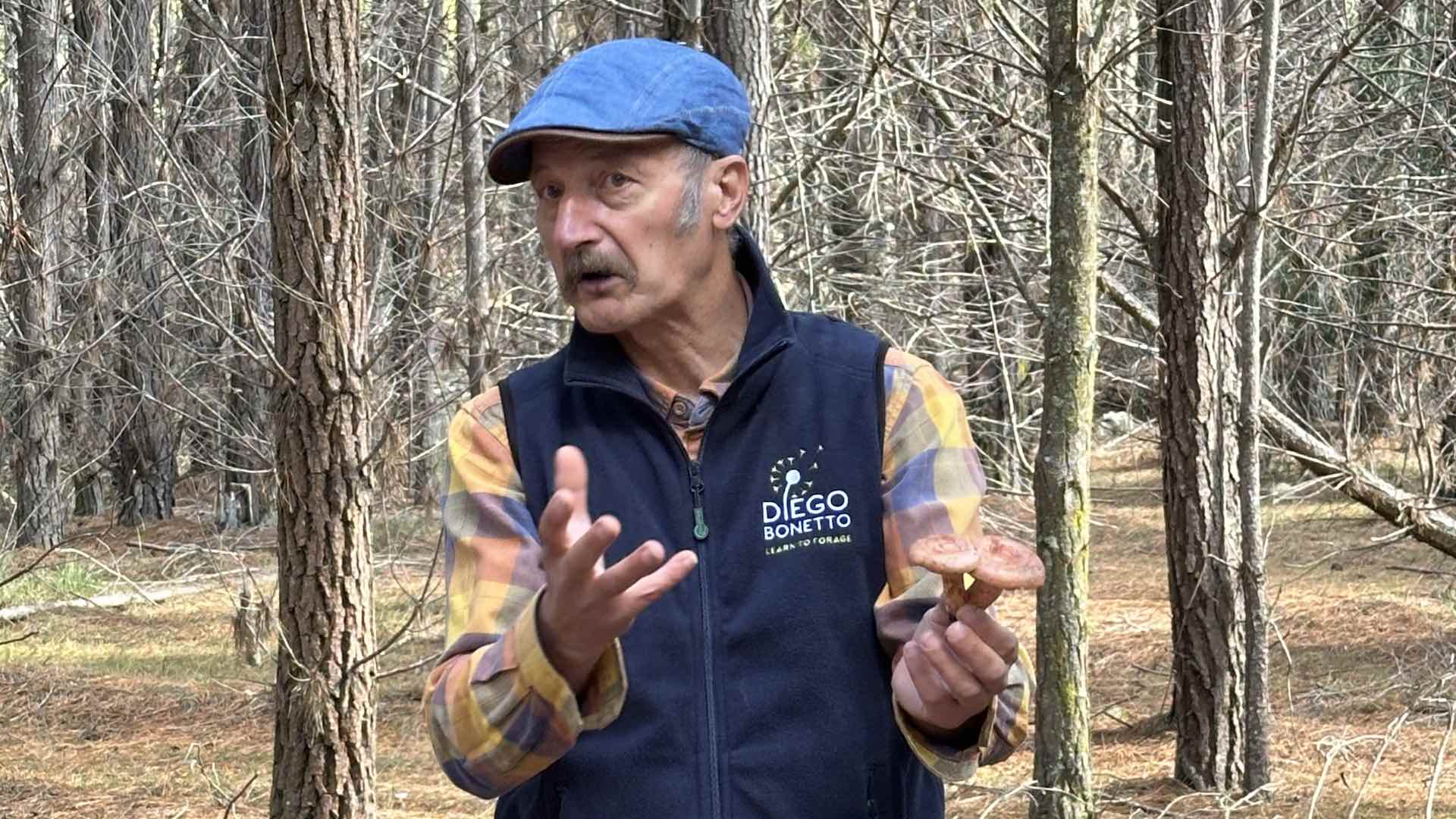
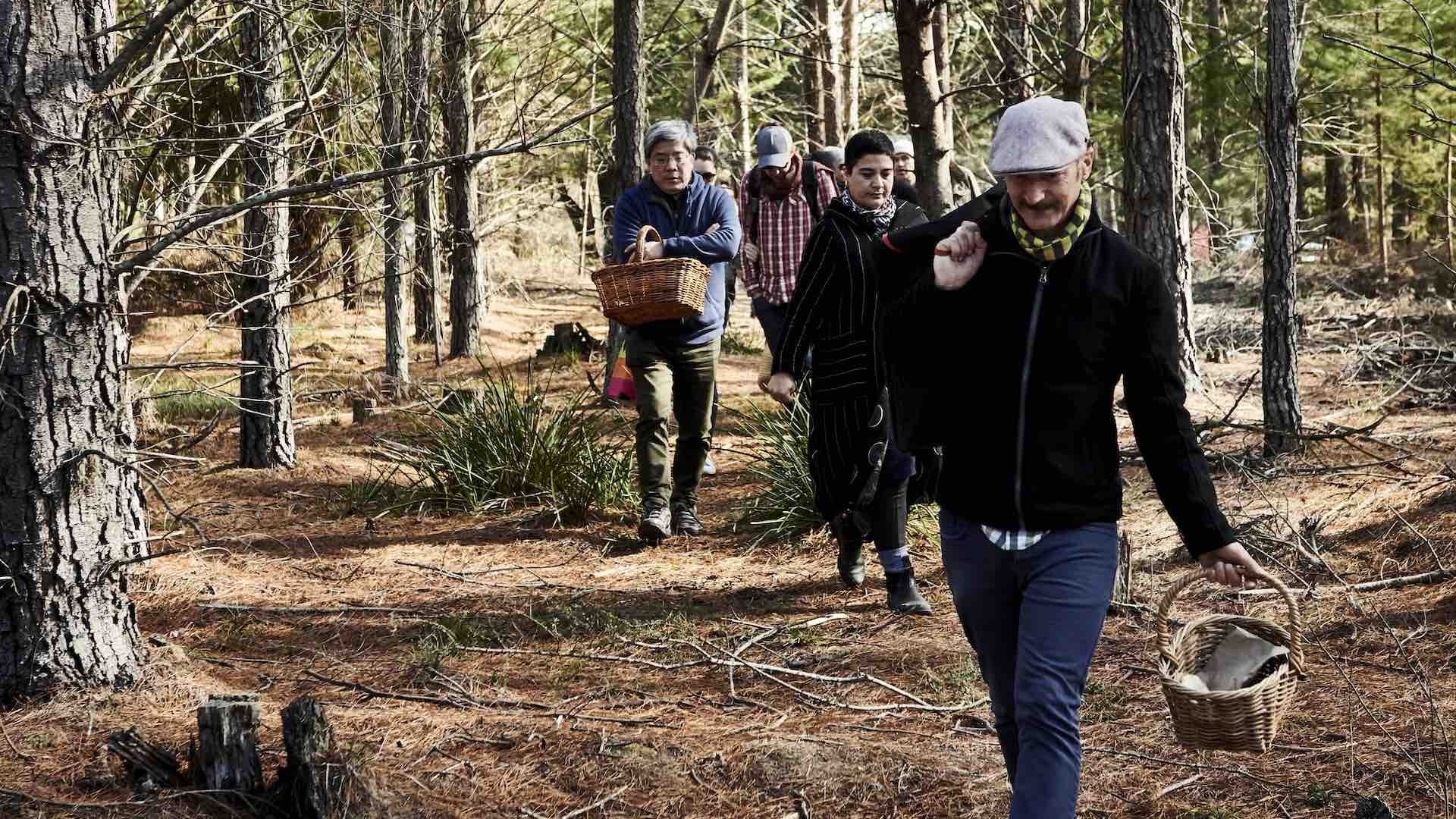
Helping to stage that comeback is the jovial wizard of foraging: the self-proclaimed 'weedy one', Diego Bonetto. With a lifetime of foraging practice that began as a child in Northern Italy, Bonetto has made it his life's mission to share everything he can about the lost art of foraging, not only mushrooms but native plants, seaweed and weeds. But it was a brisk April morning in the Lidsdale State Forest when he led Concrete Playground on an expedition into the trees, specifically in search of juicy mushrooms and knowledge.

Alec Jones
The Good, the Bad and the Deadly
It's no secret that mushroom foraging should not be undertaken lightly. With over 5,000 species of mushrooms that grow across NSW, an inexperienced, unguided amateur forager is at immense risk of misidentifying their harvest, which can have painful and life-threatening consequences. That's why you should never forage without expert advice. As an expert himself, Diego Bonetto cannot stress that enough — for your sake and the forest's:
" The biggest mistake people make is trying to go mushroom foraging just by reading an article on the internet and downloading some pictures. There are lookalikes, there are similarities [between mushrooms]. There are ethical steps that you need to understand to protect the ecology. Harvesting wild produce is not walking into a supermarket".
That's because the mushrooms you can safely eat, and even those that should be left alone, are vital to the ecosystem. Fungi decompose dead organic matter into raw nutrients to be reabsorbed into the soil. How would you feel if a giant walked into your home and ripped your compost bin off the ground? "Be nice to nature", Bonetto adds. "Nature has got plenty to worry about already".
Helen Algie
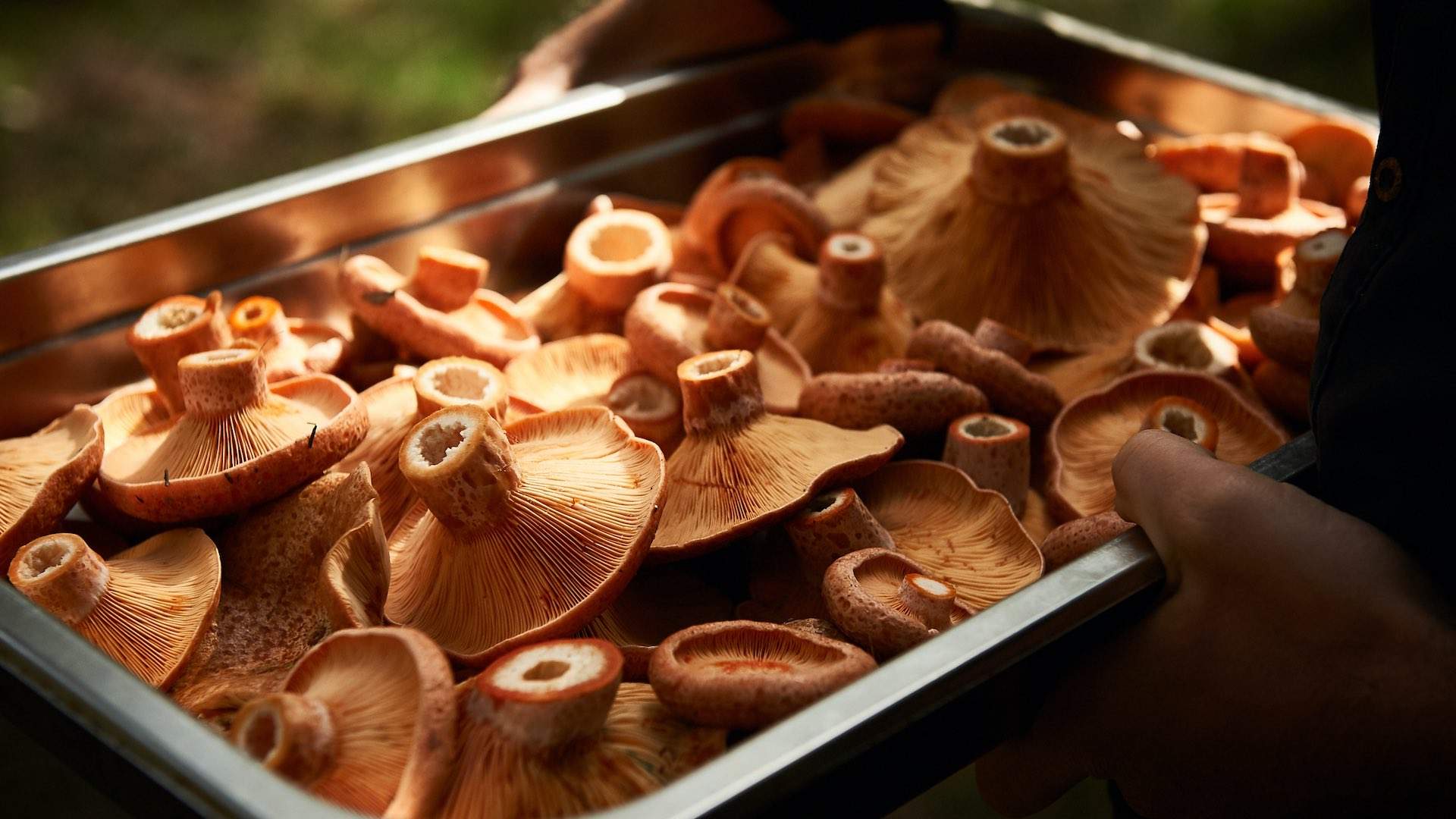
You may be wondering: why pine forests? Legalities and complexities of fungi ecology aside, pine forests are home to two edible and easily recognisable – to the trained eye – mushroom species: Saffron Milk Caps and Slippery Jacks.
The former boasts a reddish-orange cap, typically four to 30+ centimetres across, with gills and an orange, milky sap that leaks from cuts in the flesh. They're meaty and have a mild bitter taste, and work great pan-fried, pickled, as schnitzels, or to bolster pies and casseroles.
The latter has a brown, slimy cap and a spongy yellow underside free of gills, which grow up to 25+ centimetres across. With the slimy layer peeled off, it can be chopped and used in Asian-style soups, fried with butter or worked into an omelette. Any other species in a pine forest, even the iconic red-and-white-spotted fly agaric (aka fairy toadstool), is either too risky to prepare safely or outright dangerous to consume, so don't be greedy.
Alec Jones
Listen to the Experts
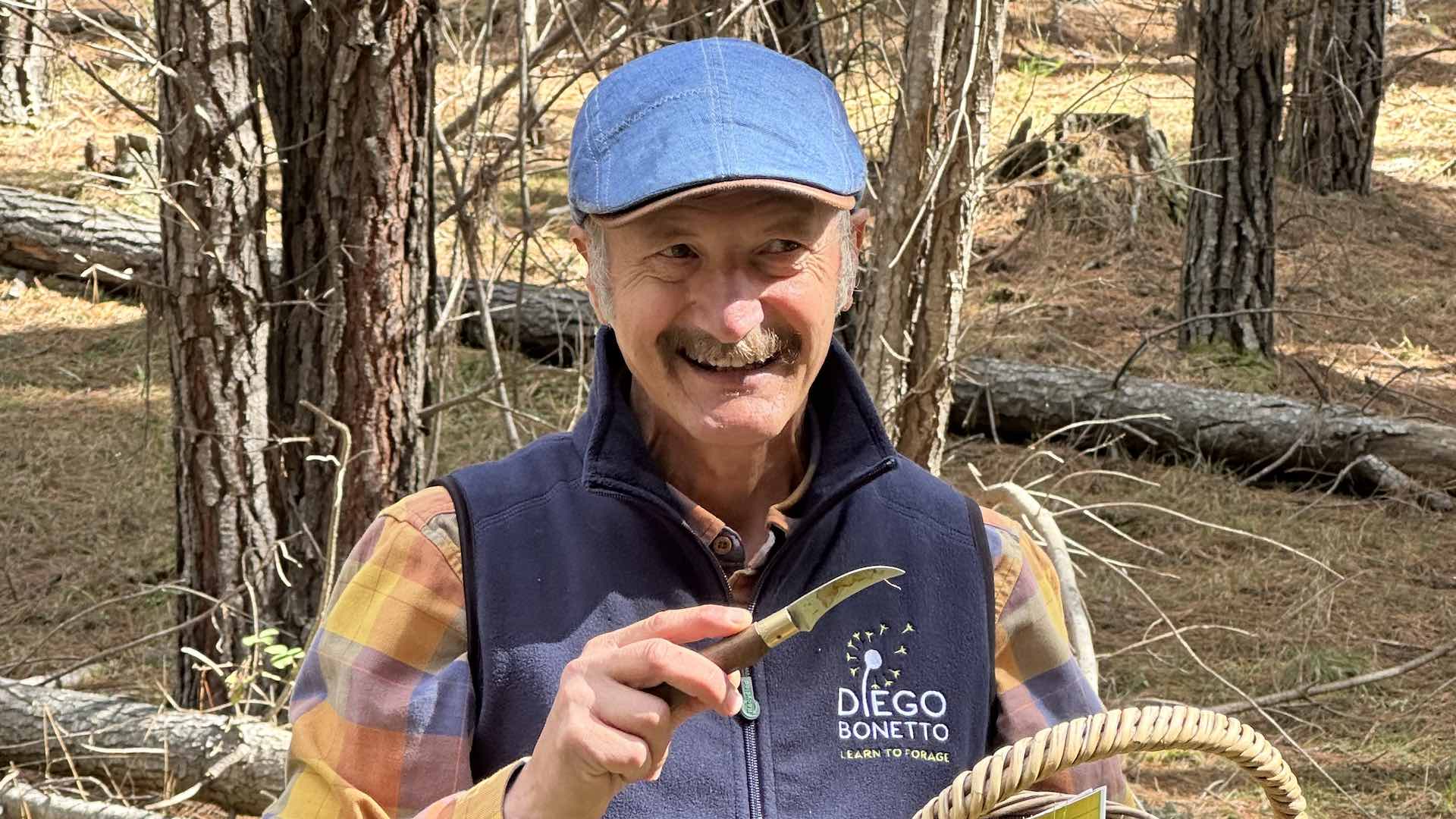
Only an experienced forager can tell the edible from the deadly, so you should never claim to know how to mushroom forage until you have the qualifications, not just a weekend of research online. Booking a foraging session with someone like Diego is non-negotiable. You don't want to take home something poisonous — or break a law you didn't know existed.
" It doesn't need to be me, but someone who can take you there, who's done it before, done it for a few years, and can take you through the steps of what it is you're looking for and why all those others are not [edible]."
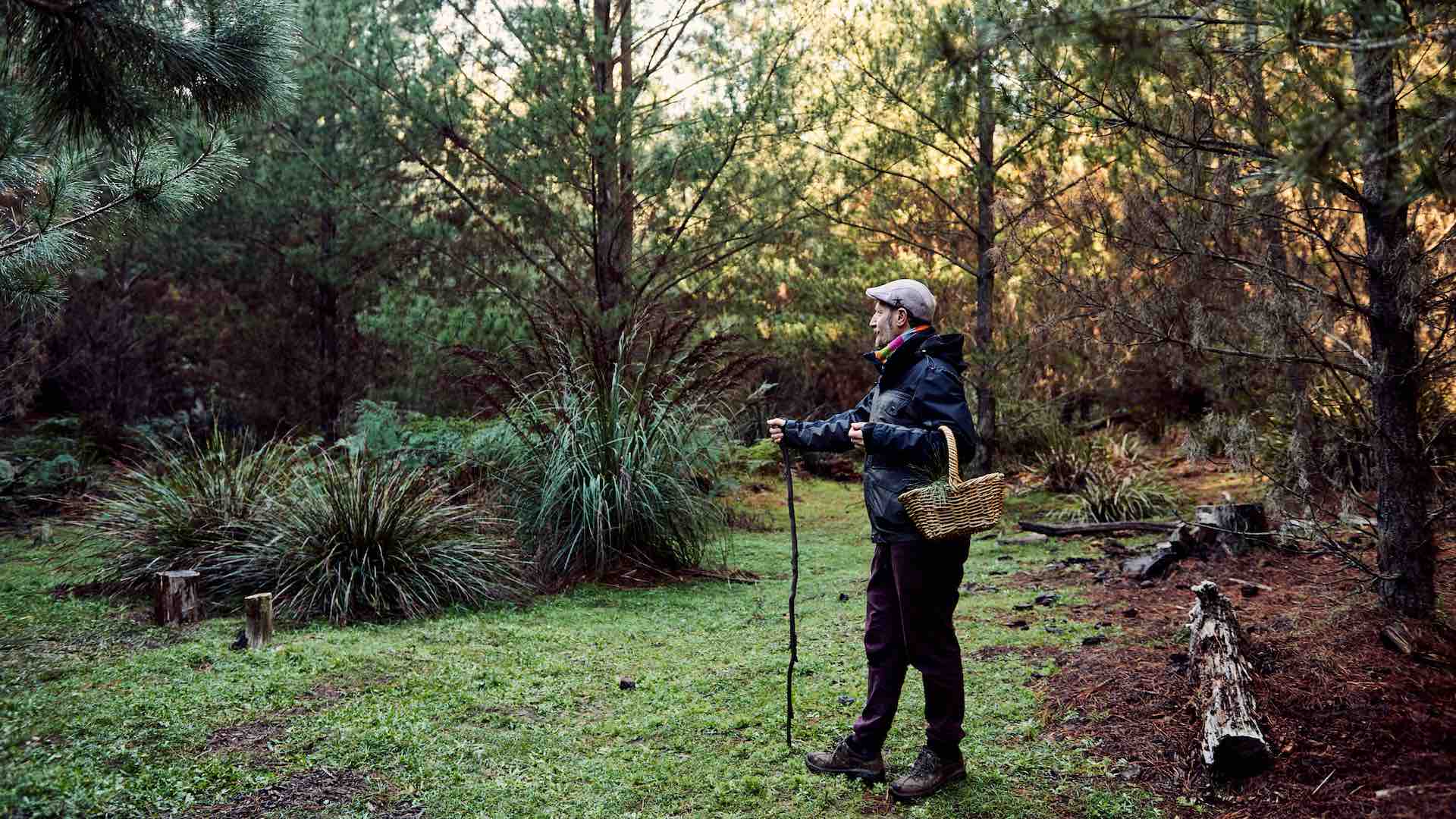
No matter what, there are three things Bonetto believes every forager should remember in the forest. "First, the assumption of knowledge is very problematic. Second, people always want to be right — be humble, it's not about you being right, it's about you being safe. Third, only harvest what you can eat that night, mushroom frenzy can make you fill six boxes, but then you don't want to process it and end up wasting it."
Helen Algie
Find Your Nearest Legal Foraging Ground
A little-known fact: NSW is the only Australian state where mushroom foraging is legal, as long as it's done inside a State forest. While permits are required for commercial foraging, foraging for personal consumption is legal and open to all. That means you'll need to make a drive out of it.
Bonetto explains it best. "I teach mushroom foraging in pine plantation State forests for a very specific reason. And as such, there are no pine plantations in Greater Sydney. The closest pine plantation you will find [to Sydney] would be in the Southern Highlands or the western slopes of the Blue Mountains".
"And that's where I teach. So if you would like to harvest mushrooms legally, you need to come to a pine State forest. Unless you do it on your own property, if you have a property big enough to have pine trees and big enough to support a mushroom ecology, then you can do it on your own property. But most people do not have the kind of land in greater Sydney, am I right?".
Helen Algie
Plan Ahead — Far Ahead
The other key consideration for a foraging booking is that the mushroom season in NSW is only eight to ten weeks long, typically from March to May. You're waiting for Goldilocks conditions, since fruiting bodies of pine mushrooms grow only after heavy rain and overnight temperatures in the single digits. Any colder, though, and the season will grind to a halt. An easy way to remember: the best time for mushroom foraging (and also the busiest) is the Easter long weekend.
Bonetto preaches foresight. "Your readers might just be a bit disappointed to know the season is already over [for 2025]. So join the mailing list. If you're into mushroom foraging, join our mailing list and we'll let you know when we've released the workshop dates for 2026. Or just check all of the other workshops available on the website, or just go and talk to your neighbour. You don't need to come to Diego. There's also plenty of foraging knowledge in ethnic communities, they'll offer you tea and sit you down in the garden. People love to talk about plants. Lemme tell you."
To book a foraging experience with Diego Bonetto or join the mushroom foraging waitlist, visit his website. Concrete Playground joined a foraging workshop as a guest of Destination NSW.
Foraging for wild mushrooms is not without risk — some mushrooms are toxic and will cause bodily harm and even death if consumed. If in doubt, throw it out, and if you become unwell after eating wild mushrooms, call the Poisons Centre on 13 11 26.
Header image courtesy of Destination NSW