Overview
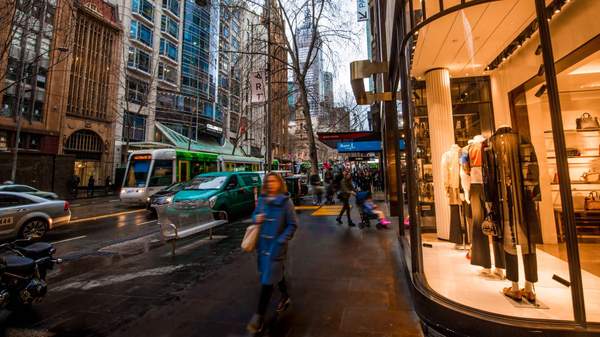
Whether you're a steadfast homebody or someone who spends almost every night on the town, you've undoubtedly heard people talking about the death of Melbourne CBD. But is it actually true? Since COVID times, and probably before too, the debate has raged from multiple angles, with both sides of the fence unsurprisingly far from reaching a consensus.
On the one hand, some argue that the CBD is now missing what made it so vibrant in the past, citing work-from-home policies, the cost-of-living crisis, retail vacancy rates, the ease of online shopping and perceptions of crime, among other issues. On the other hand, hotspots around the CBD, such as Flinders Lane and Little Collins Street, usually appear plenty busy before and after dark if you spend time seeing the sights for yourself.
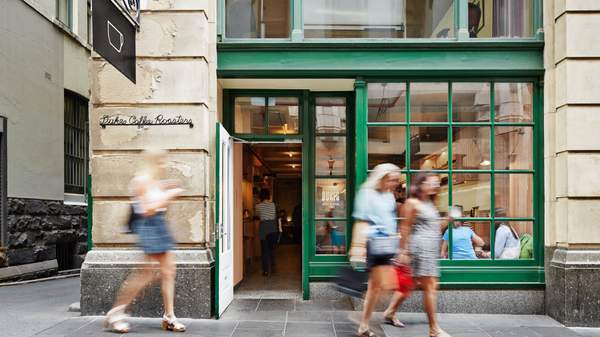

So, who's right? A new report published in The Age sought answers using about as unbiased a data point as one could hope for — the City of Melbourne's pedestrian foot-traffic data. Dating back to 2009, this network of sensors collects data at major waypoints throughout the CBD and beyond, with the latest figures showing that Melbourne CBD foot traffic remains about 20 percent below pre-pandemic levels.
Data collected around the city's most active transport hubs clearly illustrates the problem. According to the report, weekday foot traffic at Flinders Street Station has returned to 77 percent of pre-pandemic levels, while Southern Cross Station remains at 65 percent over the same period. Interestingly, the Bourke Street Mall sensors captured significant jumps in foot traffic following MECCA's landmark opening in August 2025.
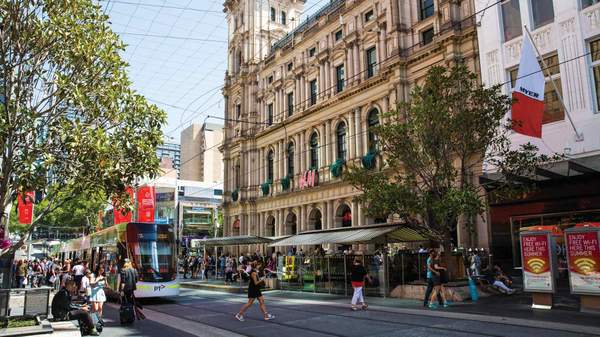
Speaking to The Age, KPMG urban economist Terry Rawnsley says the biggest contributor to Melbourne's declining pedestrian numbers is work-from-home policies, with data from hubs like Southern Cross Station revealing that a significant number of workers now attend the office three days, not five, per week. While this sensor captures about 20,000 pedestrians on Tuesdays, Wednesdays and Thursdays, the numbers crash to around 14,400 on Mondays and 11,700 on Fridays.
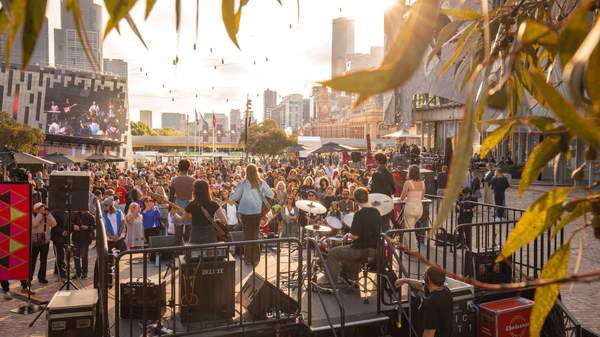
That may make for tough reading for CBD-based businesses, but workers can hardly be blamed for saving themselves a time-consuming commute. So, what's the solution to attracting people back into the centre of town? The answer depends on who you ask, with nearly every political group and peak body promoting its own point-by-point plan. Read them, and an overarching theme appears: revitalised arts and culture, improved access and meaningful community engagement.
Find out more about Melbourne's pedestrian foot traffic via City of Melbourne's Pedestrian Counting System.