Overview
As the ongoing conflict in the Middle East shows no sign of slowing down, the widest-spanning impact for Australia and the world is yet another price hike, this time at the petrol station. With the world's global oil supply throttled by the closure of the Strait of Hormuz, and despite ordering the largest releases of stockpiled oil in history, the International Energy Agency (IEA) has issued warnings for Australia and other countries facing limited fuel supplies on how to curb demand and limit consumption.
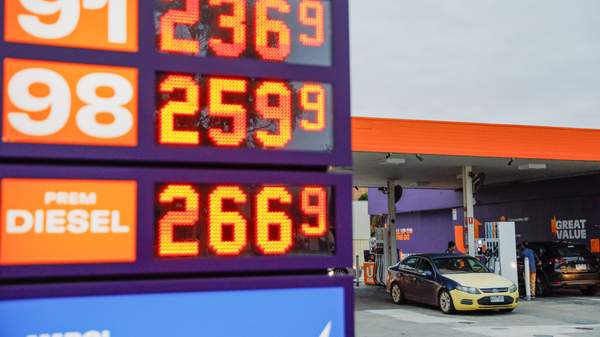
The advice is welcomed by Aussie drivers, who are staring down some truly eye-watering price boards across the country. At the time of writing, the cheapest fuel prices in NSW are $2.35 a litre in Rozelle, in Victoria, it's $2.37 in Northcote, and the same low price up in Queensland, specifically in Wynnum. Meanwhile, tanks of diesel aren't coming in any cheaper nationwide than for $2.69 a litre in Googong, ACT.


Getty
The IEA is now warning member nations like Australia that drivers should begin taking daily precautions to help prolong supplies — not hoarding, or stealing petrol — but in the form of easy everyday adjustments to routine. While Australia doesn't source its crude oil directly from the Middle East, the Asian countries we do source fuel from could soon focus on shoreing up their supply instead of meeting export demands, as evidenced by the last 24 hours, when six fuel supply vessels bound for Australia were cancelled or deferred.
So, how can Australians be proactive and do their part to extend the supply? Firstly, work from home whenever possible, and take public transport to work when able (in NSW, the Rail Tram and Bus Union is calling on the state government to lower or scrap public transport fees). If driving on the highway, reduce speeds by ten kilometres per hour below the limit to extend time between refills. And if driving is a must, consider car sharing with friends, family, neighbours or colleagues to limit individual fuel consumption. Avoid air travel unless absolutely necessary, and if possible, limit the use of gas cooking at home.

Getty
Several of the IEA's recommendations are aimed at governments and organisational bodies, including alternating private vehicle access to certain roads to reduce congestion and high-consumption driving, limiting LPG supplies for transport to maintain supplies for everyday essentials and optimising commercial vehicles' loads and driving practices to optimise fuel consumption.
If driving can't be avoided due to your own personal circumstances, there are a number of tools you can use to find cheap petrol prices near you. State governments in VIC and NSW offer fuel-checking services, or independent platforms like PetrolSpy and 11-Seven track the lowest prices in Australian suburbs and nationwide daily.
Like what you see? Subscribe to the Concrete Playground newsletter to get stories just like these straight to your inbox.