Skin Deep: Decoding Modern Skin Treatments and Understanding Active Ingredients With HÜD Founder Gry Tømte
Featured image: HÜD founder Gry Tømte at the Northcote clinic — blending science, empathy and design in Melbourne’s most awarded skin destination.

In an industry that trades on confusion, clarity has become its own form of luxury. The modern skincare market is a web of claims and contradictions — actives are glorified, acids are layered, and the language of science is used more often to sell products than to explain them. At Melbourne's HÜD, founder Gry Tømte has built an antidote: a space that cuts through the noise with science, empathy and an insistence on long-term skin health over quick fixes.
Tømte's approach to skin is rooted in personal experience. Growing up in Norway, she never thought twice about her complexion — until she moved to Australia in her twenties. "Almost overnight, I went from having porcelain skin to inflamed acne," she says. "The doctor put me on the pill to control it, and one sunny day in the Whitsundays I came back from a sailing trip and looked in horror as I was getting ready for dinner. In one day, my entire face was covered in what I later found out was melasma, a hormonal type of pigmentation caused by pregnancy or, like in my case, the pill."
The experience sparked a decade-long search for solutions and, eventually, formal training in aesthetics in Canada. When she returned to Melbourne, she opened HÜD with a simple aim: to create a skin clinic that felt human.
"Most [of the clinics in Melbourne] were either white-walled and sterile or felt like beauty spas without any clinical depth," she says. "I wanted something in between — somewhere people could feel safe, cared for and still receive serious results."
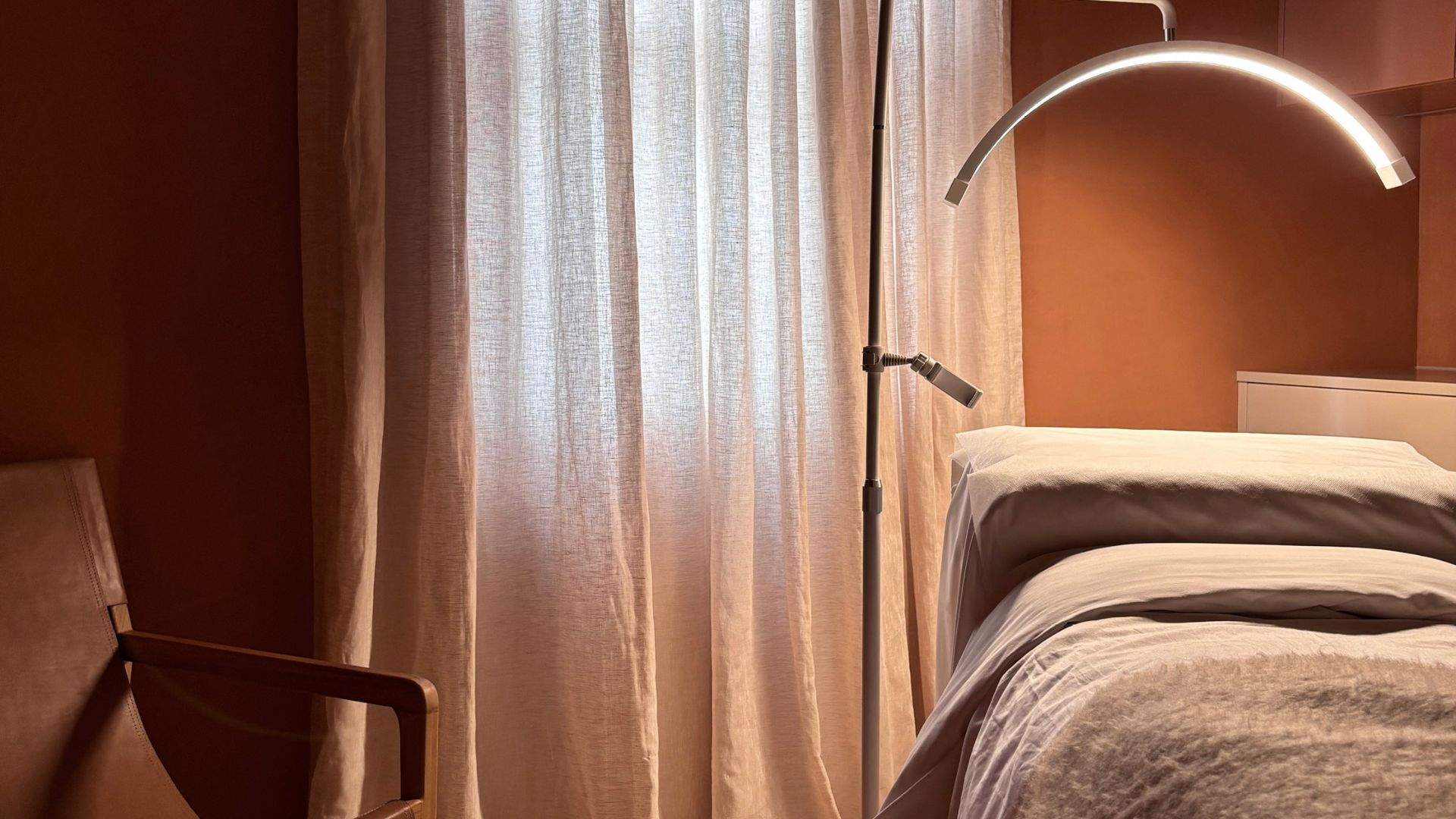
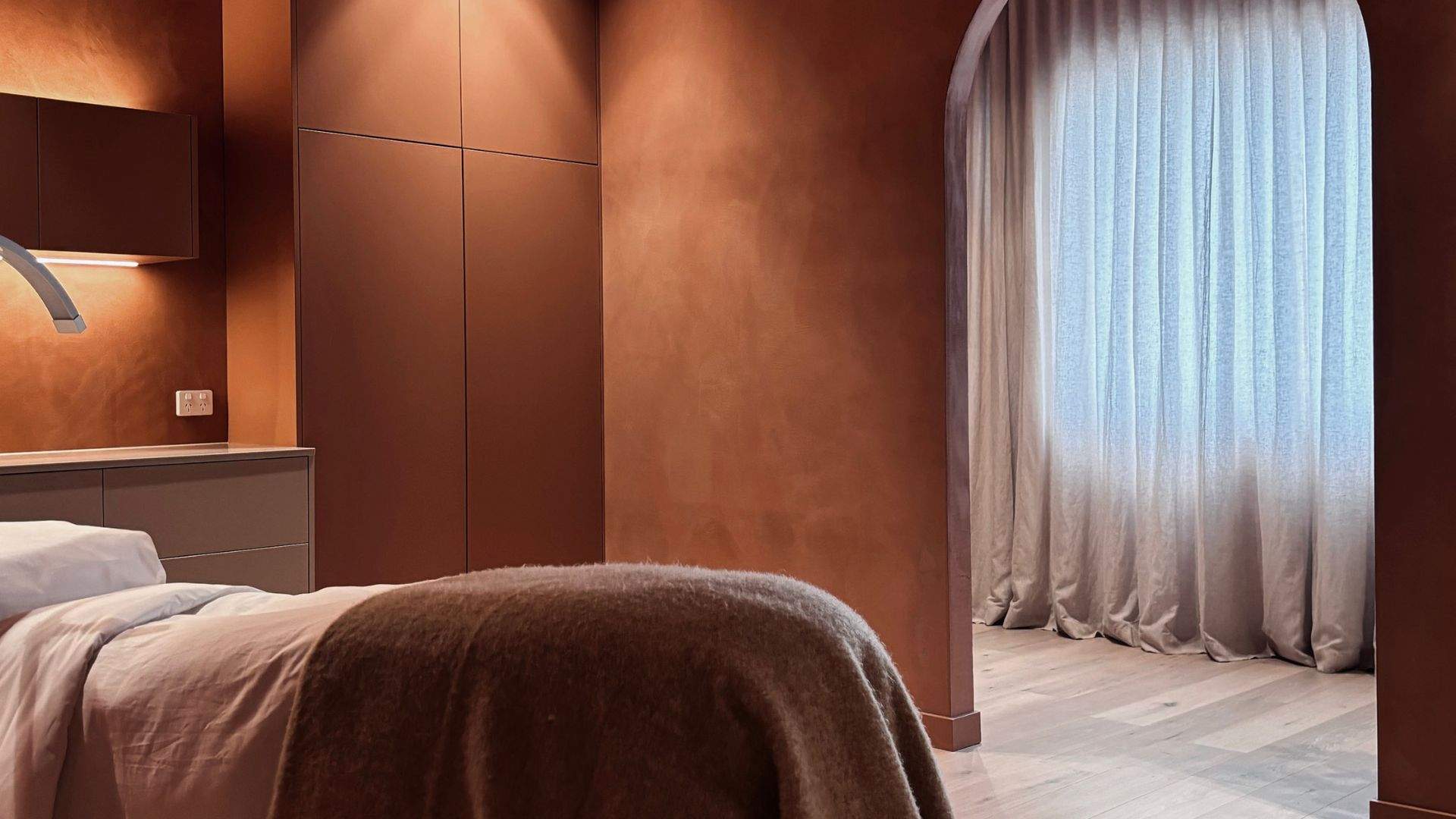
The result is a space that aims to create calm and lower cortisol — more Scandinavian café than medical facility. But beneath the warm timber and softly lit surface, HÜD operates with clinical precision. Treatments are highly tailored, with a focus on repairing the skin's barrier rather than achieving temporary results. "The aesthetics industry is full of smoke and mirrors," Tømte says. "Take the 'glass facial' trend — it looks incredible for a few days because you've removed the skin's protective layer, but long term it leads to chronic inflammation. I've never seen as much barrier damage as we're seeing right now."

That philosophy defines both of HÜD's clinics — the original in St Kilda, and the new Northcote location (pictured above) — where every treatment is designed to work with, not against, the skin. At the newer Northcote site, inclusivity was at the forefront of the project. "One of our priorities was ensuring we could safely treat all skin tones," Tømte says. The clinic's new Aerolase Neo Elite laser allows just that — a device capable of treating melanin-rich skin, rosacea, acne and even post-inflammatory pigmentation with no downtime or risk of burning. "It's a true workhorse," she says. "It delivers high energy deeply into the dermis in microseconds, so it's safe for everyone — even clients on Roaccutane."
At HÜD, Gry Tømte's focus on what she calls "barrier intelligence" has positioned the clinic at the forefront of a quiet skincare revolution — one that favours balance over aggression. She points to a new wave of lesser-known compounds that are quietly changing the field. "Phosphatidylcholine is a structural component of all cell membranes and key to barrier health," she explains. "Postbiotics like Lactobacillus Ferment Lysates can reduce inflammation and strengthen the barrier, while hypochlorous acid — something your immune system naturally produces — is antimicrobial without being sensitising."
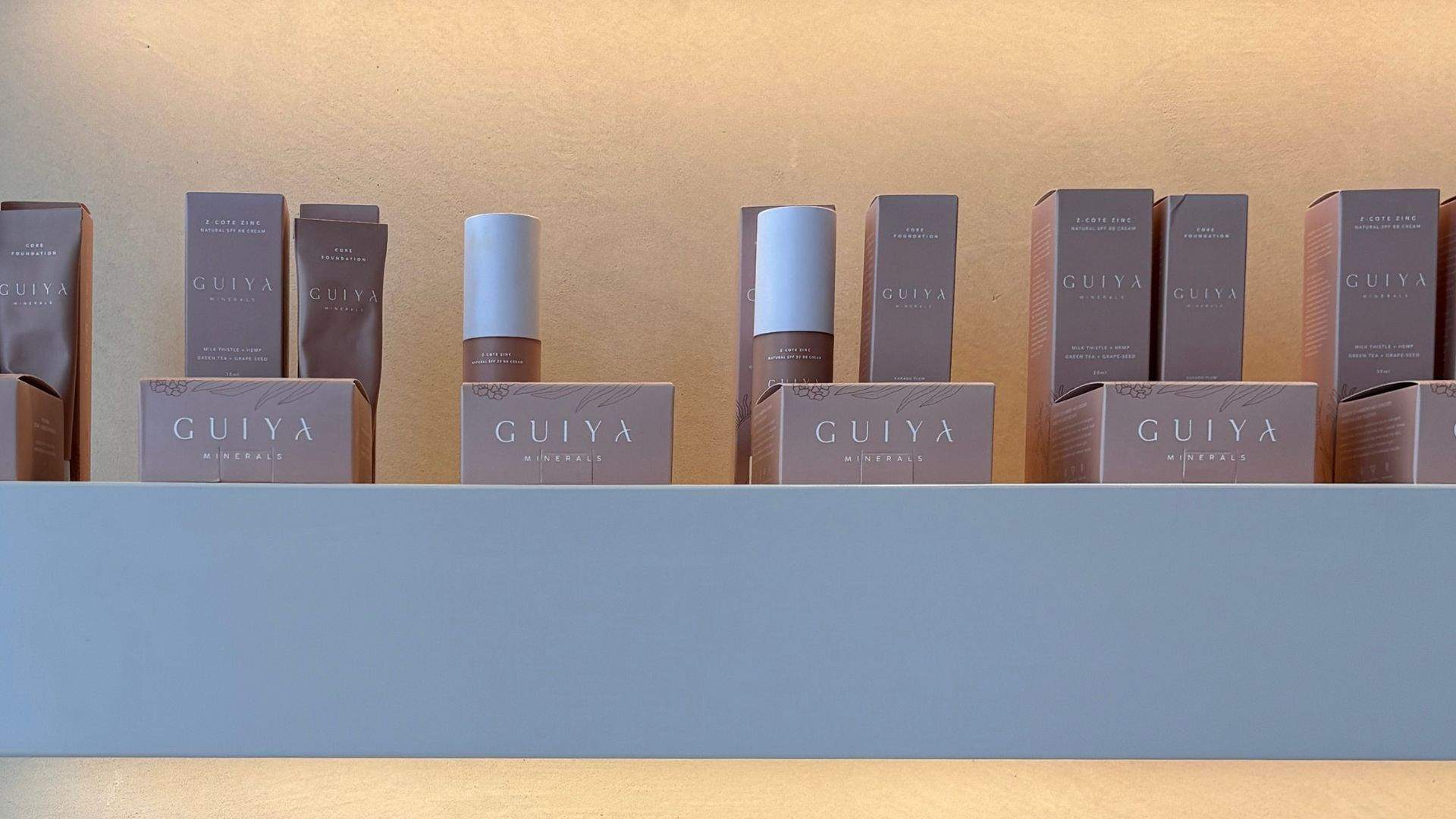
For advanced repair, she highlights PDRN, a DNA fragment that supports tissue regeneration and scar healing. "If the future of skincare is barrier intelligence, these ingredients are where real innovation is happening," she says.
That respect for the skin's complexity is matched by an equally grounded approach to client care. Nearly 90 percent of HÜD's clients, Tømte notes, have inflammatory skin conditions, and stress is often a major trigger. The clinic's warm aesthetic — the chilled cucumber water, the music, the unhurried atmosphere — is deliberate. "We want people to feel calm the moment they walk in," she says. "Even during uncomfortable treatments, they should feel cared for, not judged."
HÜD's success lies not just in its technology but in its restraint. Where most clinics promise transformation, Tømte offers something subtler — sustainability, both biological and emotional. "A good home prescription from a qualified specialist will cost less in the long run," she says. "If budget is tight, get your skincare right first, then book treatments. Not the other way around."
Her advice to new clients is as pragmatic as it is empathetic. "My first wish is that people stop feeling embarrassed to tell the truth," she says. "We can only help if we know what's really going on — everything from supplements to stress levels can affect your skin." Her second wish is simpler still: consistency over chaos. "That 12-step routine your friend swears by might be doing more harm than good. Start with the right skincare, feed your skin the right nutrients, and be patient. Just like seeing a PT once a month won't undo a daily fast-food habit, treatments only work if your home care supports them."
In an age of oversaturation and overexfoliation, HÜD Gry Tømte represents a quiet rebellion against an industry that profits from insecurity — one that proves that knowledge, patience and consistency are the real ingredients to better skin.
For bookings and more information, visit HÜD's website. Looking for another way to lower your cortisol levels? Explore Melbourne's best bathhouses and spas.
Images: supplied