Overview
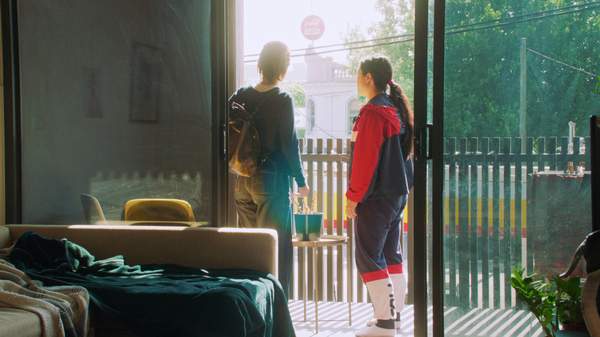
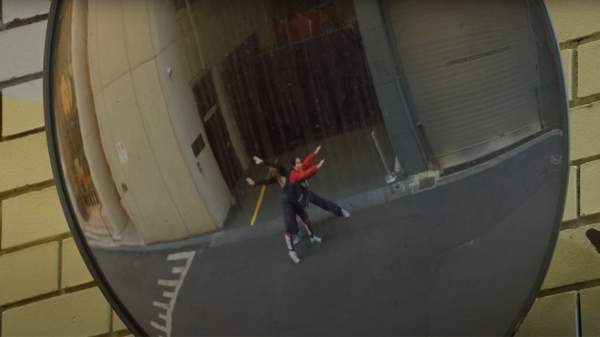
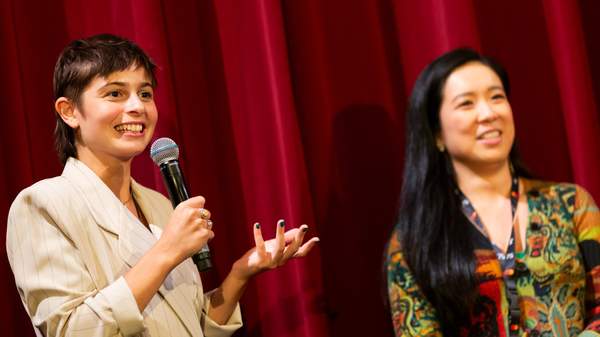
Whether you're a resident or a visitor — a lifelong local, a recent denizen of the city, a regular traveller, first-time tourist or anything in-between — walking around Melbourne, and also spending that time talking to friend, is one of the best ways to soak in the Victorian capital. Even if you're snapping photos and recording video along the way, most people aren't making a film while they amble and chatter, however. Fwends is about Em (Emmanuelle Mattana, Videoland) and Jessie (Melissa Gan) strolling through and around the inner city. Their journey is the movie's filmmaking journey, too. The feature debut of writer/director Sophie Somerville after shorts Peeps and Linda 4 Eva, both of which picked up awards at the Sydney Film Festival, this walk-and-talk comedy completely improvised its dialogue and also shot in order. Discovering a flick as it unfurls is usually just the audience's experience; for Fwends, which premiered at the 2025 Berlin International Film Festival, won the Caligari Film Prize for its innovation and had its Australian debut in the Harbour City on the way to the Melbourne International Film Festival, that applied as much to everyone making it.
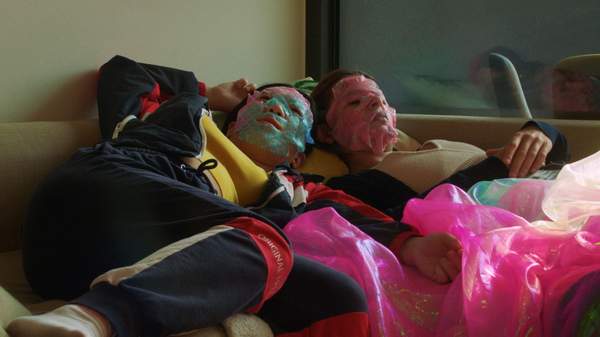
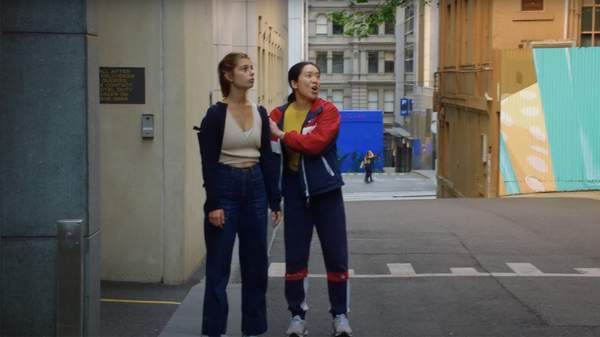
We've all had the kind of day, night and weekend — one at least, likely several — that Em and Jessie navigate in Fwends. The former is a junior lawyer in Sydney with a workaholic's dedication to her career, in no small part because of the effort it took to get there. The latter is an ex-stripper who spent time in Europe before returning to Melbourne, and is fresh from a breakup. They haven't seen each other for years when Jessie meets Em at Southern Cross Station, so catching up is built into their wanderings. Step by step, story by story, they mosey and meander and babble and banter, and it feels to them — and to viewers — that anything can happen. Lingering just as strongly: the sense that nothing, whether getting coffee or dinner, or repeatedly running into strangers, or making plans for the evening, will turn out as either Em and Jessie expects.
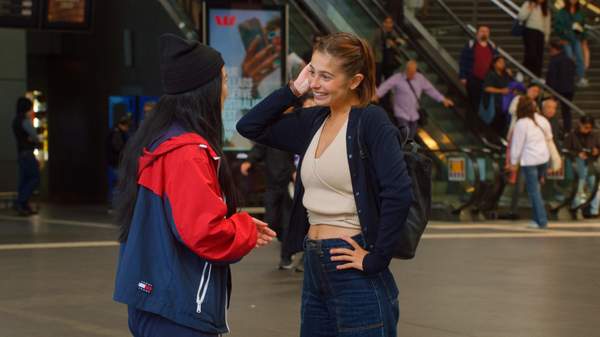

Deep bonding happens on jaunts like these. Truths and secrets are shared. Revelations are gleaned — about each other and about where you're sauntering. Rambling happens in both senses of the word. Sleep is forgone. Only the moment matters. And the main event is the walking and talking and bonding and exploring, regardless of what else is supposed to be on the itinerary. For Em and Jessie, they're digging into how work-life balance, the cost-of-living crisis, climate change, mental health and sexual harassment touches their existence — alongside sifting through their hopes, dreams, yearnings, fears, failings and regrets. Somerville is diving into the ups of downs of friendship as well, and of life, plus the fact that we all simply just want to connect.
Fwends' guiding force is certain that the chronological approach to making the film is a key to why it resonates with audiences as such a relatable slice of life. "Part of why it feels so real is because we shot the film in order. So normally when you shoot a film, all the scenes are out of order and you'll be like 'oh, we do that scene, and then we jump forward and we do that scene'. But for this one, we were just telling the story while we shot it," Somerville notes to Concrete Playground. "So we would go to one place and then be like 'okay, so we shot that part, and we're going to use that take. So we'll go to the next thing and we'll talk about these things'. So it was this very living process."
Berlin International Film Festival
"And it's the kind of luxury that you can have in filmmaking when you have no money at all, or when you have millions and millions of dollars. But because we had no money at all, it meant that we could create that freedom. That's why it feels so relatable and so alive — because we were living it while we were shooting it," she continues.
This is a film about anxiety and life's mess and existential dread, too — but, as Em and Jessie keep trekking, it's also literally about putting one foot in front of the other and keeping on going. "I didn't think of it that way, but that's really cool," Somerville says.
Having the tiniest of budgets and relying on free filming permits meant not contemplating about where and how Fwends would makes its way to audiences when it was finished as well. 2025 from the Berlinale onwards has been "pretty up and down", then, Somerville reflects. "After we got back from Berlin, it was chill for a little while — and then we had Sydney Film Festival, and then it's just been film festivals and then overseas, and now I'm back in Melbourne and more film festival, and then more film festivals after that. So it's just — it's crazy."
Fwends' Melbourne homecoming is a proud moment. "It is such a Melbourne film in the sense that all the crew are emerging young people, and there's such an amazing community of young filmmakers here who help each other out," Somerville shares. "And it's a real success story for that whole culture. So we're just super proud, and hopefully this means that people like me and people who are young and bold and making innovative, exciting films have more belief and money and time invested in them."
We also spoke with Somerville about everything from improvisation as a filmmaking technique, the importance of having the right cast willing to go on this excursion with her, and being unafraid to get dark and reflective, to shooting Melbourne in a realistic but loving way, plus being another example of Australian filmmakers going the DIY route to features and international recognition (see also: kickstarting careers via YouTube, as Talk to Me and Bring Her Back's Danny and Michael Philippou and Together's Michael Shanks did).

On the Fwends Experience So Far for Somerville — From Premiering in Berlin and Winning an Award to the International Embrace of the Film and Bringing It Home to Australian Festivals
"I feel very lucky that it's not just me going through it on my own — it's been everyone who made Fwends with me. So we've been going through it together. We were all together in Berlin when it came out, and it was a very nice time.
And then after that, when we played in the Opera House in Sydney, it was a very insane moment in our lives — because we just never imagined that was possible with our tiny film.
So I feel very glad that our friends made our film and our friends have been supporting us through our film coming out."
On Not Having Expectations for Fwends' Future While Somerville Was Walking Around Melbourne Shooting It
"Because the film was made with so little money, we didn't really have any expectations of 'oh, this will set us up, this will ... '. We didn't really think of it that way.
We were just being like 'here's our chance to experiment and try all these innovative techniques of filmmaking, like with improvisation and not having a script and being guerrilla-style and having that kind of freedom that you can't have when you have people with money riding on the film'.
So the lack of expectation is the reason the film is the way it is — because we didn't set out having this very judgmental kind of feeling of like 'oh, this needs to make or break anything'."
On Whether Somerville Anticipated That Fwends Would Resonate So Strongly with Audiences, Including Around the World
"No, we were just wanting to be heard in whatever way we could be.
When the film played so well in Berlin, we were all very amazed because we were like 'wow, they really connect with these Australian girls'. And then when we thought about it, we were like 'yeah, of course they do, because the problems they're having are the same ones that people in Berlin are having and that people in so many cities feel'.
It's weird now, trying to think back to the headspace we were in when we were making the film, but I think really we were just trying to recreate the depth of the experiences of those two characters, and we were just absorbed in that journey, that process."
On Improvisation as a Filmmaking Technique
"Working with improvisation is a technique that me and some other filmmakers have been talking about for a little while and experimenting with.
And I made a short film called Peeps with five teenage girls in it, which was my graduate film when I was at VCA. I did a bit of improvised filmmaking with those kids, because I knew that it would free them up and make them be quite funny and loose. And I became super interested in it as a way of working just because it just a really surprising, refreshing thing to watch — it feels more alive than a more-scripted thing.
And so then I did another short film with Melissa Gan, which was also improvised. And I learned a lot about how to work with that as a filmmaking style.
Then with Fwends, I was like 'let's just fully take the risk and improvise the whole thing. Let's see what happens'."
Berlin International Film Festival
On How Important It Was to Find the Right Leads to Go on Fwends' Journey with Somerville
"People have asked me 'oh, did you have an elaborate casting process?'. And the answer is actually no. I just messaged two really talented people on Instagram because we didn't have the money or the time to do a big complicated long casting process.
But I was super lucky to connect with Emmanuelle through Melbourne filmmaking adventures — and they are one of the most-talented actors in the world and they're absolutely killing it at the moment.
So it was really, really awesome to work with both Melissa and Emmanuelle, because they're so talented."
On Ensuring That Fleshed Out, Recognisable, Everyday Characters Are at the Movie's Heart
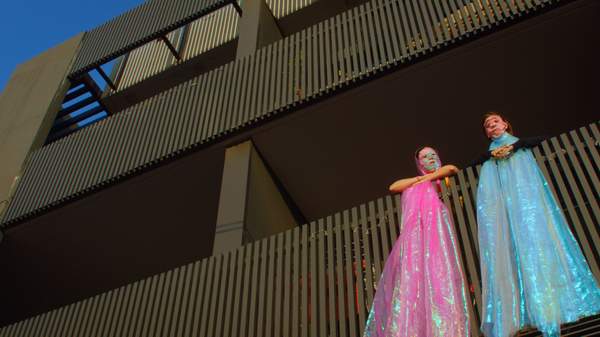
"I really wanted to have that feeling that there's this real depth to these two people, more so than a traditional film. And I also think just authenticity is a real buzzword these days, and it's something that younger audiences really want out of their entertainment. They want to see realness and they want to see honesty.
And I think it's a really exciting way of making a film, because you challenge the actors to make themselves more vulnerable, which makes it a more interesting thing to watch."
On How the Film's Tiny Budget, and Using Free Filming Permits, Helped Shape the End Result
"You kind of have to adjust your mindset, because when you normally make a film, you'll have a script and then you'll be trying to find all the components after the fact, after the script's been written. But with the way we made this one, it was very much being adaptive and responsive to the things we had available, and then being completely willing to be like 'okay, we can't do that scene in this way, so we're going to do this scene using that over there instead'.
So some of the best moments in the film weren't storyboarded or thought of beforehand, they were just decided in the moment. They were just like 'oh look'.
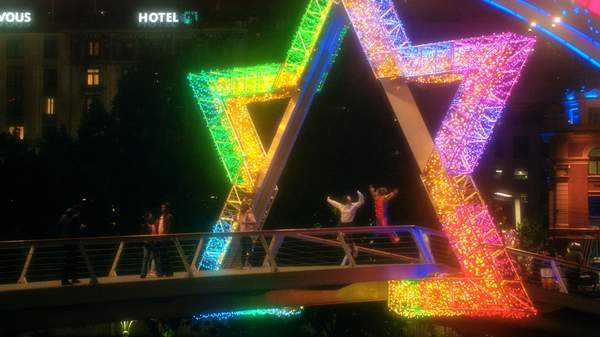
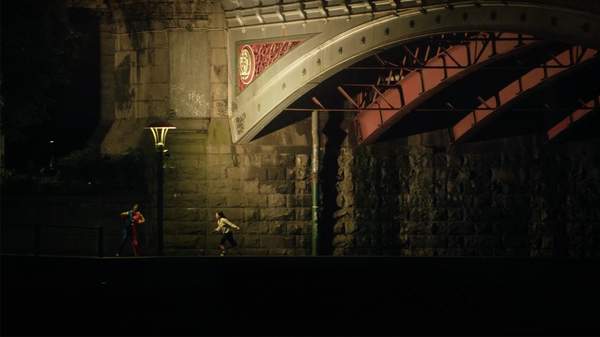
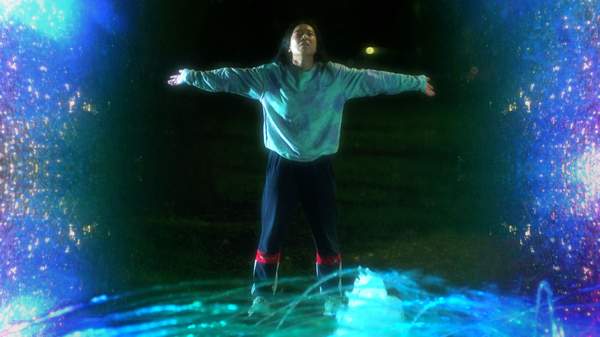
Like that star scene, that was just there the night we were shooting and it looked amazing, so we were like 'okay, we have to go do something with that star'. But we didn't plan that."
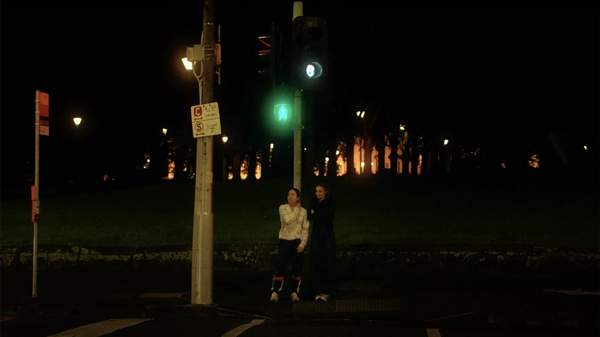
On Giving Voice to the Fact That Everyone Just Wants to Connect — But Doesn't Want to Admit It
"I guess it's just a thing that was on my mind and something I feel about my relationships, where you just constantly want to tell them how much you love them, and it's always awkward and shit, and embarrassing and doesn't come across very well.
I think their friendship is one that is like that. It's messy and they have moments of deep connection, and then they have to go away and we don't know when they'll see each other again.
Love is important."
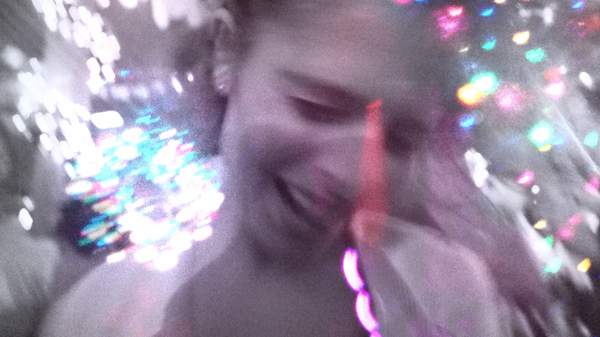
On Fwends Being a Fast-Talking Buddy Comedy That's Also Unafraid to Get Deep, Dark and Existential
"I think all my films gravitate towards this feeling of wanting to address real, dark stuff, but then somehow find a way to package it in a way that's entertaining — as a way of digesting your real experiences and being like 'but then this funny thing happened'.
But I think that's how real life is. I think with Fwends, we were really trying to convey this feeling of realness and authenticity, and so to be like 'yeah, there's all this bullshit, there's bad shit happening, but there's also all this joy and all this life, and they're totally coexisting all at the same time'.
And just to try to live with the complexity of that experience, rather than being sucked into 'everything sucks' or being all delusional and escapist — trying to just live with the complex dimensions of our experiences."
On the Walk-and-Talk Genre and Fwends' Influences
"I know Before Sunrise is the film it's being compared to a lot, but I intentionally didn't watch it before I made this one because I didn't want to feel like I was too absorbed by the Linklater-y thing.
I think when I was making the film, I wasn't thinking about it in terms of 'where does this sit in the constellation of cinema?'. I try not to get too sucked in thinking about that kind of thing, because I think it distracts you from what you're really doing when you're making a film — which is 'how do I show this particular person's journey?'.
I love all kinds of films and Fwends is definitely influenced by my own taste, which is a field of movies from the French New Wave and slacker films and all kinds of cinema, really."
On Whether It's Rewarding Making an Improvised Film — and Taking an Inventive, Problem-Solving Approach to Budget and Resource Constraints
"Yeah, for sure. Because filmmaking is so prohibitive. It can feel so out of reach to people who don't have access to a lot of money. And none of my films were ever made with lots of money because I didn't have any.
My short films were made with really, really small budgets as well, where it was just a problem-solving thing of being like 'how do we make cinema out of nothing at all?'.
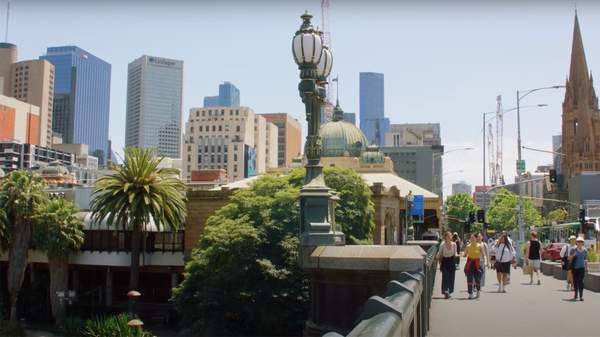
So Fwends was a combination of all those skills, of being like 'how do we make this thing feel bigger than it is using the very limited resources that we have?'.
I guess I'm very lucky because I'm in today's day and age, where it is possible to make a great movie on your laptop. And I really hope that we can — I don't think we should be ashamed of the fact that we're making a film with no money. I think it's a powerful thing and it can be used to your advantage."
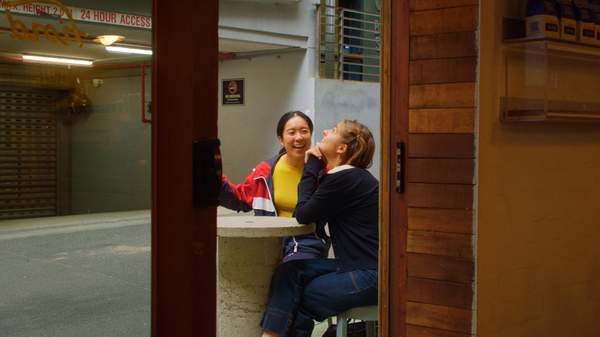
On Somerville's Approach to Showing a Realistic — But Still Affectionate — Version of Melbourne
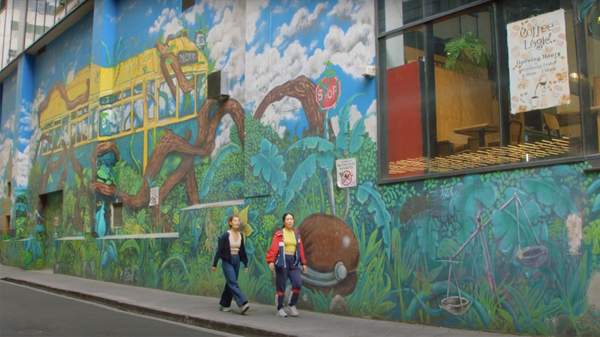
"I didn't want it to look too pretty and too ugly. I wanted to strike a middle ground between 'this is a real place' and also wanted to frame it quite lovingly. Because we were shooting the world out there, just regular people walking around, and so I think when you do that you owe the city a kind of respect.
So I hope that it t does come across that way, because we do love living here. And I think I was just trying to just show it the way it is — and also find a romance and a beauty in the messiness of the real world."
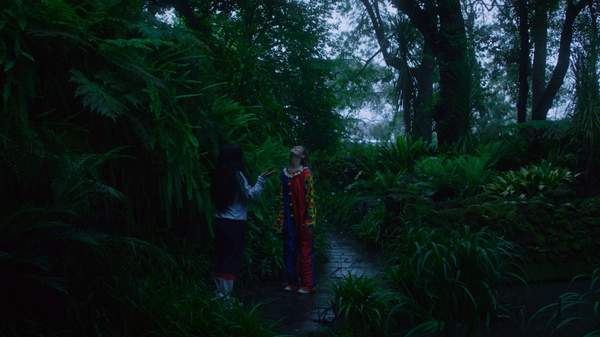
On Fwends' Journey Around Melbourne, Including Both Planned Stops and Surprises Along the Way
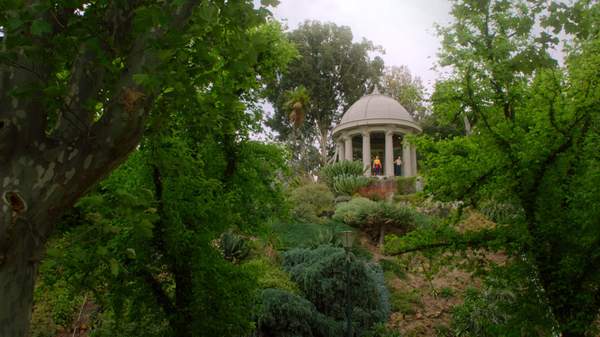
"Some places were very planned. Carter [Looker, an alum of Peeps and Linda 4 Eva] and I, the cinematographer, we did a lot of walking around — and a lot of 'oh, we really want to do a shot there'. The shot in the rainforest where they walk around, that was always, very early on, something that we were going to do, because we were very excited about this idea of doing this long take where they weave around the whole place.
So it's a real mixture. Some of the nicest shots in the film were not planned at all, and then others were totally imagined and planned out and storyboarded.
I mean, that's the beauty of making a film — some of it is totally planned and it doesn't even work, and then some of it is fully improvised in the moment and it's the best thing ever."

On How Shorts Helped Prepare Somervile for Making the Leap to Features
"I wouldn't have been able to make Fwends if I hadn't made those two short films. It's so important that you experiment and try things.
And those two short films, they're very different — really, really different aesthetically. But I think there is something about Fwends that they join in the middle a little bit. Then I hope with my next one, that it'll be even more of a joining together of all these different vibes.
And I'm super lucky to have worked with some really generous, talented people for my short films."

On How Somerville Plans to Build Upon Both Fwends and Her Shorts for Her Next Feature
"Our next thing, we want to make with proper funding and all that stuff. So it's an interesting conversation now to try to bring all these methods that came out of working in the DIY space and bring them into a professionalised environment.
But I think it's going to be so exciting. Because I think we've proved, because of how well Fwends has done, we've got real proof that filmmakers like me who are taking bold experiments deserve to be given trust. So I'm really excited to make the next one."
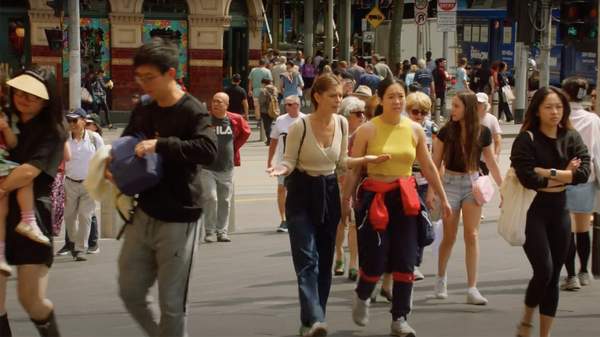
On Being an Example of Australian Filmmakers Taking the DIY Path to Features and International Recognition
"That's very, very cool. I hope that lots more films get made with no money — and I know how hard it is, but I think that it's super important that you have a space to experiment.
And sometimes the only way you can find that space is by doing things yourself and taking those risks."

Fwends screens at the 2025 Melbourne International Film Festival.
MIFF 2025 runs from Thursday, August 7–Sunday, August 24 at a variety of venues around Melbourne; from Friday, August 15–Sunday, August 17 and Friday, August 22–Sunday, August 24 in regional Victoria; and online nationwide from Friday, August 15–Sunday, August 31. For further details, visit the MIFF website.