Women Who Inspire Us: Jaimee Krawitz Is Changing How Australia Talks About Eating Disorders
After experiencing firsthand how difficult it is to talk about eating disorders before they reach crisis point, Jaimee Krawitz founded Hide N Seek to equip communities with the tools to intervene earlier.
At 12 years old, Jaimee Krawitz looked like she was doing just fine. She had a supportive family, close friends and a strong academic record. But beneath the surface, something wasn't right. Like so many young Australians, she was quietly beginning a battle with an eating disorder — one that would reshape her life. When she eventually made it to the other side — through determination, support and perseverance — she knew she was one of the fortunate ones. What stayed with her, though, was a question: why is it so hard to talk about eating disorders before they reach crisis point?
Motivated by lived experience, Jaimee identified what she saw as a critical roadblock: the language surrounding eating disorders. Reflecting on her own journey, she realised she hadn't known how to speak up — and those around her hadn't known how to ask the right questions. At 23, she founded Hide N Seek, a not-for-profit dedicated to changing the way we talk about eating disorders. The foundation is grounded in the belief that these illnesses are often missed not because people don't care, but because they lack the skills to recognise early signs and the tools to navigate difficult conversations.
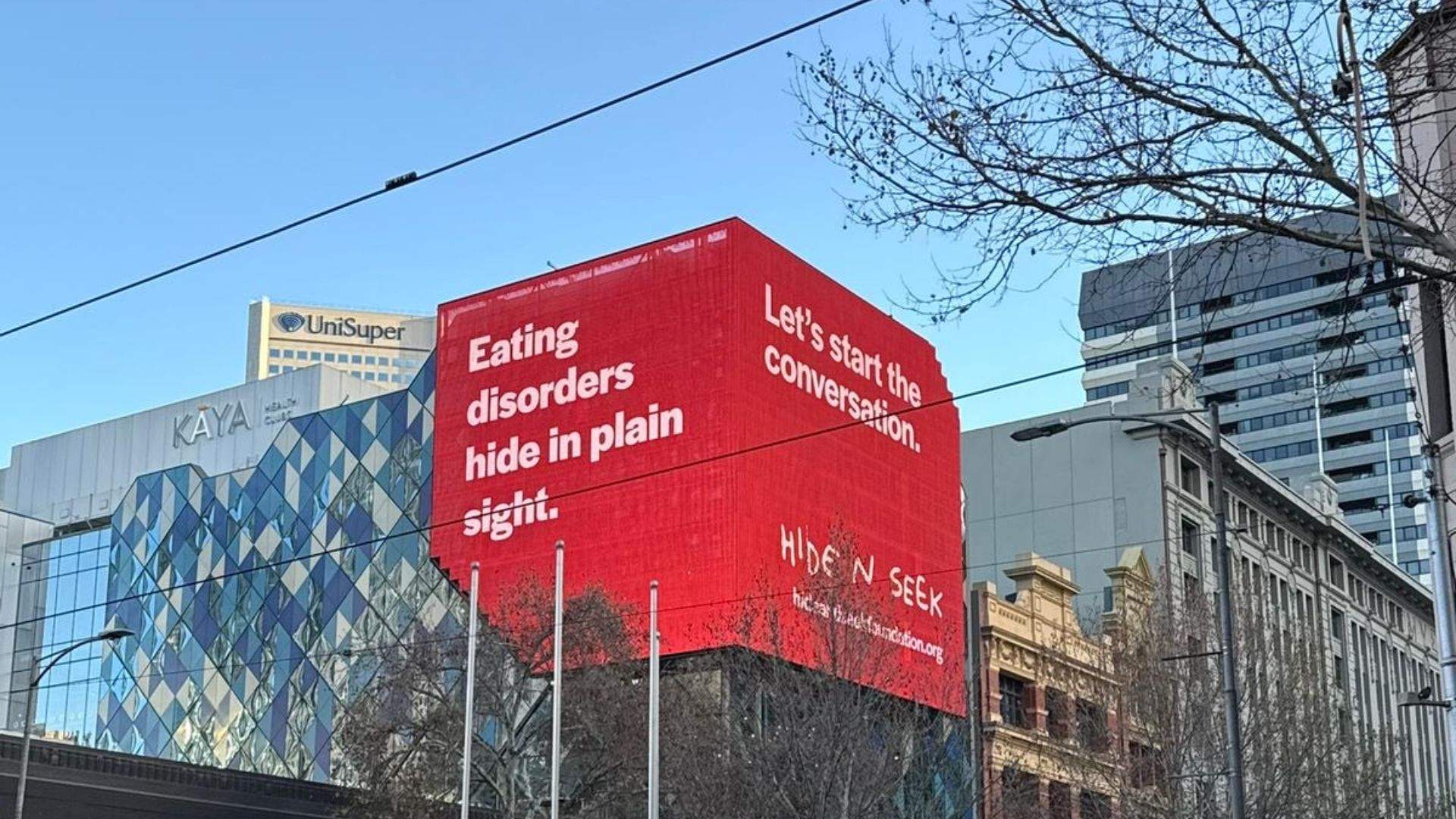
"I wanted to provide others with the help I wish that I had access to — not only equipping individuals with skills to manage an eating disorder, but also recognising the broader impact on families and caregivers. At the time, there were limited resources available, and this gap sparked the idea to focus on empowering caregivers with practical tools, safe language and early-intervention support."
From the ground up, she built Hide N Seek to reshape the language around eating disorders and create a community where caregivers can find the confidence and clarity to support their loved ones. To underpin the work, Jaimee became a registered counsellor and gained experience within a psychology practice, deepening her understanding of empathy-led communication. She assembled a team of mentors and advisors — including doctors, ambassadors and accredited dietitians — to ensure the organisation was grounded in clinical expertise.
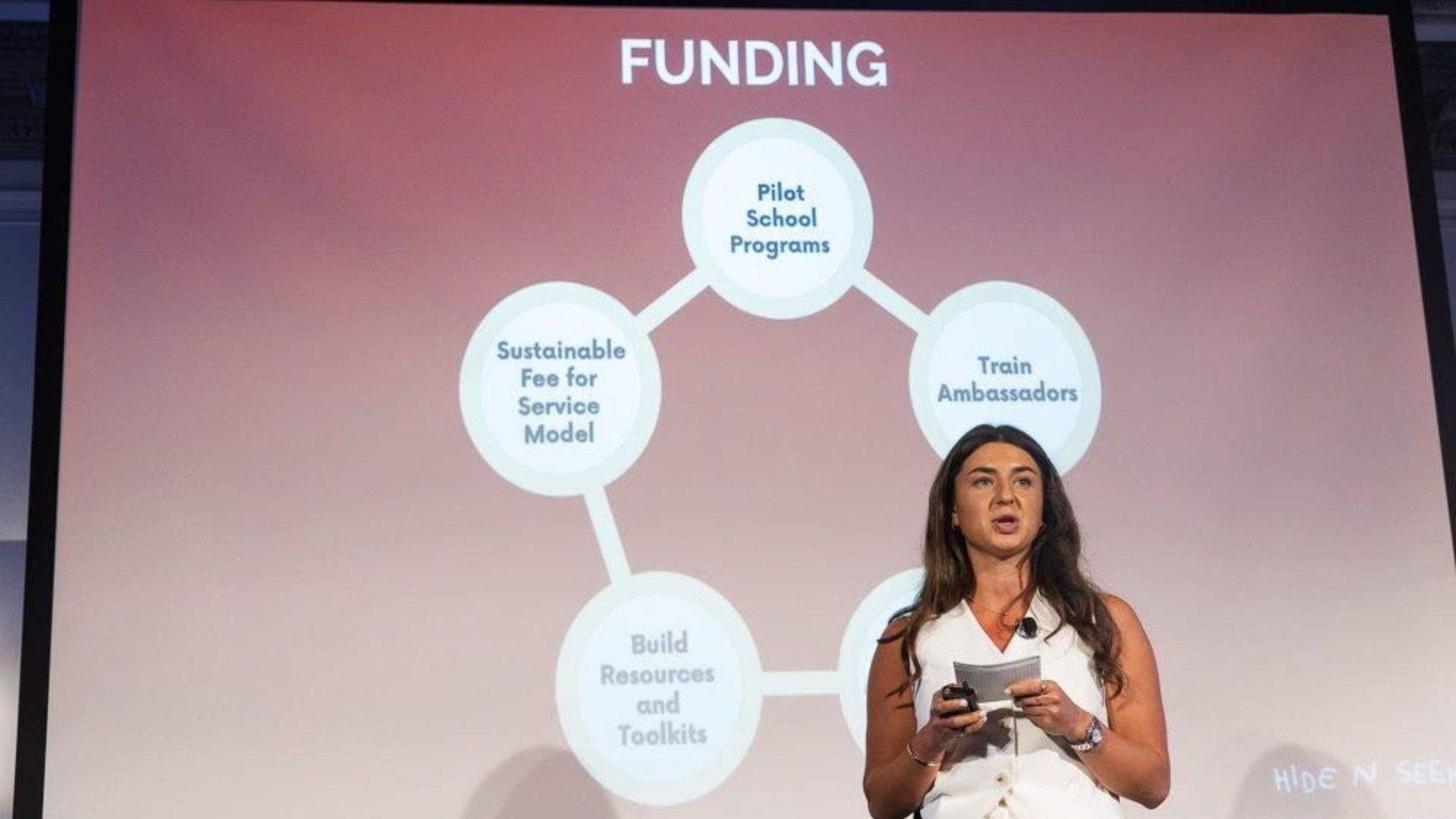
"The organisation exists because there is a clear gap in how eating disorders are understood. They often remain invisible until they become severe, partly because everyday language has normalised harmful beliefs around food, bodies and self-worth. Behaviours and comments that are culturally accepted are not always harmless, particularly for someone already struggling. Hide N Seek focuses on that early window, long before crisis, where awareness and language can genuinely change outcomes," says Jaimee.
The scale of the issue is sobering. Current Australian data estimates that more than one million people are living with an eating disorder in any given year — around 4 to 4.5 per cent of the population — with Australia reporting one of the highest prevalence rates globally. Only one in three seek help. For Jaimee, that statistic underscores the urgency of early recognition and clearer pathways to support.
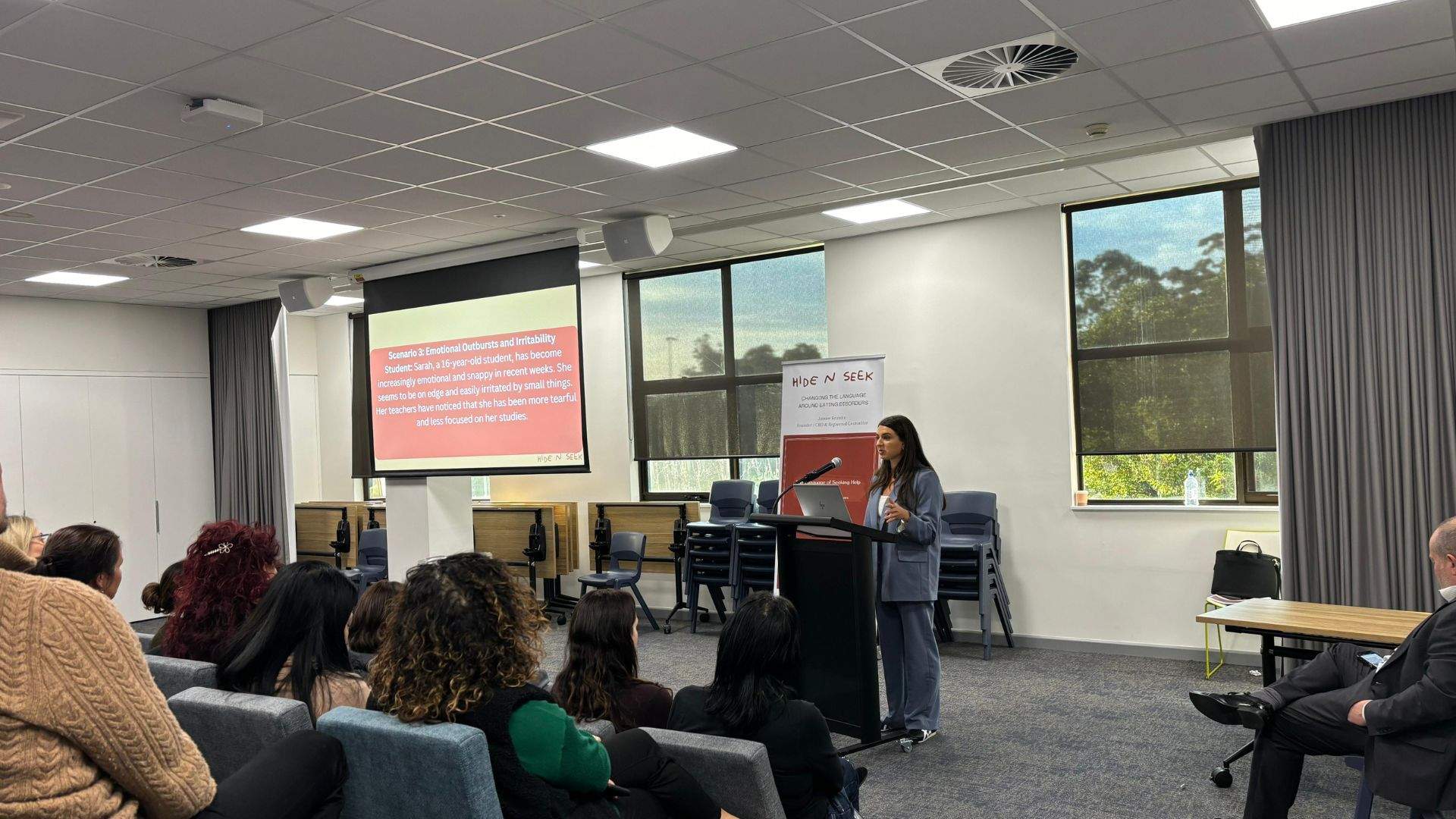
While Hide N Seek does not provide clinical treatment, it focuses on prevention and early intervention — implementing safeguards and tools designed to stop illnesses escalating into crisis. As Jaimee explains, "Eating disorders are the fastest growing mental health condition in Australia, yet many people delay seeking help for years due to shame, the normalisation of behaviours and the fear that they are not sick enough."
Education quickly became a priority. Believing educators can be powerful advocates, she developed the Hide N Seek Eating Disorder Recovery Program. The program, already implemented by more than 1000 educators, caregivers and students, includes sessions on early recognition and safe language, alongside broader whole-school prevention and culture change. The aim is to give educators the confidence to recognise early warning signs and respond without judgment. "Early intervention significantly reduces severity, duration of illness, hospitalisation and long-term system burden. This is why Hide N Seek focuses so strongly on early recognition through language, long before a crisis."
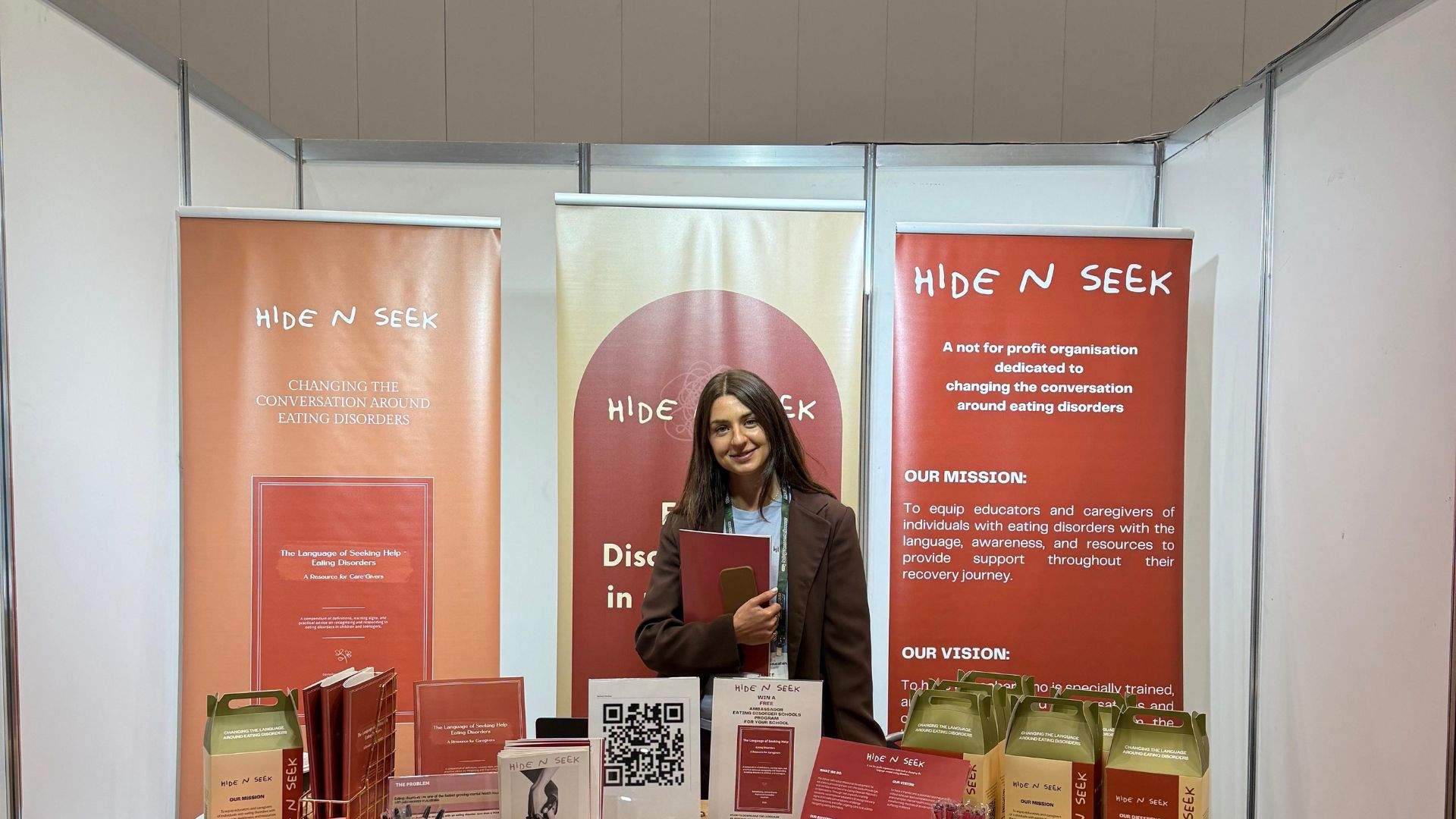
Jaimee is also conscious of the intersection between Hide N Seek's work and Australia's food, drink and hospitality culture. In cities where dining out is central to social life — amplified by social media trends and viral food culture — language around indulgence, balance and self-control carries weight. The line between celebrating food and moralising it can be thin, particularly for someone already vulnerable.
"Food is social, which makes language around it incredibly influential. Social settings are where language is most powerful. They are where norms are reinforced and where people can feel either included or quietly isolated. None of this is usually said with harmful intent, but what we say around food can either include someone or isolate them. Your friend might be laughing at the table, but in fact be deeply unwell. This conversation is not about blame. It is about awareness."
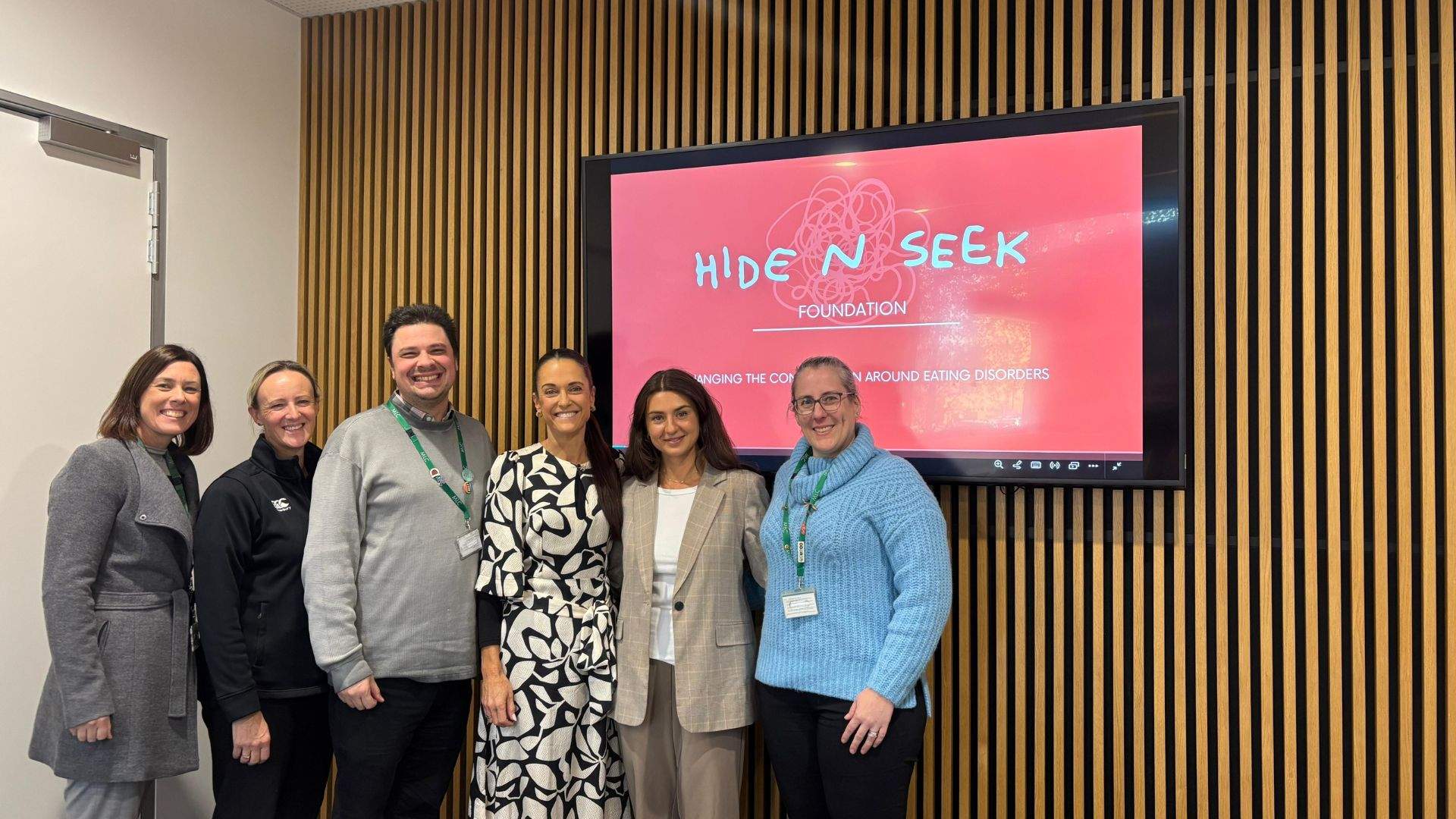
In 2024, Jaimee secured a $40,000 grant to expand the organisation's reach. As demand has grown, the program has extended into sporting clubs and workplace settings — reflecting how widely eating disorders impact individuals, families and communities.
As International Women's Day approaches, Jaimee reflects on the gendered reality of body scrutiny and food moralisation. "This work feels especially important to me as a woman building this organisation from lived experience. International Women's Day is not only about celebrating women, but about examining the spaces women occupy and whether they feel safe, visible and supported within them. Women are disproportionately impacted by body scrutiny, food moralisation, pressure to justify pleasure and normalised self-deprecating language, particularly in social settings. My intention with Hide N Seek is not to restrict enjoyment or tell people how to eat. It is to protect the joy that comes from social connection without shame attached to it."
View this post on Instagram
Jaimee's long-term goal is to create a world where access to help feels clear, connected and human. "My hope is to take Hide N Seek into every community where people live, learn, work and gather — schools, sporting clubs, workplaces, businesses and government spaces. I want educators, colleagues, and employers to feel confident responding to this widespread issue. I want the government to help shape systems that catch people earlier, not later. My dream is for Hide N Seek to become part of everyday culture, so no one feels unseen, unsupported or alone during this journey."
Join the Hide N Seek community now to receive the Language of Seeking Help e-book, which is tailored to empower caregivers with practical advice and knowledge of how best to support loved ones.
If you or someone you know is struggling with an eating disorder, help is available via Lifeline, Kids Helpline and The Butterfly Foundation.
Images: Supplied.


- 13 Best Book Releases to Read This October
- Honda ZR-V-Approved: The Honda Team's Favourite Spots
- Year-Round Pools and Swimming Spots for a Good Dip in Any Season
- X-Factor Venues Made to Impress Even the Most Jaded Out-of-Towners
- Wine Bars with Excellent By-the-Glass Lists to Slowly Work Through
- Views and Lookouts That Handsomely Reward the Effort of the Climb