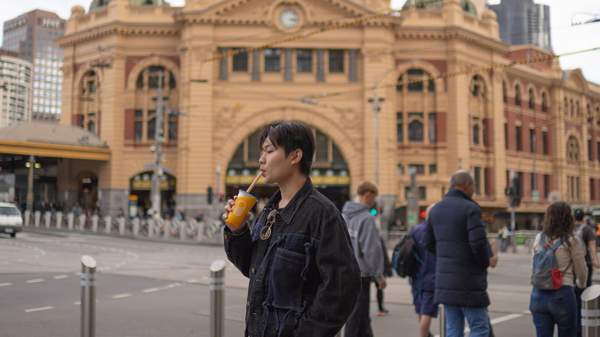
Overview
It was the year 2002 when Bubble Cup first opened in Melbourne, popularising the milky, boba-studded beverages we've come to know as "bubble tea".
First created in Taiwan about twenty years prior, boba or bubble tea — typically made from sweet milk tea and chewy tapioca pearls — wasn't quite an overnight sensation. But these days, it's a household term that Australians of all ages and demographics are at least familiar with, if not regularly consuming.
Today, bubble tea has become a catch-all term for sweet, takeaway tea-based drinks. But according to Orlando Sanpo, brand manager and head of marketing for Molly Tea Australia — one of China's biggest tea exports — this was just the first ripple in a much larger wave. The landscape has come a long way since the days of Bubble Cup, with new variations, many from mainland China, redefining what takeaway tea can be.
"They get offended if you call them bubble tea," Sanpo says of the latest entrants, many of which don't offer tapioca pearls at all. "Now it's real tea, and they actually tell you, 'this tea is from this district in China.' There's an education about it."


First Wave – Taiwanese Milk Tea
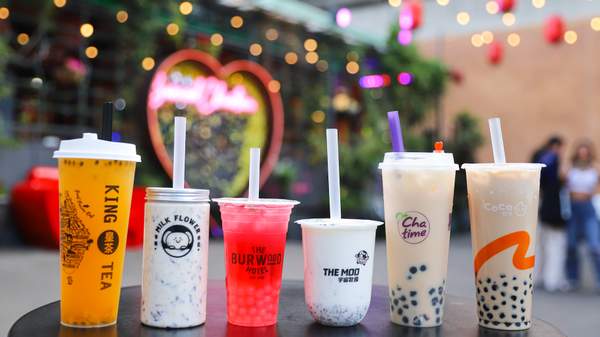
Bubble Cup sparked the trend, but Taiwanese brands like Gong Cha, Chatime and Sharetea — which arrived about a decade later — cemented it. Built on powders, syrups and pre-made pearls, these chains offer affordability and customisation with a strong suburban presence and menus suited to almost anyone.
For a time, this was the epitome of takeaway tea. But younger, health-conscious consumers and the churn of food trends have left these brands feeling more nostalgic than aspirational — still popular, but entry-level compared to what's come since.
Second Wave – Fruit Tea
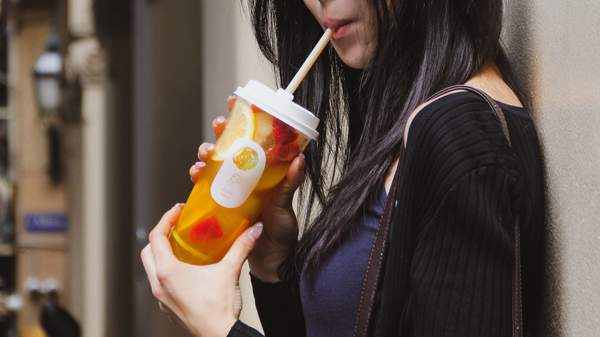
The next shift came with fruit tea: colourful, layered drinks combining fresh fruit or juice and tea bases. Machi machi and YiFang, also from Taiwan, alongside local chain Top Tea, popularised the style with combinations like grapefruit green tea slush with cream cheese foam or jasmine tea with fresh lychee, lychee jelly and strawberries.
Taning, a Chinese brand that landed here in 2023, took it a step further with its "hand-punched" lemon tea made from hand-picked green tea and vigorously, somewhat suggestively muddled green lemon sourced from the Mornington Peninsula.
Taning's Australian director Hui Chong says the spectacle of the tea-making process — amplified by social media — is as important as the drink itself, signalling a new wave of tea where experience counts as much as flavour.
Third Wave – Premium Loose-Leaf Tea
The current wave of newcomers pushes tea back towards its origins — slow, intentional and centred on quality. Drinks are built on premium loose-leaf teas and far more pared back than their predecessors.
But the real hook is the brand appeal. Luxury fashion-inspired packaging, loyalty programs and limited-edition merch have turned takeaway tea into a collector's item. It's not unusual for fans to queue for a seasonal cup design or branded keychain more than for the drink itself.
"A lot of people want luxury, but they cannot afford luxury every day," Sanpo says. "So this is part of the luxury they can afford. It's not just the tea; it's the lifestyle."
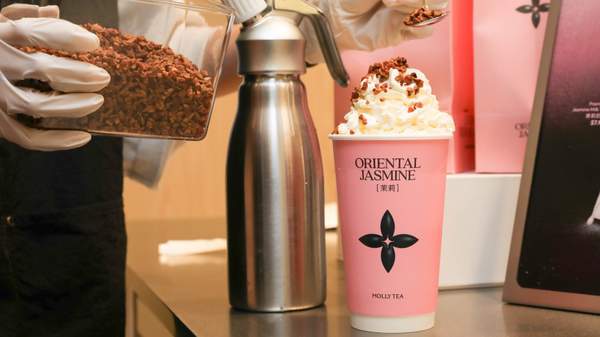
Molly Tea has perfected this balance, combining strong branding with a streamlined product range. Its menu spans jasmine, oolong, champaca and osmanthus teas, with toppings like pistachio cream, matcha cream or the crowd favourite, jasmine whipped cream with salted pecan. These tall towers of cream have become a hallmark of third-wave tea, also seen at spots like Charlie's Tea, Tea White and Tingtea.
The cream toppings add a playful spin, but the focus on quality reconnects tea with its roots in ancient China, where it was a ceremonial drink meant to be savoured. Some shops even recommend a narrow straw so the tea hits the palate more gradually, highlighting its fragrance and slowing down the experience.
"The whole thing about tea in Chinese culture is sitting down, enjoying the tea, not rushing," Sanpo says. "It's telling you to take a step back, enjoy life, just like the old tea culture."
Of course, this isn't pure tradition. These teas are still takeaway-friendly and designed to shine on social media. But compared with earlier waves, they put provenance and intention back at the centre.
Images: supplied
Want to try some for yourself? Check out some of our favourite spots.