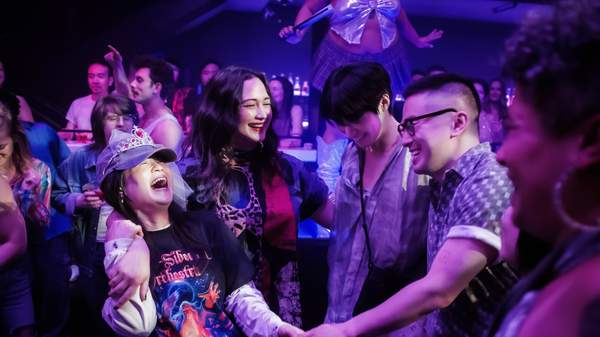
Overview
We all have movies that change us, open up the world to us and/or make us feel seen. Most folks, whether they're filmmakers or not, don't then bring new versions of those pictures to cinemas — no matter how much they might want to. Andrew Ahn's feature filmography started with his 2016 debut Spa Night, then delivered 2019's Driveways and 2022's Fire Island, and now adds a fresh take on a Berlin-winning, Oscar-nominated 90s box-office hit that marked just the second film from Brokeback Mountain and Life of Pi Best Director Academy Award-winner Ang Lee. 1993's The Wedding Banquet was also the first gay movie, first gay Asian movie and first gay Asian American movie that Ahn ever saw.
The man behind the camera on 2025's The Wedding Banquet was eight when he watched the original picture courtesy of a video-store rental. When he started on the path to becoming a filmmaker himself, and even once he had a movie or two under his belt — long before this project came his way, then — crafting his own version didn't ever occur to him. "Oh, it never crossed my mind — like, not a direct remake," Ahn tells Concrete Playground about the fourth feature on his resume, which premiered at the 2025 Sundance Film Festival. "I think I thought about similar themes and ideas, but to make something that would be called The Wedding Banquet, I could never have imagined. It really took the producers approaching me. Our producers had been chatting before I was in the picture, and I think their scheming led to this."
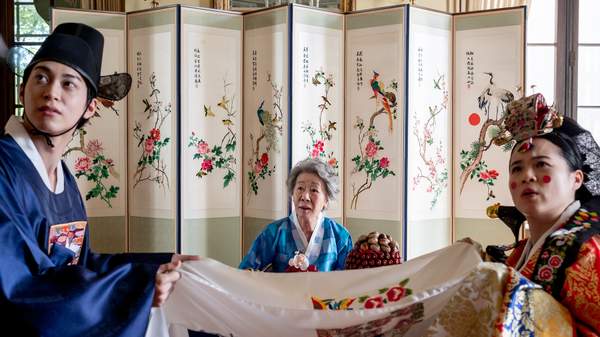

Three decades back, The Wedding Banquet focused on Manhattan-based gay Taiwanese man Gao Wai-Tung (Winston Chao, Daughter's Daughter), whose parents (Crouching Tiger, Hidden Dragon's Sihung Lung and Qing yu nian's Ah-Lei Gua) had no idea that he wasn't straight, let alone any awareness of his long-term American partner Simon (Mitchell Lichtenstein, Modern Houses), and so had matchmaking their son with a future bride and stressing their yearning for grandchildren firmly on their minds. As co-written by Lee with James Schamus (The King's Daughter) and Neil Peng (The Candidate), the film makes Wai-Tung's mother and father's dreams come true via Wei-Wei (May Chin, now a Taiwanese politician), a Chinese artist who'll be deported if she doesn't get a green card. Of course the eponymous event takes place, with Mr and Mrs Gao in attendance and in the dark that it's all a sham. Lee's movie is a comedy, romantic and screwball alike, and equally a deeply considered and thoughtful relationship drama, plus a compassionate family drama.
A reimagining rather than a remake, 2025's The Wedding Banquet falls into all of the above categories still, so it's a rom-com, it's screwball, and it's both a relationship and family drama as well; however, Ahn and Schamus — who returned to co-write another The Wedding Banquet, after initially collaborating with Ahn by producing Driveways — have their eyes firmly on the queer experience right now. As a result, while there's winks and nods to the original, and clear affection for it evident across its frames, this take on the film is guided by how the initial flick's setup would truly play out two decades into the 21st century as it explores queer identity, cultural heritage and community.
Accordingly, audiences meet two Seattle-based queer couples: Angela (Kelly Marie Tran, Control Freak) and Lee (Lily Gladstone, Fancy Dance), plus Min (Han Gi-Chan, Dare to Love Me) and Chris (Bowen Yang, Saturday Night Live). Among their families, Angela's mother (Joan Chen, Dìdi) wins awards for her allyship, while Min's grandmother (Youn Yuh-Jung, Pachinko) is the head of a Korea-originated multinational company that he has always been expected to take over. Having children is Angela and Lee's priority, but after two unsuccessful rounds of IVF they're now out of money for a third. While cash isn't a problem for Min, the fact that his student visa will soon expire is — and so is Chris' commitment-phobic reluctance to marry him. The plan, then, is for Angela and Min to wed, helping the latter stay in the US in exchange for financial assistance for Lee's next IVF treatment.
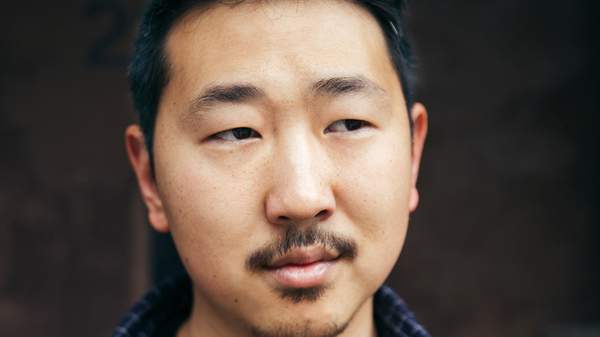
Janice Chung
One of the key points that's pushed further to the fore this time around is parenthood — and what it means to have a family as a queer couple. Ahn's fondness for the families that we choose, as seen across his filmography so far, remains a pivotal element of The Wedding Banquet, but so does the specific intention and effort needed to pass on your genes when getting pregnant can't just happen accidentally as it can for some in heterosexual relationships. That thread, and even a specific line of dialogue about it, comes from Ahn's own life. As such, he's not just lending his loving eyes to a new iteration of a movie that's personally important to him — alongside his Korean American background, he's lending parts of his existence.
Ahn's on-screen ensemble is clearly phenomenal, including Gladstone in a more-comedic role than audiences are accustomed to seeing the Killers of the Flower Moon Oscar-nominee and Golden Globe-winner in, the director giving his Fire Island star Yang a more-dramatic arc, The Last Jedi and The Rise of Skywalker's Tran in a film with a smart and funny Star Wars line, Han getting his feature film and English-language debut, Chen after she was almost cast in the original and Youn's first American film since winning her Oscar for Minari. Also exceptional: how lived-in that they make their characters' connections feel. We spoke to Ahn about that, drawing from his own reality to highlight queer parenthood, how his past work — episodes of Bridgerton among them — led him here, fleshing out the narrative for 2025, tonal balance, found families and more.


On Ahn's Past Work, Including Spa Night, Driveways, Fire Island and Directing Episodes of Bridgerton, Leading Him to a New Version of The Wedding Banquet
"I think everything that I do feels informed by what I worked on in the past. Even Bridgerton I feel like snuck its way into The Wedding Banquet a little bit — the romanticism of it.
I think The Wedding Banquet definitely required me to pull from so many different parts of my life, as a person and as a filmmaker, to make this film the best that I could."
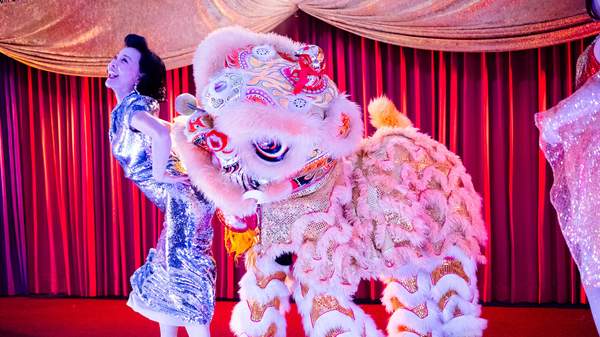
On Working Out Where to Take a New Iteration of The Wedding Banquet, Including a Broader Range of Characters, Exploring the Korean American Experience, and Examining Allyship, Found Families and Having Children
"It was kind of step by step. When I rewatched the film in preparation for my conversation with the producers, there were first instincts that were just inspired by how beautiful the original film is. I wondered 'what if the bride in the original film, Wei-Wei, what if she also were queer and had a lesbian partner?'. And then, thinking about how gay people can get married now, I wondered 'now that we can, should we?'. Like 'do we really want to?'
And then in the original film, there's an accidental pregnancy — 'but what if we see a couple trying to get pregnant, and planning to have a baby?'.
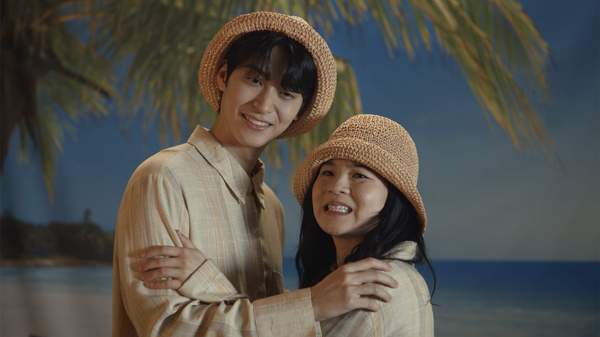
And so these were very helpful foundation-building elements to the story, and I worked with James Schamus to really breathe life into these characters, and engineer the many different themes and questions that we were wrestling with. It was a very difficult process.
We worked very hard, and we were writing the film for more than five years, and so it was a real labour of love.
I'm so thankful for James, and just the years of experience that he had — not just as a screenwriter, but also as a producer and a director. You could not ask for a more-experienced collaborator."
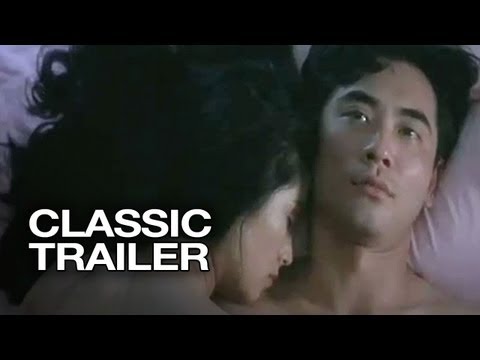
On First Watching Ang Lee's Film at the Age of Eight, Then Reimagining It Three Decades Later
"I think it definitely helped that I had a really special relationship with the original film, but that wouldn't be enough. I think what helped me understand 'this is my film that I can make' was the phase of adulthood that I found myself in when I was working on this — and really thinking about getting married and having children.
I had a lot of conversations with my boyfriend about marriage and kids, and I realised that I felt very strongly about how important and how beautiful queer family-building is — and that really was my guiding light through this whole process in making this movie."
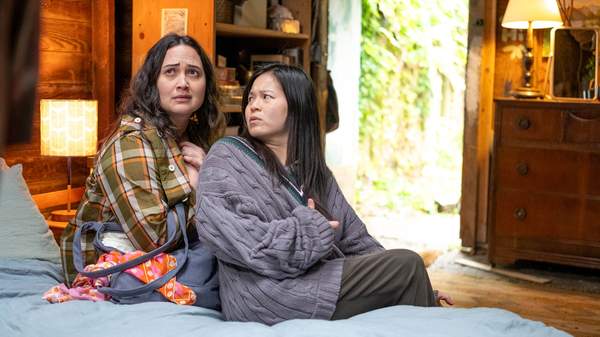
On Drawing One of the Film's Key Exchanges About the Intention Needed for Queer Couples to Start a Family From Ahn's Own Life
"I wanted to talk about how that's a reality of queer people's existences — and one of the challenges of building family that's not even defined by homophobia. It's not like there's a straight person keeping us away from building family. It's our own hesitations.
There's definitely, of course, a lot of financial and legal reasons that complicate queer family-building, but we kind of have to get out of our own way first, and just believe that this is something that we can do and that we want.
And so I really wanted to talk about this particular nuance that I don't think has been explored in an in-depth way on the big screen. So it was an insight that I had only come to in having a conversation with my boyfriend, and I took that line of 'if it happens, it happens' straight out of my boyfriend's mouth onto the page."
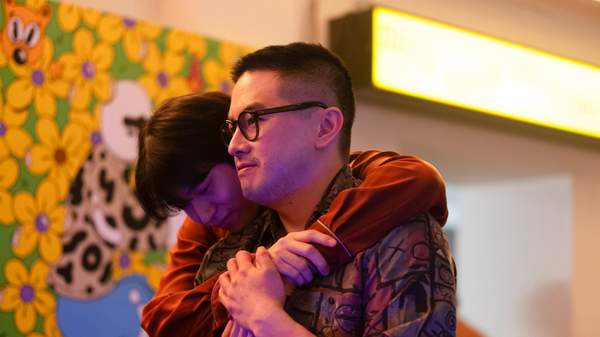
On Helping Ensure That Years and Even Decades of Intimacy Shone Through Among the FIlm's Characters Thanks to Its Stacked Cast
"It's such an incredible ensemble, and I had so much fun working with them. They were all so game. They wanted to be vulnerable, and they showed so much generosity with each other and with me.
I think of directing as creating an environment where these actors can feel safe and inspired, and so there was a lot of conversation that I had with each of the actors before they came to set — and then as much as we could find rehearsal time, we built in rehearsal time in our schedule so that we could fast-track an intimacy.
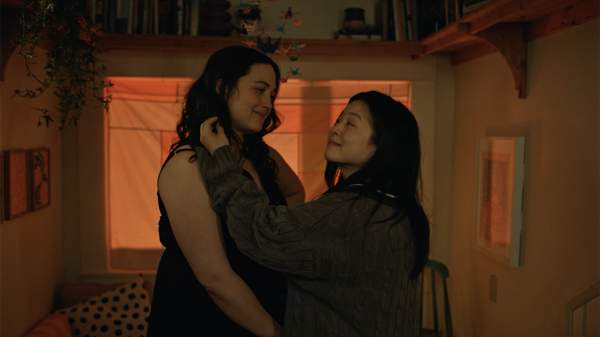
I think these actors are all incredible, incredible actors, and so it's not hard to get a great performance out of them — and so for me, it's just about creating an energy and a space for them to really be present and work with each other well.
And for me, I think a lot of that had to do with just putting together a cast and crew that really valued the story and what we were doing, and understood the meaningfulness of our work."
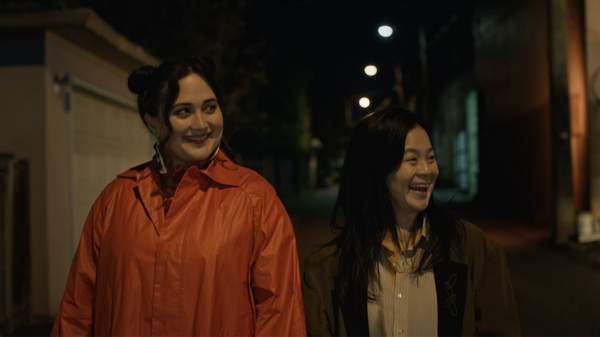
On Casting Gladstone in a More-Comic Role Than Audiences Are Used to Seeing Her in, and Also Giving Yang a More-Dramatic Arc
"I love being able to work with actors in a mode that they might not be used to or have been cast in before. I think it's fun to broaden the horizon for an audience of who these actors are and can be.
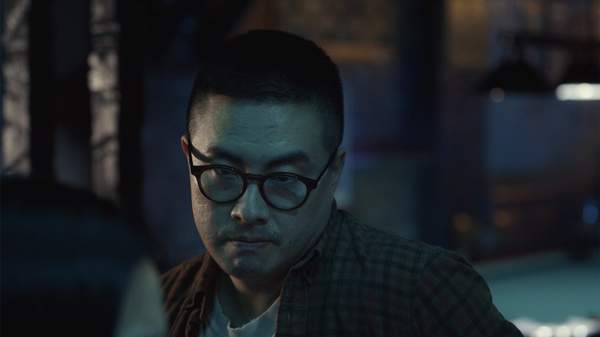
Bowen, I loved working with him on Fire Island, and I just see so much charisma and vulnerability that I think is undeniable.
And then when Lily, she's so serious in some of her work, but I saw her in some interviews and she's such a goofball. And I love that. And so I had a lot of belief that she could have fun in this role.
And the way both of those actors — the way that all of our actors — traverse the balance of comedy and drama, it was very inspiring to watch."
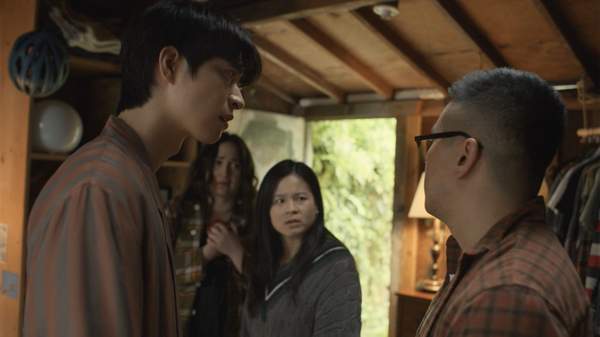
On Making a Romantic Comedy and a Screwball Comedy That's Also a Family Drama, and Is Deeply Considered and Thoughtful About Queer Identity, Cultural Heritage and Community
"I think tone is one of the hardest things about filmmaking, and it's because it takes the entire process to figure out. You are writing it, you are directing it, you are editing it, and it's not until the very end, even with score and sound design and colour correction, where you've figured out the tone of your movie. And so it's really about trusting the artistic process and giving yourself options.
In the script, we had alt lines for other jokes, for different zingers. On set, we would do certain takes more dramatically, do certain takes more comedically. In the edit, we're constantly adjusting.
And so we had to just trust in the process — and in some ways trust in my own intuition and just energy. My editor Geraud Brisson [Lessons in Chemistry] mentioned that the film, it kind of feels like hanging out with me. And I used that as a creative north star in helping find that really complicated but fun balance of comedy and drama."
Fire Island, photo by Jeong Park. Courtesy of Searchlight Pictures. © 2022 20th Century Studios All Rights Reserved
On Why the Idea of Found Family Interests Ahn and Keeps Popping Up Through His Work
"I think found family, it is something worth celebrating, and I think we can take it for granted sometimes.
Our friends, our relationships — there's so much there, there's so much that needs to happen, there's so much work you need to put in in creating your chosen family. And so when you can create your own chosen family, it's really worth celebrating.
And so it's something that I feel like whether you're queer or not, it's a very meaningful reminder"

The Wedding Banquet opened in Australian cinemas on Thursday, May 8, 2025.
The Wedding Banquet images: Luka Cyprian, Bleecker Street.