Overview
Talk about a big hook: while shark movies and serial-killer films comprise their own unnerving genres, each swimming with ample must-see viewing, Dangerous Animals combines the pair into an entertaining thriller mashup. The Gold Coast-made and -set picture boasts marine predators aplenty. The real monster in the hierarchy, however, lives on land and is very much human. Indeed, in a post-Jaws world — June 2025 marks five decades since Steven Spielberg's blockbuster sparked many a permanent case of galeophobia — one of The Loved Ones and The Devil's Candy filmmaker Sean Byrne's aims with his third feature, and first in ten years, is to do justice to rather than villainise the feared toothy fish.
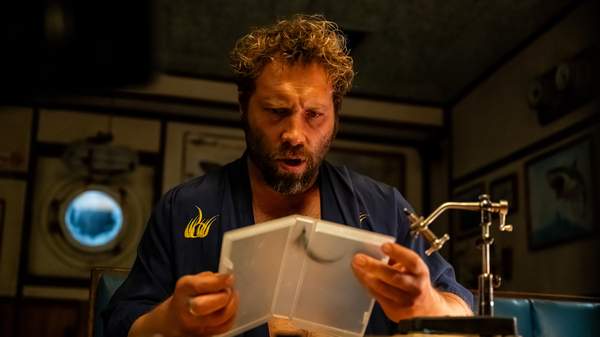
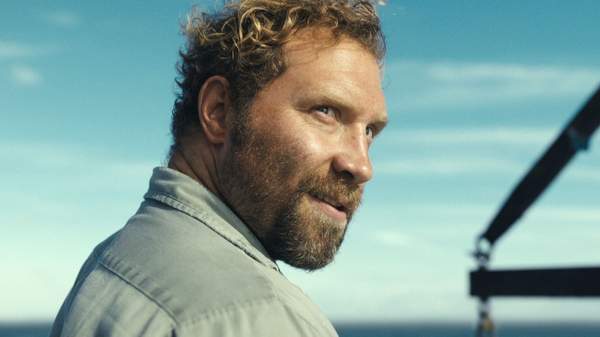
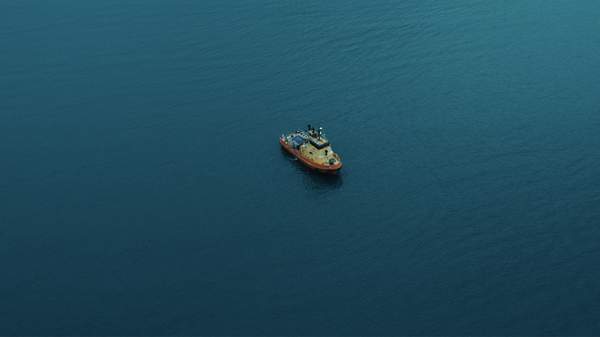
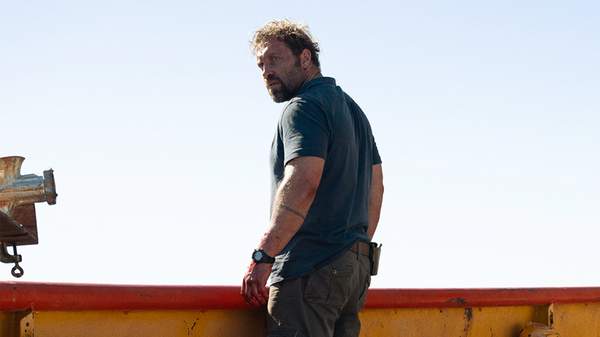
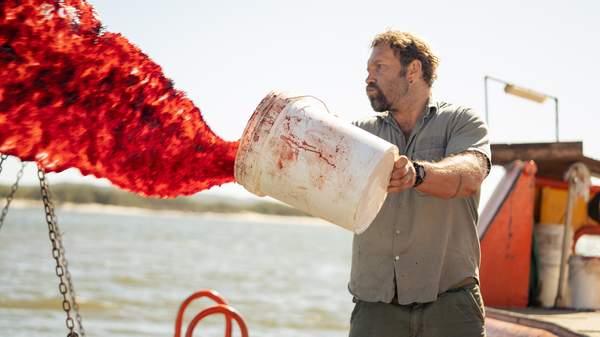
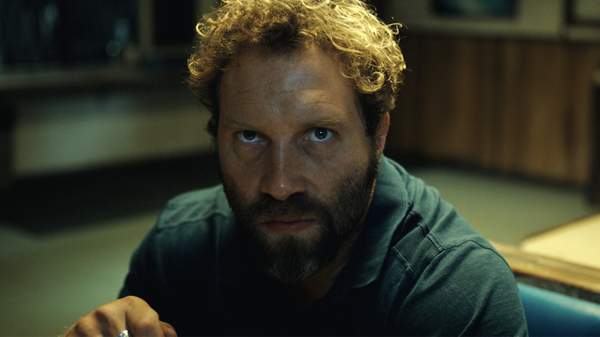
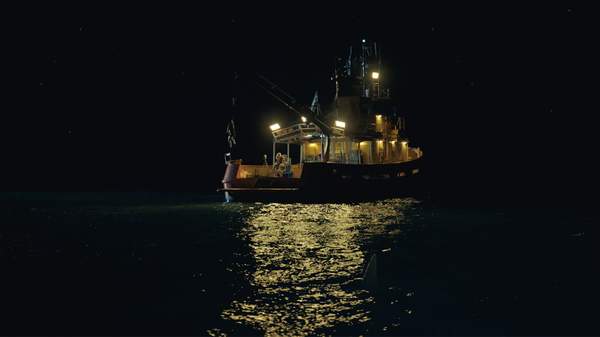
His new antagonist: Tucker, Dangerous Animals' shark-obsessed murderer. The victim of an attack in his younger days, he's now in the cage-diving business. As viewers learn early on, tourists frequenting his boat to swim with the ocean's creatures get more than they bargained for. From Jai Courtney (American Primeval) in the part, the movie receives exactly what it needs, though: an unforgettably terrifying performance, bringing to life a figure that's charismatic from the outset, while equally unsettling from the get-go as well. Tucker charms his customers, but there's aways an edge to him. He's menacing and obsessive, and also believable and fleshed out — and a little vulnerable, too.

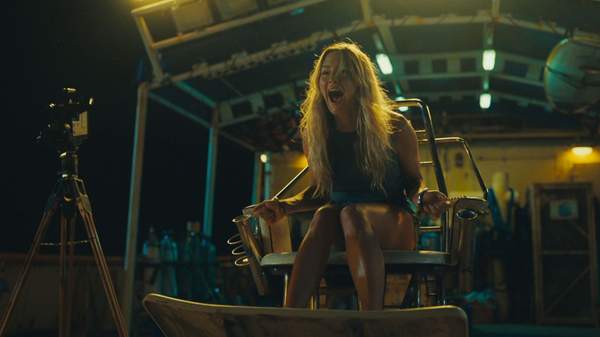
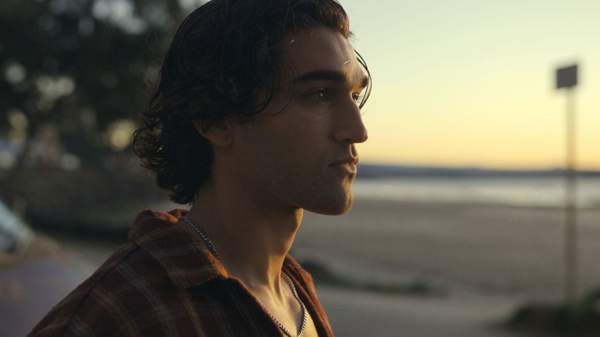
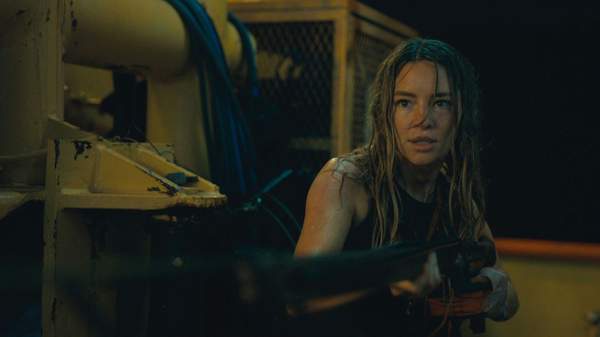
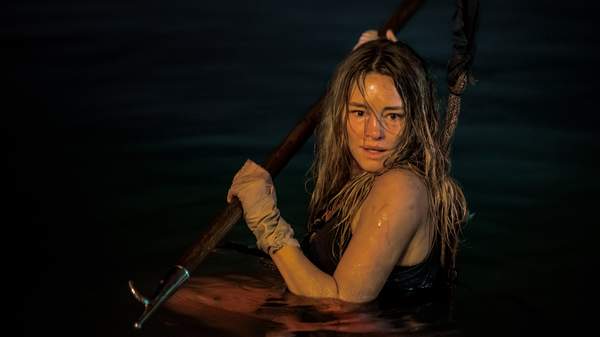
When Dangerous Animals introduces American-in-Australia Zephyr (Hassie Harrison, Yellowstone), everyone watching knows that the dedicated surfer is bound to paddle into Tucker's orbit, even as the solo traveller is making a rare connection with local real-estate agent Moses (Josh Heuston, Heartbreak High). The screenplay by first-timer Nick Lepard obliges — but this isn't the type of film where foreseeing such a turn of events kills the tension and suspense. Although Tucker abducts Zephyr to indulge his sadistic shark-feeding ritual, she knows the true threat and isn't afraid to sink her own teeth into fighting back.
An engaging big-screen experience results, as does a movie that earned a rare endorsement on its way to cinemas Down Under. At 2025's Cannes Film Festival, Dangerous Animals became the first shark film to ever grace the event's program. "To be the first shark film to be officially selected for Cannes was kind of mindblowing," Byrne tells Concrete Playground. "And to be in Directors' Fortnight as well, which traditionally is a very film-literate sidebar — but it was a great vote of confidence that, I think, the selection committee saw this as a subversion of the traditional shark film."
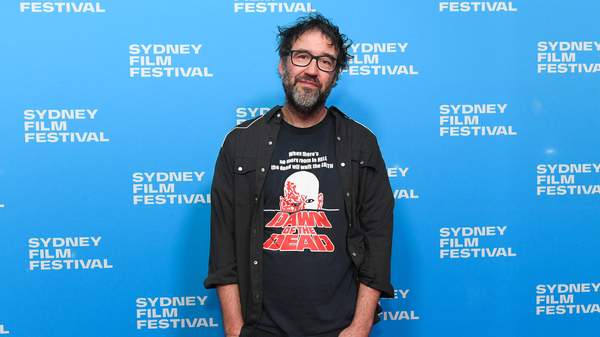
Belinda Rolland © 2025.
"What I loved the most was, the Cannes experience, that was the first time that an audience had seen the finished film," Byrne continues. "So I was terrified. And because it is a very film-literate audience over there, I was thinking 'how are they going to perceive this?'. But they absolutely understood that this is just a fun, unhinged night at the movies, and really responded to that, and laughed and gasped. And we got a ten-minute standing ovation. So, yeah, it was incredibly gratifying. But to begin with I was petrified, because it was the first time that an audience had seen the finished film and on quite a big stage, so the stakes felt high."
Playing Tucker, the stakes are raised for Courtney, too. It's a complex role — and one that Byrne has likened to Kathy Bates in Misery, Jack Nicholson in The Shining and Christian Bale in American Psycho. The Australian actor, making his second homegrown flick in succession after the immensely different, family-friendly Runt, hasn't shied away from playing the bad guy across his career so far. Here, the IRL true-crime fan was excited about the many layers to his Dangerous Animals part, as he adds to an on-screen resume that began two decades back in short Boys Grammar — and has spanned the likes of Jack Reacher, A Good Day to Die Hard, Terminator Genisys, the Divergent movies and two Suicide Squad entries in Hollywood.

Is a willingness to get dark behind the range of antagonistic parts to Courtney's name? "I think it's just something that's started to happen. You find things that are in your wheelhouse," he advises. "And I'm not afraid of that or necessarily in search of it, either. It's just that, I guess, things that tend to be the stuff that come my way, that meet up with where my interests are, happen to be that way. But the goal for me is just to try and shake it up whenever I can. And fortunately films like Runt come along and I get to play a loving father of two, and completely depart from this world whatsoever. As long as I pepper a few of those in here and there, hopefully I'm not pigeonholed too heavily."
A premise like Dangerous Animals' is a rarity, no matter how common both shark and serial-killer fare are separately. Yes, for both Byrne and Courtney, that's a drawcard. Respecting the film's sea-dwelling creatures, complete with using real animal footage as much as possible, was another key element for its director. So was the fact that this is as much a movie about the importance of love, and the power that someone believing in you can give. For its star, Tucker's dance sequence to Steve Wright's 'Evie' wasn't a motivating factor — but it's one of the film's most-memorable moments in a flick filled with them. We also chatted with Byrne and Courtney about the above, unpacking Australian larrikins and ideas around Aussie masculinity, how starring in a shark picture leaves you feeling about them and their career journeys as well, among other subjects.

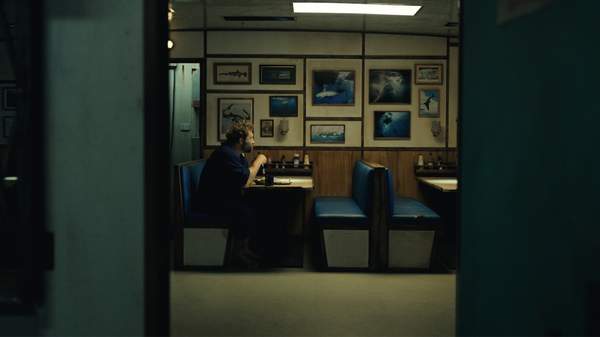
On the First Reaction When a Horror Movie About a Shark-Obsessed Serial Killer Stalking the Gold Coast — and About Man Being the Real Monster, Too — Comes Your Way
Jai: "I think I read something that felt really original. It was a great story and had really strong characters at the centre of it, which is a sort of immediate way in — because I think with something like this, you get a loose logline before you're about to crack it open and it's like 'okay, it could go either way'.
But Nick Lepard, who wrote our script, had really done a lot of work in giving these characters maybe a bit more depth than you'd come to expect from a film of this nature. And I think that's what made it a bit of a unique experience, and certainly made it appealing to me to want to get involved with.
I think Tucker, he's so much more than the shark-obsessed serial killer. And we don't get to explore tons of his backstory, but there is a lot of colour to him, and I think seeing a chance to bring all that to life with this undertone of his morally ambiguous intentions was what really attracted me to it.
And then, just speaking to Sean and kind of getting on common ground as far as what we thought was necessary for him. I didn't want this character to feel like a broad-strokes-washed-over-evil-intentions guy. If that was the movie he was trying to make, I don't think I would have been there. But I think we both wanted him to feel like there was a sort of deception there.
And it had to feel fun. I wanted it to feel familiar and uniquely Australian, but also the genre speaks to the world, and we play into all the classic tropes that you might expect.
It also does a good job of not taking yourself too seriously. There's a few winks to the audience in this film, where I think if you get onboard — it's why it's so important to see it with an audience, too, I really believe, because there's an energy to it that when you're sharing the space with others who are on the same ride, it becomes really palpable."
Sean: "I tend to write my own scripts, much to the frustration of my agent and manager. And then this crossed my desk, and immediately I was just struck by the high-concept of serial killer film meets shark film. And I thought 'why hasn't anyone done this?', especially when you had the fact that this is the first shark film where the sharks aren't really the antagonist — man is.
So I felt like Nick Lepard had actually kind of cracked the code. Because, Jaws masterpiece though it is, has done such a disservice to the sharks, where the same formula has been followed over and over again to the point that sharks are beginning to become an endangered species — because it was so culturally seismic.
And so to get this shark film that was unlike any other shark film, but also had a conservation angle — but on top of that, was just a wild, fun night at the movies — it was just irresistible.'
On Exploring Tucker's Layers — Including His Childhood Shark Attack and the Physical Scars It Left, Plus the Trauma, Vulnerability and Emotional Damage — All While He Remains a Shark-Obsessed Serial Killer
Jai: "You just have to find the quiet moments and allow them to be there without trying to sell it too hard. The camera is an interesting thing, because it sees things that are saved for the audience for later. It's not like on set — you can't kind of like sell it all for the people that are in the room.
And I think Tucker, there's an opportunity with him sometimes — where even just his response to certain comments made by Zephyr, or questions he's asked by Heather [Ella Newton, Girl at the Window] in the start of the film, there's things that can be quite potent. I just wanted to find opportunities with him to reveal a bit of his tenderness.
And I think that's the thing that, for me, was like the gateway into figuring out who he was — is like this wound. We don't get to hear a lot about it in the film. There's one moment that sort of touches on it. But there's a bit of arrested development. He's stuck in a place where he was abandoned as a kid, and this somewhat otherworldly encounter touched him, and that's by way of being victim of an attack. But it almost made him feel chosen in a way.
And so a lot of that is really just figuring out the path for yourself, where you're going 'alright, here's this bloke who's got this gaping wound in him, this trauma, but feels this immense connection to the animal'. All of that is just sort of say that he's found a crusade for himself that feels real. And it might be misguided, but he has a true belief in it.
And so there you have the building blocks of who he might be, and then the fun part is stacking on the colourful bits on top. Even just costume and makeup and finding his look, finding the shape of his body — I mean, that for me, it's all part of building who Tucker is, and I wanted him to feel like a real salty, kind of born-out-of-the-marina, familiar Australian figure."
On Courtney's Chance to Turn in a Horror Performance That Aims to Be as Memorable as Kathy Bates in Misery and Jack Nicholson in The Shining
Jai: "Oh no, I didn't really approach it with any of that in mind. I just approached it with a goal to just do something that was dynamic and big, and get to explore all the corners of this human, really.
And I think Sean and I were onboard with each other, and there was an immediate trust. And I think he let me — I was kind of like 'you help me with the temperature, and the volume of where we're pulling moments up and down and in and out, and I'll take care of sending it as hard as I think it needs to'.
I mean, the material is there. But that stuff is a blueprint, it's not prescriptive. Every actor is going to come and do that with their own instincts.
I saw a version of it in my head when I first read it, and I felt like that was the version that would work for the film. And fortunately I was given the chance to do it, and I'm proud with what we came up with."
Sean: "I think any kind of horror film that stands the test of time, the antagonist haunts the audience's nightmares well after they've left the cinema. But I wanted it to be a great time as well.
You think of Hannibal Lecter, and as disturbing as he is, he's fun. And Kathy Bates in particular, that character is just so wonderfully goofy, and she doesn't swear. And there's a certain theatricality to antagonists in commercial horror films, and we really wanted to aim for that and keep it fun.
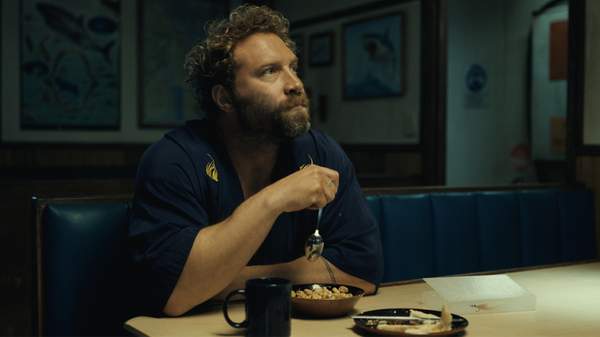
But also, the great thing about Jai is he's such a great character actor. I knew he would bring emotional nuance to the character where it was required — and capture the broken child inside the man, and point to this shark attack that he'd had as a child and capture all that. But also, he was also Captain Boomerang. He's got this wild charisma that reminded me of kind of Eric Bana in Chopper. And that's how the spider catches the fly, with charisma and letting tourists, they let their guard down.
And finally, he's physically really intimidating and genuine — he could kill you with one punch. So I just thought combining the charisma with the kind of character actor that he is and the physical intimidation would be a really electric mix, to the point that I thought that this was the role that he was born to play. And so I was so thankful that we got him."
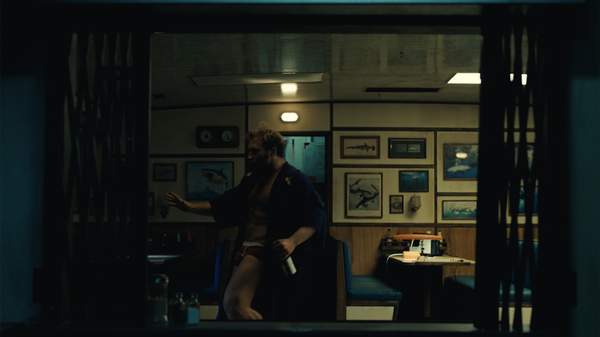
On What Goes Into a Good Dance Sequence for Courtney, Given That He's in Quite the Unforgettable One in Dangerous Animals
Jai: "God, I couldn't even tell you. I was daunted by that whole thing, because I'm by no means a dancer and it should never be filmed when I'm dancing.
But we knew what it wanted to feel like. It's completely unchoreographed and just improvised.
Tucker's kind of having this wrap party for his own little film that he's made, and it's a private look at this person in a light that we don't really get to spend a lot of time with them outside of that moment in the film.
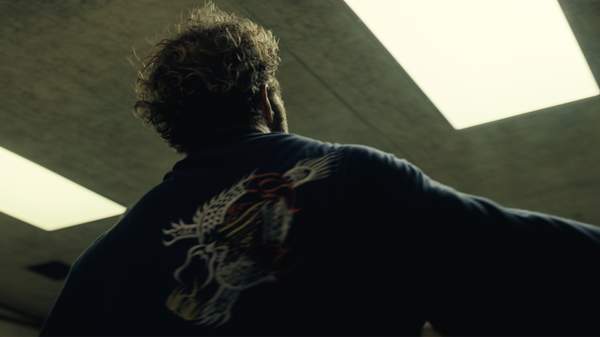
That needle drop of 'Evie' was written into the script. I know that song very well. I could already see it and hear and feel it. And I didn't plan any of it. I just had to go in, get in that mindset that he's in that night and just go for it.
I think we did it in two takes. We did one, and we just ran it again from a different angle, and it was just me and Shelly [Farthing-Dawe, In Vitro], our cinematographer, with a handheld camera in the space. It was kind of like 'what we get is what we get'. And fortunately it turned out to be something really fun."
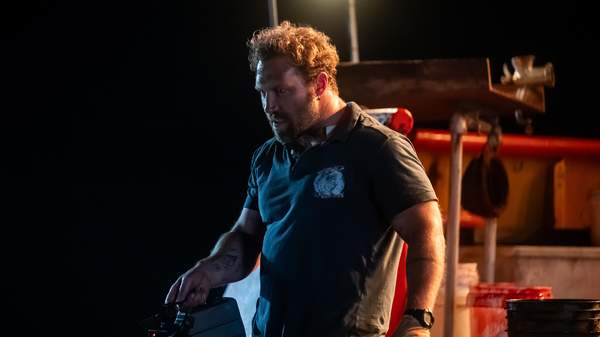
On Unpacking Australian Larrikins and Ideas Around Aussie Masculinity Through Tucker
Sean: "I think we've all had that kind of tour-guide experience. It doesn't necessarily need to be a shark-diving boat, but we're always in the hands of the tour guide. So yeah, there was that, but also he's almost an outdated representation of the kind of masculinity or toxic masculinity that I think the film works as a Trojan horse to say that this is something that needs to be kind of defeated.
And Moses, in many ways, is the anti-Tucker.
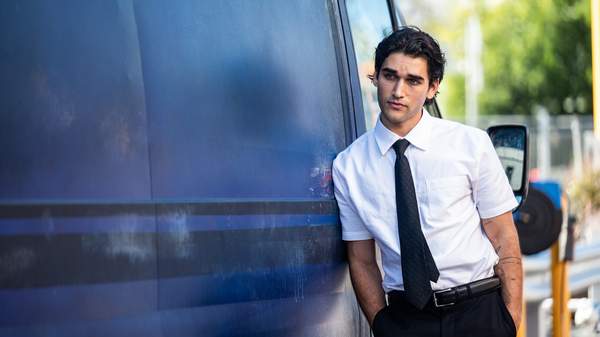
But I think it's inherent in the title. It's called Dangerous Animals. He is definitely more dangerous than what's in the water.
But ultimately, I think Zephyr is the most-dangerous animal — and the allegory is she needs to defeat this. This is something that needs to be defeated. His philosophy needs to be destroyed."
On Whether Being a True-Crime Fan Helps When You're Portraying a Serial Killer
Jai: "I think so. I think I leant on my curiosity for people that are capable of things that we can't quite understand. And yeah, I do just have a fascination with it. It's one of those things where I think it's easy to judge that and feel like for some reason you're excusing these behaviours, or we're glorifying it or whatever — but I don't know, I've just always been fascinated by how close we might get to people that are capable of these crazy things without even knowing it. And that's interesting to me.
You know, you don't really know who you're sitting next to on the bus or in a pub or whatever, and for some reason that doesn't terrify me — it intrigues me. There's not a story you could tell me that's too dark. I'm kind of here for it in a strange way.
So yeah, I guess it led me in a little bit. But even with Tucker, the experience of shooting it, there were moments that hit a limit. There's a night we had where Ella Newton, who plays Heather, is strung up in the harness over the open water in the middle of the night, screaming for her life — and everyone was squirming, honestly, after a few minutes. We were all kind of, the whole crew, myself included, we're just like 'can we make this stop? This is too much'.
And it's a testament to her performance and what she was giving it. But yeah, when your disbelief is suspended somewhat, even as a performer, you know you're stepping into wild territory."
On the Importance of This Being Not Just a Killer Shark Flick and a Serial-Killer Movie, But Also a Survivalist Thriller, Plus a Film About Love and Finding Someone Who Helps You Believe in Yourself
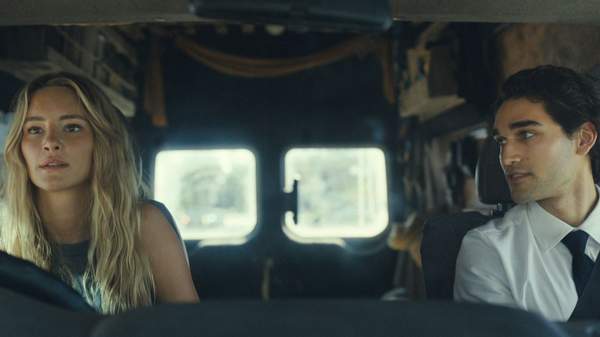
Sean: "Oh absolutely. I'm so glad you said that, because I think that's almost a central theme — that it's about love, or the difference that love can make in a life, and what an absence of love can do to a person as well. And I think it's this collision course between these two broken people that have had to learn to survive on their own, which actually sharks do. They're birthed in the shallows, and then they're left on their own to survive.
So in many ways, Zephyr and Tucker know each other better than anyone else on the planet does — in a similar way to De Niro and Pacino doing Heat. Even though they're opposites and they're trying to kill each other, it's like, well, they actually understand each other as well.
I think ultimately, Zephyr uses the ocean to ease her loneliness, and she uses it in a way that's about solace — whereas Tucker takes advantage of the ocean, ultimately, and it comes back to bite him."
On How Making a Film About Sharks — Even When They're Not the Villain of the Movie — Leaves You Feeling About Them Afterwards
Jai: "Sharks are scary. Let's get one thing straight, right: I don't think anyone's not scared of sharks. Maybe there are people out there that have a completely different affinity with them, but I don't need to come closer than anyone should.
I would love to cage dive with whites. I've been in a tank, in a cage with some sharks, but they weren't exactly maneaters, so, you know, I wasn't in fear of my life.
But there's something so incredible and mythical about giant beasts that could consume humans, that I think it's rare — that's sort of a rare quality on this earth. You think of big cats and maybe bears, and other than that, there's things that will kind of poison you.
But sharks are a very unique threat, and they live in a world that we really can't get too close to or understand. So I think there's always going to be this quality to that that keeps people in fear.
But they're beautiful. And nature is beautiful. And it's just the nature things. There's a line in the movie about it not being the shark's fault, Tucker references his own, being the victim of his own attack, and yeah, that is the case — it isn't."
On How Crucial It Was to Use Real Shark Footage, Including to Dispel the Notion That They're Villainous Creatures
Sean: "I feel like shark films recently have become so reliant on CGI, just because you can have lots of them in the shot. And they tend to be super sleek and more like a video game.
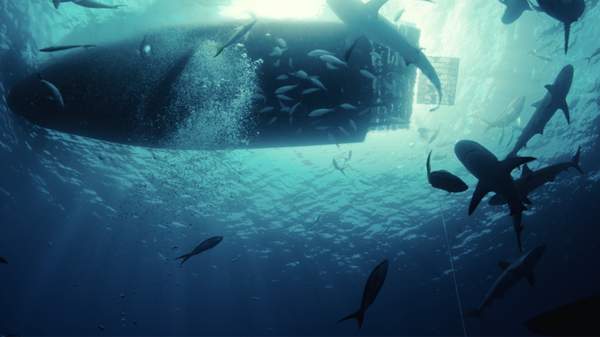
But since Jaws, there's been so much overfishing of sharks. And they carry scars the same way that we do. And so I wanted to present them in a kind of documentary, real light — because our scars as humans are a big part of our personality. So I wanted to depict that with the sharks and show them as the majestic creatures that they truly are. And the only way to do that is treat them with the respect and show them for real.
So 80 percent of the sharks that you see are real. Everything underwater is real. It's all taken from 4K footage that our shark researcher sourced to match storyboards and photographic references.
The only CG is the fins above the water, because it's pretty much impossible to cover the intricate shark blocking with real shark fins. And all the shark photography really happens underwater because no one ever captures fins. So that was a necessity.
But yeah, it just felt like I hadn't seen that in a shark film for such a long time, just real sharks in their element and appreciating them in all their beauty."
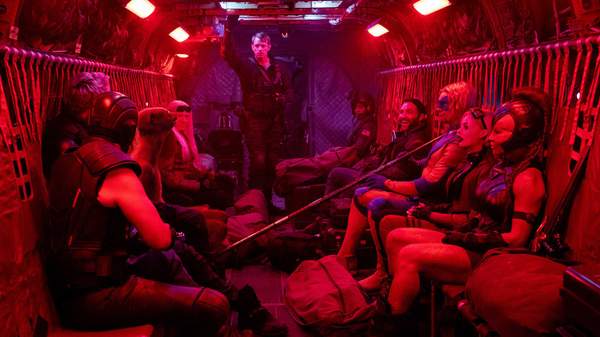
The Suicide Squad
On How Courtney's Franchise Experience in Everything From Die Hard and Terminator Flicks to the Divergent Series, Jack Reacher and Suicide Squad Helps on a Film Like Dangerous Animals
Jai: "Filmmaking is weirdly all the same. Your experience of it might change because the budget is different, but that's really not — you're just telling different stories. It doesn't really get better or worse.
Maybe some people wouldn't like to work on a film of this size and give up a few basic luxuries, but that doesn't really — having more money to spend on screen doesn't make something more fulfilling to make. Sometimes it's just the bare-bones stuff where the story is as good as it gets and the character's really well rounded out and you're working with a phenomenal director, and it can be a really contained drama, but it's just as alive to shoot because of what we do as storytellers, as people that play dress ups. And it's all make believe.
It's nice to put a big costume on sometimes and jump around on huge stunt rigs, and get to be involved with epic crash sequences or whatever. It's a lot of fun. But I enjoy the intimate, small stuff just as much. I guess I'm fortunate to be able to shake it up and operate in many different spaces."

On What It Means to Courtney to Be Able to Come Home and Make Films That Are as Diverse as Runt and Dangerous Animals
Jai: "It's everything. I hope that never ever ends. Australia's such a great place to work. I love the crews there.
I've been fortunate to be part of some really special films — and I don't think it'll ever change. As long as we keep telling stories, I'll keep wanting to be involved."

On Byrne's Journey From The Loved Ones Through The Devil's Candy to Dangerous Animals
Sean: "I think it's probably a perception out there that if you do something that a lot of people end up seeing and gets some kind of cult status, that there's going to be money on tap. And the unfortunate reality is if you write original films about humans hunting other humans, they're not that easy to get off the ground.
That's why there's more supernatural films than there are serial-killer films, because it's easier to blame the devil. In fact, I kind of had to do that in The Devil's Candy to get the money.
So I've written constantly in the years between The Loved Ones and The Devil's Candy, and The Devil's Candy and Dangerous Animals, and optioned all of my scripts. But then Hollywood is so risk-averse, that that's why they want something that can mitigate the risk and justify their decision. Hence it's got to be either IP-driven or a sequel, or kind of supernatural — and that's why I was so thrilled when this crossed my desk.

I had another film that was a lower budget that actually got the money at the same time as Dangerous Animals. So after all that time, it was like an embarrassment of riches. But Dangerous Animals felt the most-commercial choice, just because it's a shark film that has a very loyal following, plus it's a serial- killer film.
And I was really happy to have that safety net that I could explore the extreme nature of man, but have the loyal shark fans to hold it up."

On How Courtney Sees His Path From His First Screen Acting Role Two Decades Back, Through Huge Hollywood Franchises, Comedies, Local Fare and Much In-Between
Jai: "I don't know. I'm still figuring it out, I think. Just trying to stay engaged with the material that I'm choosing nowadays.
I'm a big believer in it all being part of the story, and there's some elements of that that you can control and a lot you have none over. So, I don't know, man. It gets tough out there. I'm just really grateful to get to do this for a living. There's nothing else I would be doing or ever will.
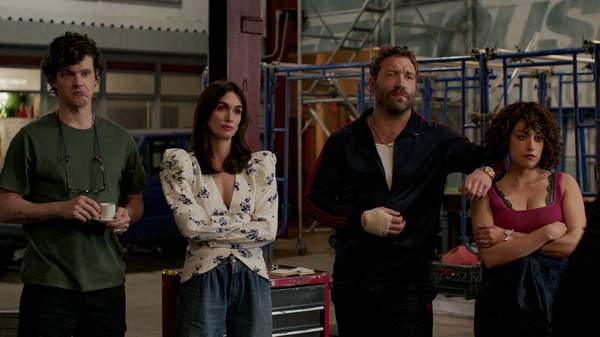
Kaleidoscope. Cr. Courtesy of Netflix © 2022.
And I really am in touch with that gratitude when I'm working. It's a real pleasure to get to do this.
So I'm just trucking along, trying to keep growing as an artist — and try to hopefully do stuff that I'm thrilled to roll out of bed and get to involve myself in."

Dangerous Animals opened in cinemas Down Under on Thursday, June 12, 2025.