Overview
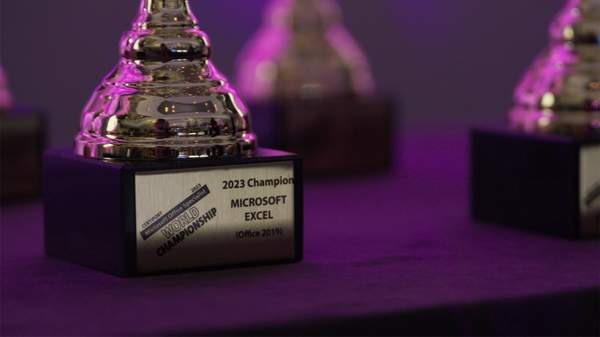
For many — perhaps for most — Microsoft Excel is a necessary means to an end, whether you're using it at work, home or both. The act of spreadsheeting doesn't inspire strong feelings, then, let alone an abundance of affection, no matter the contents being entered into cells. As Australian documentary Spreadsheet Champions illustrates, that attitude isn't anywhere in sight among the competitors demonstrating their skills at the Excel component at the annual Microsoft Office Specialist World Championships. Each year, students aged between 13–22 hit the keyboards in Orlando, Florida, all hoping to be crowned the best on the planet at using software that has been a data-calculating and -computing go-to since its 1985 debut — so, for four decades now.
If your first response to even hearing about the Microsoft Office Specialist World Championships — which also has separate competitions for Microsoft Word and Microsoft PowerPoint, too — is "does that actually exist?", then you're in good company. "I just thought 'what? Is that real? Who are these people?'," Melbourne-based Australian filmmaker Kristina Kraskov explains to Concrete Playground. "Always, when you have a little spark of an idea, if you immediately have 100 questions it's usually got a strong story. So I just go about trying to answer all those questions. 'Who are these people? Why do they try so hard? What does this mean? What does this involve?'," she continues.

"It was a new world," Kraskov says. That's her preferred domain as a director. Kraskov's past shorts span the likes of Heavy Haulage Girls, about women driving road trains; The King of Frankston, with a sneaker-loving local legend in the Melbourne suburb at its centre; Party in the Back, focusing on entrants at Mulletfest Australia in Kurri Kurri in New South Wales; and Suburban Legends, with obscure local celebrities in the spotlight. "I'm always intrigued into new worlds and what things mean to people," she advises.
Kraskov knows that others are having the same reaction to initially discovering that there's a world championships for Excel. That helped the film get made. "I was much less experienced than I am now, but every time I pitched the project, people were always having also a million questions — very intrigued. So we always had that initial response from people, which was great," she shares. Equally excellent: that Spreadsheet Champions had its world premiere at SXSW in Austin in March 2025, then played HotDocs Film Festival in Canada, before debuting at home at the Melbourne International Film Festival.
"I didn't know if it was real, that we'd got in," notes Kraskov about SXSW. "I had to check the official announcement and the website and make sure that it was true. And it was. And being there was really amazing. It's a huge, prestigious festival and we'd never had the film play in front of an audience. So there's a lot of things that you really hope work and hit home, and they did, and people were laughing and crying, and telling us how much they love spreadsheets or technology. It was just a really good experience."
Spreadsheet Champions is a doco that sparks reactions. Some hails from Excel diehards, some from others. "There's a lot of forums and it's almost like a cult online about people that are obsessed with Excel. But it is other people coming as well and it's a good mix," says the filmmaker. At screenings, "people will say 'I'm obsessed with spreadsheets, it gives meaning to my whole life, people don't understand me' — or they'll say 'I thought this film would be boring, my friend wanted me to come, I loved it'. It's kind of one or the other."
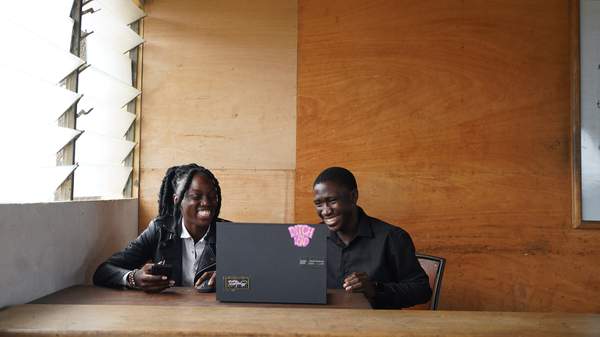
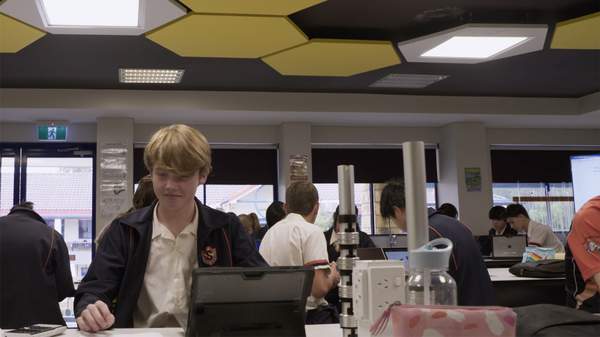
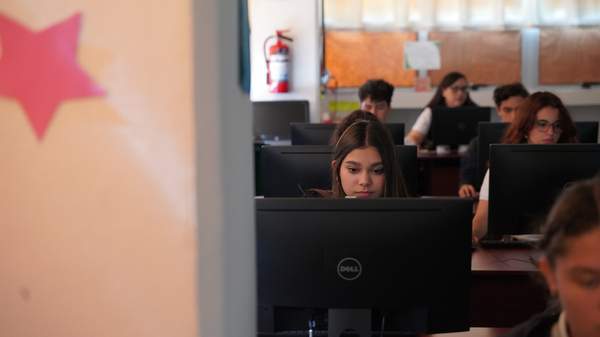
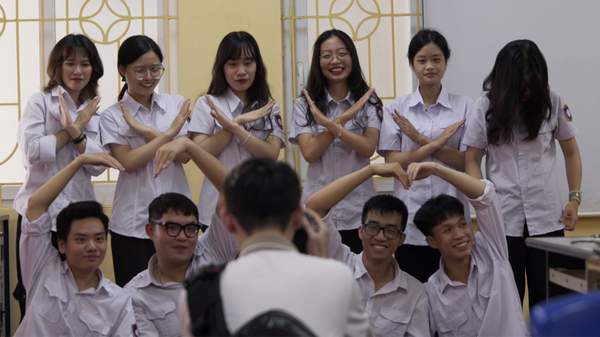
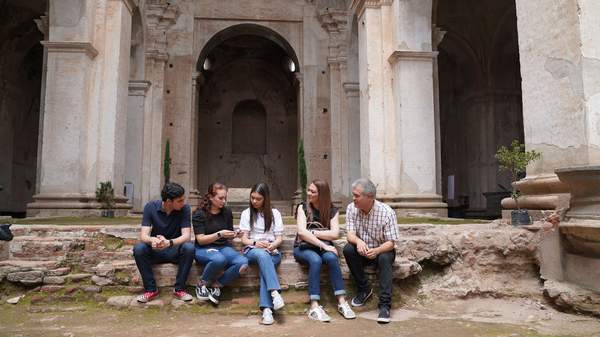
The film follows six talented young Excel users: Mason from the US, Australian teen Braydon, Guatemala's Carmina, Nam from Vietnam, Greek entrant Alkmini and Cameroon's De La Paix. To even get to Floria, they first have to top the Excel field in their own countries. Once at the software's pinnacle competition-wise, they then need to sit an exam that covers their use of the tool, including creatively and in problem-solving, plus their knowledge of not just its functionality and formulas but its history. Charting her subjects' progress, Kraskov captures what Excel and the Microsoft Office Specialist World Championships means to each, their distinctive journeys there, and the experience — and tension, and pressure — of the contest, creating a riveting viewing experience.
MIFF isn't just a festival with Spreadsheet Champions in its program. Pivotally, the event's Premiere Fund helped support the film. Kraskov advises that that "was a big game-changer for us. It is really hard to make documentaries in Australia, and the producer Anna [Charalambous, Ellis Park] and I, we were first-timers for features. So it was good support to have early on, and once you have some support, it is easier to have others. I've always loved MIFF as a festival. I always got the program and circled all of the unusual documentaries. So it just feels really huge that MIFF supported me in making my own, and now it's in the program and everyone's going to go see it."
What do you learn making a doco like this? "I think you just learn to be open, and to question everything you know all the time. You just keep gathering other people's knowledge, comparing with your life and experience, and just keep evolving — keep listening and watching. That's the main thing," Kraskov reflects. And yes, as for what comes next, "someone suggested a three-picture deal with Word and PowerPoint. I'm not opposed to that. There's a lot of unusual competitions in the world," she furthers. "But there's also a lot of great stories. I'm definitely just going to keep going and keep telling these kinds of stories."
Included in our conversation as well: everything from Kraskov's own starting point with Excel going in, getting the documentary's subjects onboard and restraints around accessing the test to celebrating unique passions, details that unite the movie's six competitors and the appeal of highly specific factual films.

On Spreadsheet Champions' Appeal to Excel Devotees — and to Those Not Fond of the Program, Too
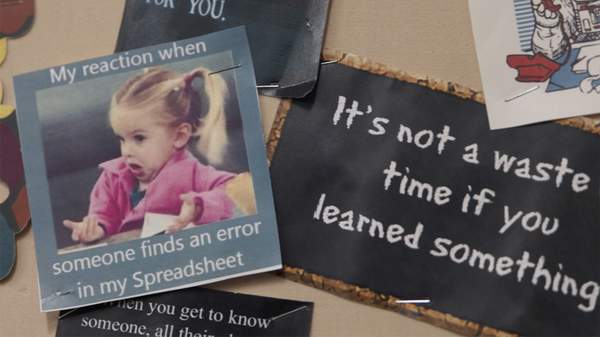
"We realised very early on that Excel has a billion users worldwide — and not all of them, a lot of people do hate Excel, but many of them are very, very, very passionate about it. And hence some of them going to the lengths that they do to be in competition.
So we knew that that Excel fanbase was out there, but it's great to have Excel fans and people who don't like Excel all enjoying the film."
On Kraskov's Own Starting Point with Excel Before Making the Film
"I used Excel in a very basic way. Producers use it a lot and are pretty passionate about it in filmmaking, but that's as far as I went.
But I quickly discovered how much it means to people — how it organises their life and chaos — and I was just enthralled in those people and why it meant so much to them.
When people ask me if good at Excel, I just say that 'the commentators at the Olympics, they're not going to win the gold medal, but they can appreciate it and tell the story'. So I feel like that's my role."
On Choosing Just to Focus on Excel, Not Word and PowerPoint, for Spreadsheet Champions
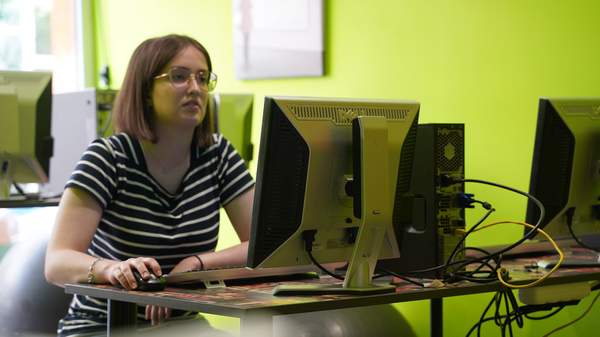
"I did think about them, but often if you just pay attention, a story will present itself to you. So that's what happened. I was just doing a lot of research and I thought 'what would they do in the Word and PowerPoint programs?'.
But very much the Excel competitors and competition itself had this reputation of being the hard one. 'These are the hardcore people. You don't mess with them. This test is really punishing.'
It had this real atmosphere and reputation around it that made me think that that's where the story is."
On Finding Spreadsheet Champions' Six Contenders
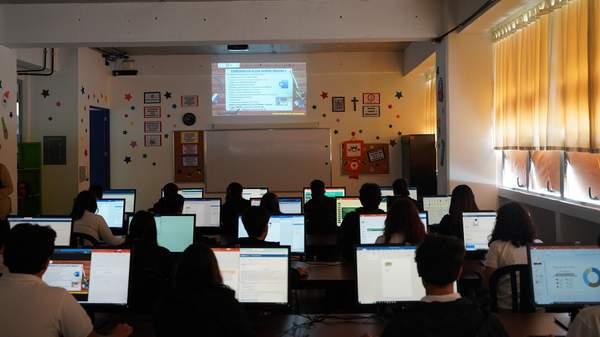
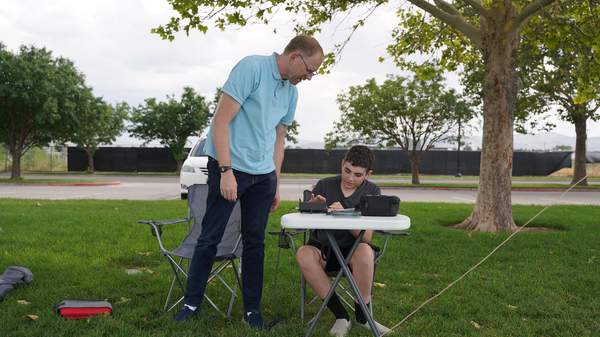
"It was a really difficult casting process, because they qualify at their national championships at all different times. So basically, we just — whoever qualified in their country and wanted to talk, we would go out on a Zoom interview with them And we were looking for very different home environments, personalities, strengths and weaknesses.
We had a few countries that usually do well, and some countries who have never got a medal before — but most importantly, it was the competitors themselves and just making sure they're very different from one another.
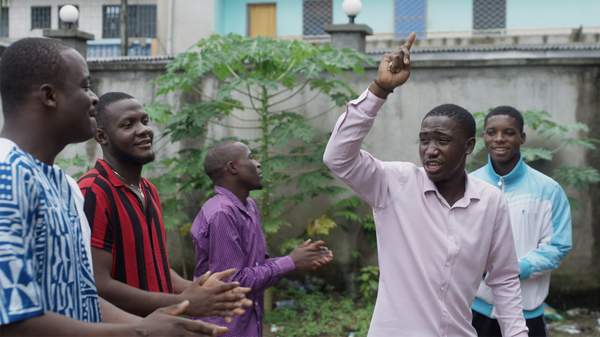
So we have some who are what you would imagine, and what you come for to see this film, maybe like Mason. But then you have others who surprise you. And I think who we think of as computer people, geeks and nerds, it's not really the same anymore. These teenagers are something different.
So we just wanted them to be really different from each other."
On Getting the Documentary's Subjects Onboard
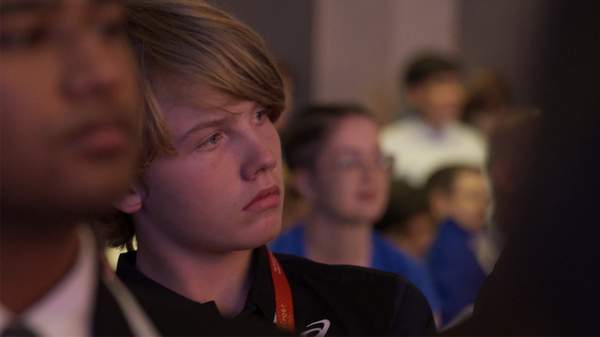
"A few of them are underage, so we had to proceed with caution and always be talking to their parents or teachers as well, and just be really upfront with our intentions and what the film was going to be about at its core — because it would have been really unusual for them as well.
But once we got to know them, after a couple of sessions it really wasn't difficult, what we proposed, what we wanted to do. And I think in some way, the competitors themselves and their support networks knew this was something really special outside of this world no one else really cares about.
So it's an opportunity for all of us, really."
On the Feeling in the Room at the Microsoft Office Specialist World Championships
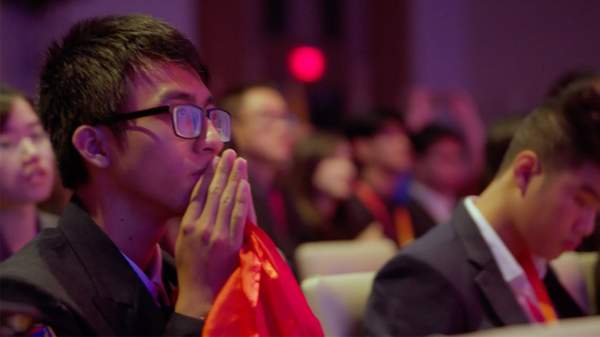
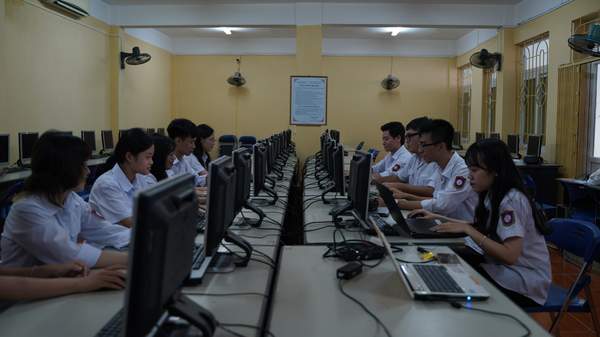
"The air is really thick with stress and tension. It's very palpable, and operating the camera and thinking about what we have to do, it was really difficult. I was holding my breath at points, trying not to disrupt them. And you can just hear furious keys and mouses.
And I think it's described in the film that once it's over it, that noise re-enters the world and there's a big sigh of relief.
It's a really unique environment, definitely — a first with something like that for me. But the mood after the test was over, you can see it on their faces, it was quite harrowing experience for all of them, really, but at least it was over and you could breathe."
On Working Around the Limited Access Allowed to the Excel Test Itself, Given That Its Contents Are Kept Secret
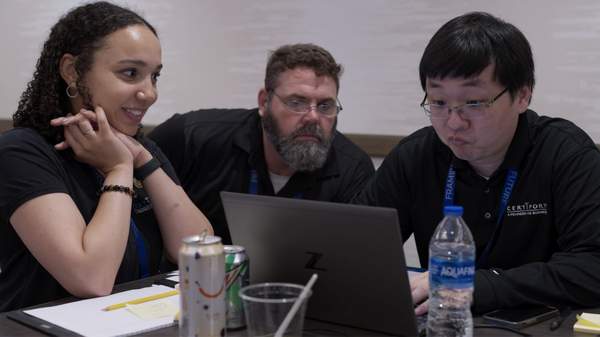
"I guess it was about giving a context to the scale of the difficulty, and introducing the aspects that they're looking for. We worked really closely with Bing [who oversees the Excel championship] once we had gained his trust. So that did take a long time, because he didn't care about the film at all.
I mean, he's happy now, but at the time he said 'I've got a job to do. It's finding the best, keeping it secure, so I don't really care about this'. But once we met him and built that trust, then we could work with him.
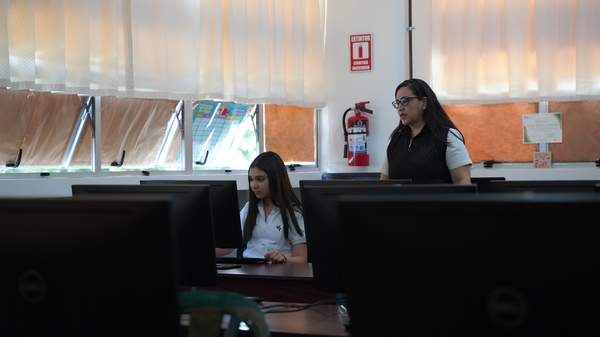
So some of the things that you do see during the test are real questions that he allowed us to use that won't be reused. And what they do in the creative section is real as well.
But for us, it was a really fine balance of the story of the emotion and the competition, and telling people how difficult it is, with the story of Excel and those intricate details themselves.
And it is hard to make a film like that for everyone. The Excel lovers and haters are not going to agree with that. But in the end, I think it's a really important story — and for me, the focus was always the competitors' journeys, and Excel is the vessel to tell."
On How to Get the Right Balance Between Providing Context to the Competition, the History of Excel, the Event Itself and the Contenders' Journeys
"I think just working with the creative team, and just making sure that everything kept you engaged. There's so many engaging parts to this story, and obviously some parts of Excel can get a little bit dry.
We watched the test sequence a lot, and it was probably one of the more difficult sequences of the whole film to edit — so just making sure that when we showed fresh people, there was always a response, an emotional response, something that they learned.
But yeah, it was tough, but audiences have been responding really well and I'm really grateful."
On Whether It Was Difficult to Find the Best Visual Approach for a Film That Often Jumps Between Talking Heads and People at Computers
"Yeah, absolutely. That was a question we got asked a lot: 'wouldn't it be boring? Won't you just be watching kids on-screen?'. So we had to just make sure that there was a lot of actuality in it as well.
I love observational documentaries — vérité is my favourite genre. So you see that there's some real moments where the camera is just following what's happening, and you're very real in there. So it's just a matter of balancing everything out, I think.
And then using your other — if you can't have crazy footage running around, then what else can you use? So working with our composer and our sound design to make sure that there's still that tension and audiences are still really engaged."
On What Kraskov Observes Unites Spreadsheet Champions' Subjects
"I would say there's two things that they all have in common. That is, firstly, that they are kind of born with — not a completely mathematical, logical brain, but numbers are a very natural language to them more so than words. So they all have an affinity at very young ages for mathematics, and it makes a lot of sense to them. And they were always all very, very exceptional at it.
And the second thing that I was very surprised about, I thought that we would have a lot of different kinds of parents — I have very strict immigrant parents, I thought we would have some of that kind of 'you better win or you're in trouble', but it wasn't really the case.
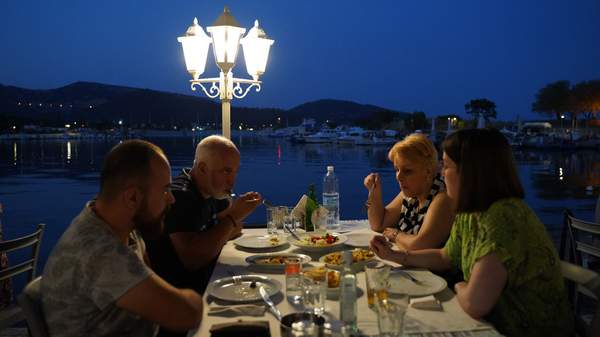
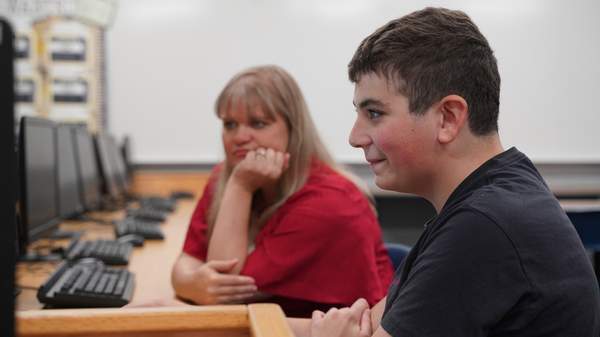
All of the parental support that the students had was a mixture — consistent but they really knew their kids well and really supported them, and they were all very nice but firm in their own ways.
And that's what they all had, I think, that helped them. They had their natural skill, but they had people in their corner as well, noticing them and encouraging them."
On the Film Being a Celebration of Unique Passions and Going All in on What's Important to You
"That was always the main message for me. I think I love a subject that's very unusual, and it might draw you in and people might go 'who are these weirdos?', but through that you really learn to appreciate people who ho have different skills and have different passions.
And that's pretty much what all my films are about, is just finding people who are uniquely themselves, finding out what that means and living their life accordingly."
On If Making a Film About People Being So Dedicated and Passionate About Something Is Inspiring
"Absolutely.
The shoot itself was gruelling. We were going to a different country every week, different time zones. If you're not shooting, you're on a plane and that's about it. So I was exhausted, but everyone I met and spoke to was so inspiring.
And even just to learn a country's philosophy towards something like this, being so completely different to our own — everyone we met really fuelled us to keep going and to just have the energy to tell the story, because it was so incredible."

On How Kraskov's Short Films Helped Lead Her to Spreadsheet Champions
"I had this idea before I'd done a lot of the work that I've done, and lots of things like COVID got in the way. But my other work that I've had creative control over has always followed a similar line of discovering new worlds and what people living differently can teach us about ourselves, I suppose.
And then, just getting to interview people and follow them throughout their lives, you just get to hear people boil down their life philosophy to you on a weekly basis — and that's such an amazing thing. And I think it's helped me be really open to stories and possibilities.
It's a really cool job to do."
On Why Documentaries About Highly Specific Topics Appeal to Audiences
"I think these documentaries are so powerful because everyone can identify with an underdog. No matter who you are, you've felt like you didn't belong and you want somewhere to belong.
And so just finding people who so unashamedly try so hard at what they love — and if that thing that they love isn't recognised by the people, it doesn't stop them — I think people just really resonate with that, and that's a good thing."
Spreadsheet Champions screens at the 2025 Melbourne International Film Festival.
MIFF 2025 runs from Thursday, August 7–Sunday, August 24 at a variety of venues around Melbourne; from Friday, August 15–Sunday, August 17 and Friday, August 22–Sunday, August 24 in regional Victoria; and online nationwide from Friday, August 15–Sunday, August 31. For further details, visit the MIFF website.