Overview
Carrie Bradshaw once said that Vogue fed her more than dinner – a hot take in the early 2000s, when skipping a few meals was á la mode. Alas, flipping (or scrolling) through a fashion mag today might not have the same effect. Tinned fish, cherries, lemons and lobsters appear on the clothes, like one big grazing plate. Every Loewe ad features sculptural heirloom tomatoes, while Jacquemus' are a reminder to butter your toast.

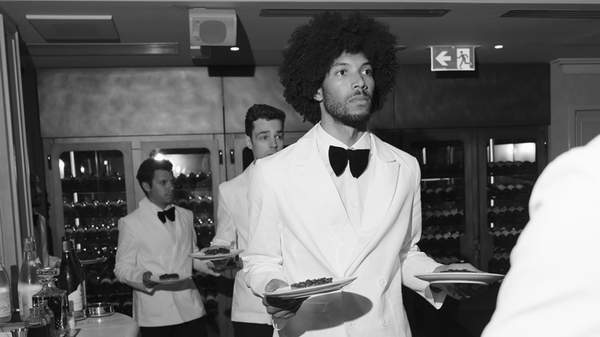
Maison Batard servers wearing bespoke tuxedos from The Service Club.
The obsession has even spilled over to the beauty industry in recent years — Nude by Nature's lippies are stirring martinis and scooping up whipped butter. Food motifs aren't new in fashion, but in the latest wave of the food-fashion zeitgeist, the people behind what we eat are also shaping what we wear for the first time.
Amidst workplace misconduct and financial pressures, working in hospitality is notoriously tough. But 'chefcore' has officially become a thing, thanks to shows like The Bear, which have turned our attention to what chefs wear. Fashion publications dissect the show's thoughtful costuming every season, with iconic looks including vintage designer pieces that reference Chicago history, Carmy's perfect (and pricey) white t-shirt, and the $600 Thom Browne chef whites gifted to Sydney in the season two finale.
Another thing: The Bear doesn't shy away from the industry's harsh realities — and the grittiness appeals. It's why Jeremy Allen White, who plays Carmy, now fronts Calvin Klein campaigns. And why Gio Luciano, a real-life line cook in New York City, went viral on TikTok for "line cook food hauls".
It makes sense that brands are clamouring to cash in on this cultural cachet. Incu asked Messina to reimagine its brands as gelato flavours in 2020. In Hollywood, Mel's Drive-In made a sky-high pancake stack for Skims, which homegrown Scarlet and Sam referenced with its monogrammed birthday pancakes. Last month, Tarts Anon teamed up with Birkenstock Australia to spotlight their professional footwear range.
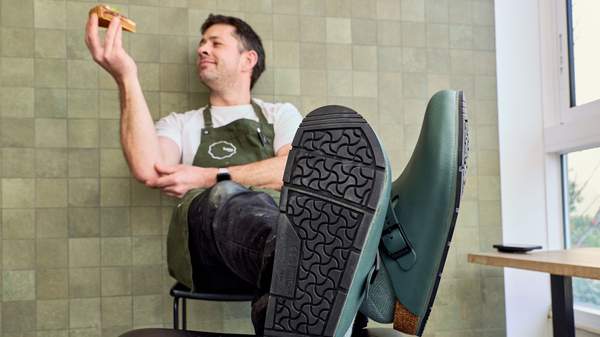
Tarts Anon Head Chef Gareth Whitton in his trusty work clogs.
"Fashion brands want to be part of culture and create experiences that feel tangible and memorable," Tarts Anon founder Gareth Whitton says. "Food and hospitality are inherently social and sensory experiences, which makes them perfect for lifestyle storytelling." Borrowing from the thyme-hued Boston clogs he wears around the kitchen, Whitton created a one-weekend-only thyme, chocolate and verjus tart, finished with a cocoa dusting in Birkenstock's signature bone pattern.
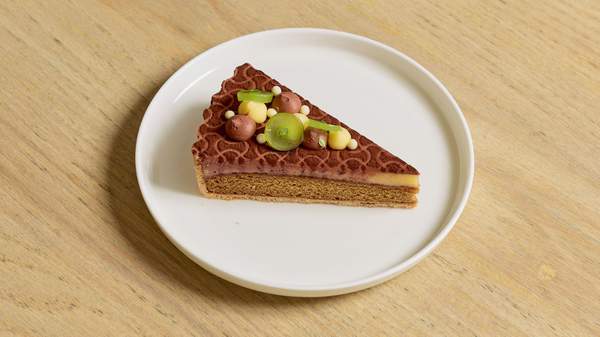
An exclusive thyme, chocolate and verjus tart at Tarts Anon that pays homage to Head Chef Gareth Whitton's Birkenstock Bostons in Thyme.
These collabs are a win-win for Whitton: his team is excited to experiment, while retail brands gain exposure to "a highly curated audience in a relaxed social setting". This face time is especially valuable to brands without a brick-and-mortar presence, but it's also a way for those with a physical storefront to draw more curious browsers.
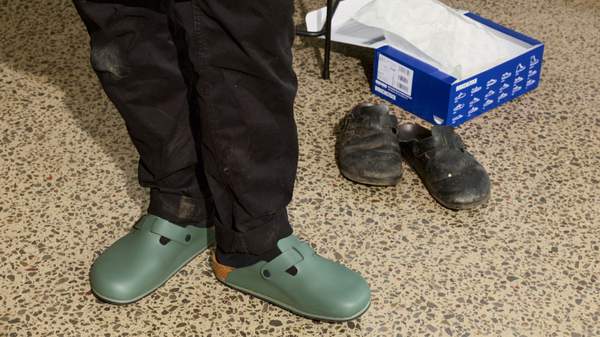
Birkenstock's iconic Boston clogs, made for work.
Luxury maisons have long paired fashion with fine dining. In 2004, Chanel brought on celebrated chef Alain Ducasse to open Michelin-starred French restaurant Beige alain Ducasse Tokyo in its Ginza flagship. Gucci, Prada, Ralph Lauren and more followed with similar concepts, all meant to draw crowds to their stores.
As designers join diners at the table, Whitton warns against collabs that feel "forced and gimmicky". He offers a hot tip for fashion marketers: "Typically, chefs collaborate with brands that share a similar aesthetic, ethos, or target audience. The best collaborations are always the ones where both sides feel the partnership enhances their story, rather than serving as a one-off promotion."
Keeping that in mind, workwear labels might have an edge in the game. Sydney-based designer Johnny Schembri, who started hospo-dedicated diffusion line The Service Club, explains: "Chefs are incredibly particular, and rightly so, they spend long hours in these garments. We listen carefully to their notes around comfort, heat, and movement. The same goes for waitstaff; they need to be able to move freely, and everything must be easy to wash and wear."
Schembri has been dressing women under his namesake label, By Johnny, for the past 16 years, but he earned his stripes making uniforms for the now-defunct Keystone Group. Two years ago, the designer turned his eye back to the kitchen with The Service Club. Venues can pick from a collection of 40 ready-to-wear garments or opt to collaborate with Schembri on custom uniforms.
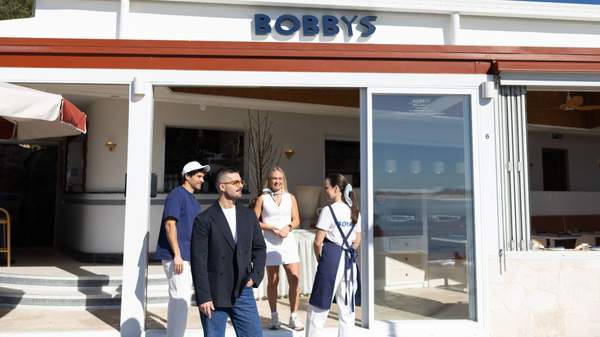
The crew at Bobbys Cronulla kitted out in nautical-inspired uniforms designed by The Service Club.
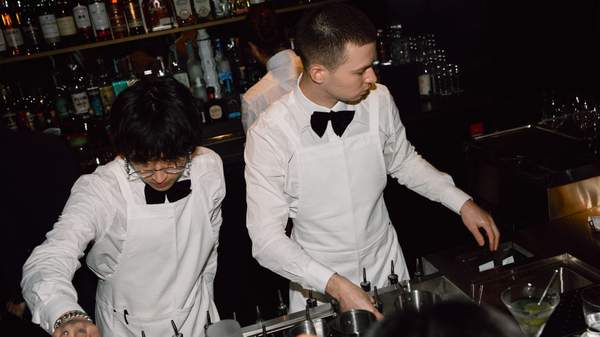
"Historically, chef uniforms have all looked the same, very standard and not especially considered," Schembri says. But now, chefs are looking for design-led options to inject personality into their attire. The Service Club outfitted 20 venues in its first 12 months, ranging from a breezy all-white look punctuated by blue and clay aprons at Sydney's beachside restaurant Bobby to tailored-yet-functional tuxes for Melbourne's Maison Bâtard team.
While uniforms are a masthead for venues — Schrembi calls them "walking billboards" — the clothes worn during a busy shift still have to strike a balance between function and style. In an era of countless microtrends, practicality might be a virtue; The Bear's style explosion demonstrates a love for clothes that go just as hard as the people who wear them.
Beyond chefcore, the people and pulse of a restaurant can also inspire the fashion world in its own right. London-based Melt Jewellery's most-hyped collection in five years features sculptural sterling-silver-and-gemstone rings and pendant necklaces that nod to the movement in a kitchen.
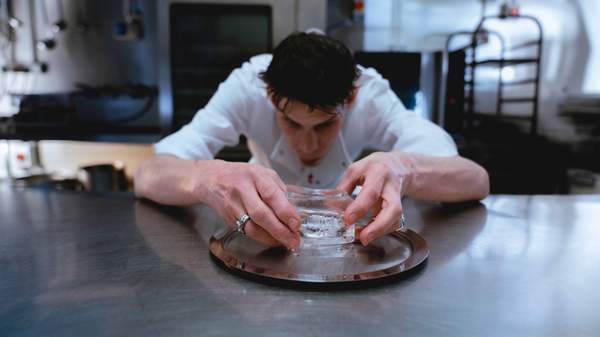
Bertrand Kerleo shows off Melt Jewellery's new collection.
The collection took shape when Melt founder Prachi Jan met French pastry chef Bertrand Kerleo on the tube. Kerleo became the muse of the campaign, which is centred around his culinary journey and shot in a working kitchen where he busies himself making an avant-garde take on European milk pudding called blancmange.
While Jan is well aware that no chef would actually wear jewellery during service, it's the unlikely crossover that intrigues her. "We're not encouraging people to sauté in silver," she says. "You see Bertrand wearing the jewellery while cooking, moving [and] sweating — all those human details that you don't usually associate with fine jewellery. It feels slightly surreal."
With all the hype around hospo, high-concept collaborations like this could be where we're headed. As Schembri puts it: "There's something raw and real about the hospitality world that cuts through the noise; it's tactile, it's lived-in, and it feels genuine, which is exactly what people want from brands right now."
Images supplied