This Just In: Sydney's Most Radioactive Suburbs Revealed by a University of Sydney Study
As it turns out, Sydney's background radiation has nothing to do with meltdowns and leaks, and everything to do with the earth under our feet.
Radiation is a scary word, but it's an ever-present thing. Yes, high doses of radiation have the ability to cause serious harm to the human body, but on this planet, in this universe, we are constantly being bombarded by small amounts of background radiation from space, the ground underneath us and the bodies around us (your own body is generating radiation as you read this).
In Australia, large-scale maps of local radiation levels have been available for some time, but unlike other cities around the world, Sydney hasn't had a suburb-by-suburb radiation map until now.
Dr Laura Manenti, experimental particle physicist at the University of Sydney, set out to change that after arriving in Sydney from Abu Dhabi and recording five times the background radiation count that she observed in Abu Dhabi. Recruiting two students, she set out to traverse the Sydney metropolitan area on foot and map the radiation in the ground, revealing some interesting insights into our city.
View this post on Instagram
In her study, published in full here, Dr Manenti reaffirms that this isn't cause to panic, writing "At its most basic level, radiation is energy travelling through space," and adding that the ground beneath our feet is the source of most of this radiation thanks to slowly decomposing deposits of elements like uranium, thorium and potassium.
Dr Manenti and her students placed gamma ray detectors into the soil on the ground and took soil samples to measure the local radiation levels, and cross-referenced them against Sydney's inherent cosmic radiation, constantly raining down from space, by testing levels on Sydney Harbour — where water blocked the radiation from the ground.
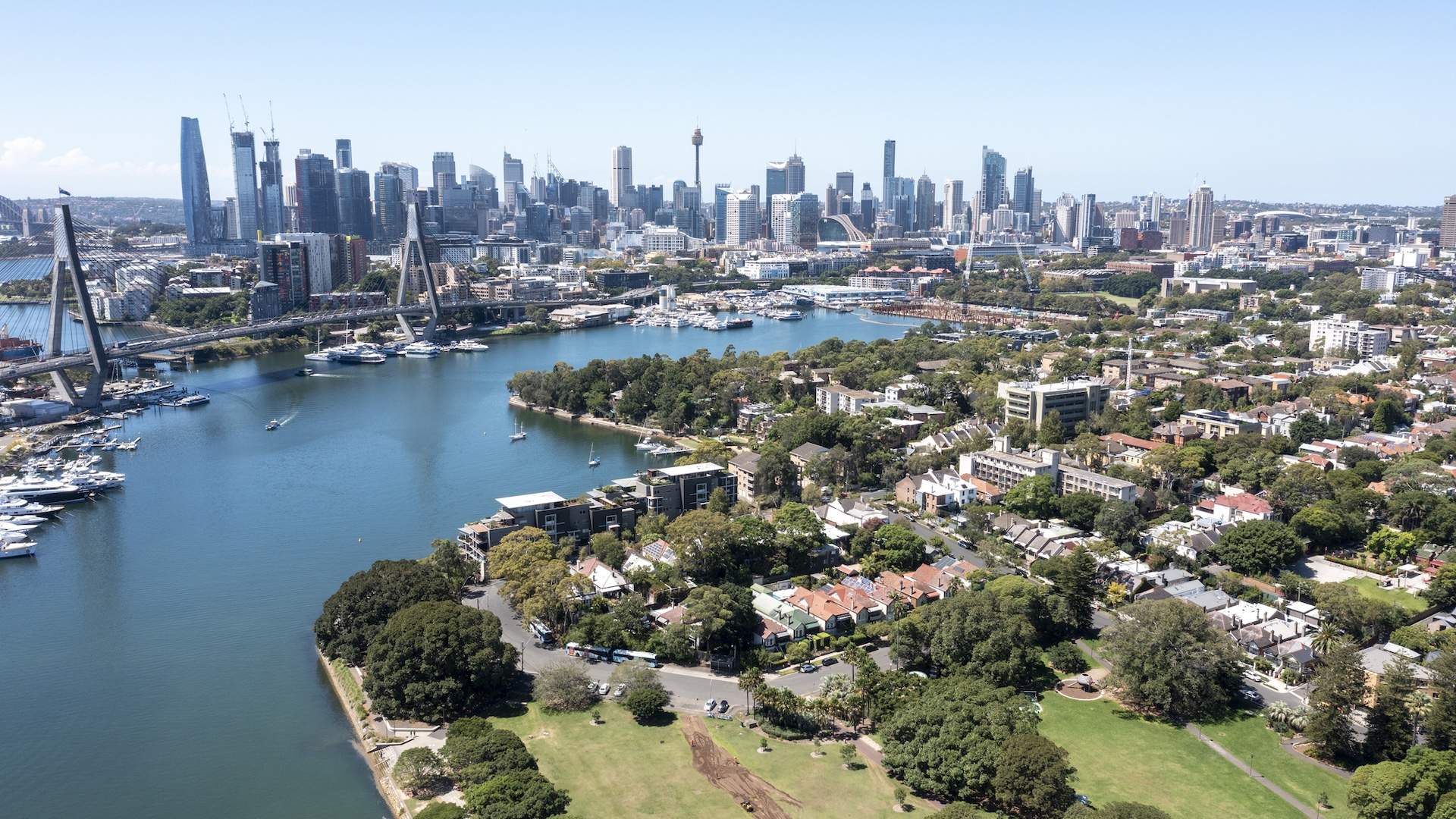
Going off the heat map created by Dr Manenti, Sydney's most radioactive suburbs are the cluster in the Glebe area, with slightly less hot-spots found in areas like Kirribilli, Erskineville, Leichardt, Cremorne Point and Kingsford. But Dr Manenti specifies that these levels aren't thanks to human activity — it's all down to geology.
Sandstone and shale deposits, of which Sydney famously has several, often show higher levels of radiation thanks to the presence of uranium and thorium. But none of these levels are harmful. To put it into perspective: radiation is measured in millisieverts (mSv). The highest levels of ground radiation recorded in Sydney were 0.52mSv per year (averaging 0.24mSv per year) — it takes more than 100mSv to have effects like increased cancer risks, and medical scans like CT and X-rays typically generate just 1.7mSv — as Dr Manenti puts it, measuring radiation "doesn't make the world more dangerous – it makes it clearer."
Read the full study by Dr Manenti on 'The Conversation'.
Lead image: John Carnemolla via iStock


- A Weekender's Guide to the Barossa Valley and Beyond
- From Cosy Mysteries to AI-Era Satire: The Best New Australian Books to Curl Up With This August
- The Best Restaurants in Sydney to Take Your Dad This Father's Day (or Any Day)
- The Best Australian Shoe Brands to Know Right Now
- Dark Arts, Hedonism and Exploration: A Weekender's Guide to Visiting Hobart for Dark Mofo
- The Best Australian Fashion Brands to Know Right Now