Women Who Inspire Us: MECCA's Chief Purpose Officer Lisa Keenan on Empowerment and Enacting Structural Change
From post-apartheid South Africa to MECCA's leadership team, Lisa Keenan has built a career around one central question: who holds power — and how do we redistribute it?
In many female-led industries, the word empowerment gets thrown around as a synonym for all manner of things — confidence, success, and supposed investment in the futures of women. It appears in campaign copy, in limited-edition packaging and in International Women's Day collateral, til it's an abstract, pulpy mess that ends up meaning very little at all. But for Lisa Keenan, empowerment is not a slogan. It is a structural question: "In the gender equality space, it is all about power — or the absence of it," she says. "So who has it, and who needs it?"
Keenan is MECCA's first (and maybe only) Chief Purpose Officer. She sits on the leadership team, shaping decisions about how one of Australia's most influential retail brands integrates gender equality into its core business model. But long before her foray into beauty, Keenan's life and career were shaped by the concept of power.
She was born in Zimbabwe and spent part of her childhood in South Africa during a period of enormous political transition. Growing up in the shadow of entrenched inequality — and later, in the uneasy shift toward post-apartheid reform — meant power was never abstract. It quite literally shaped who moved freely, who spoke loudly, and who was silenced.
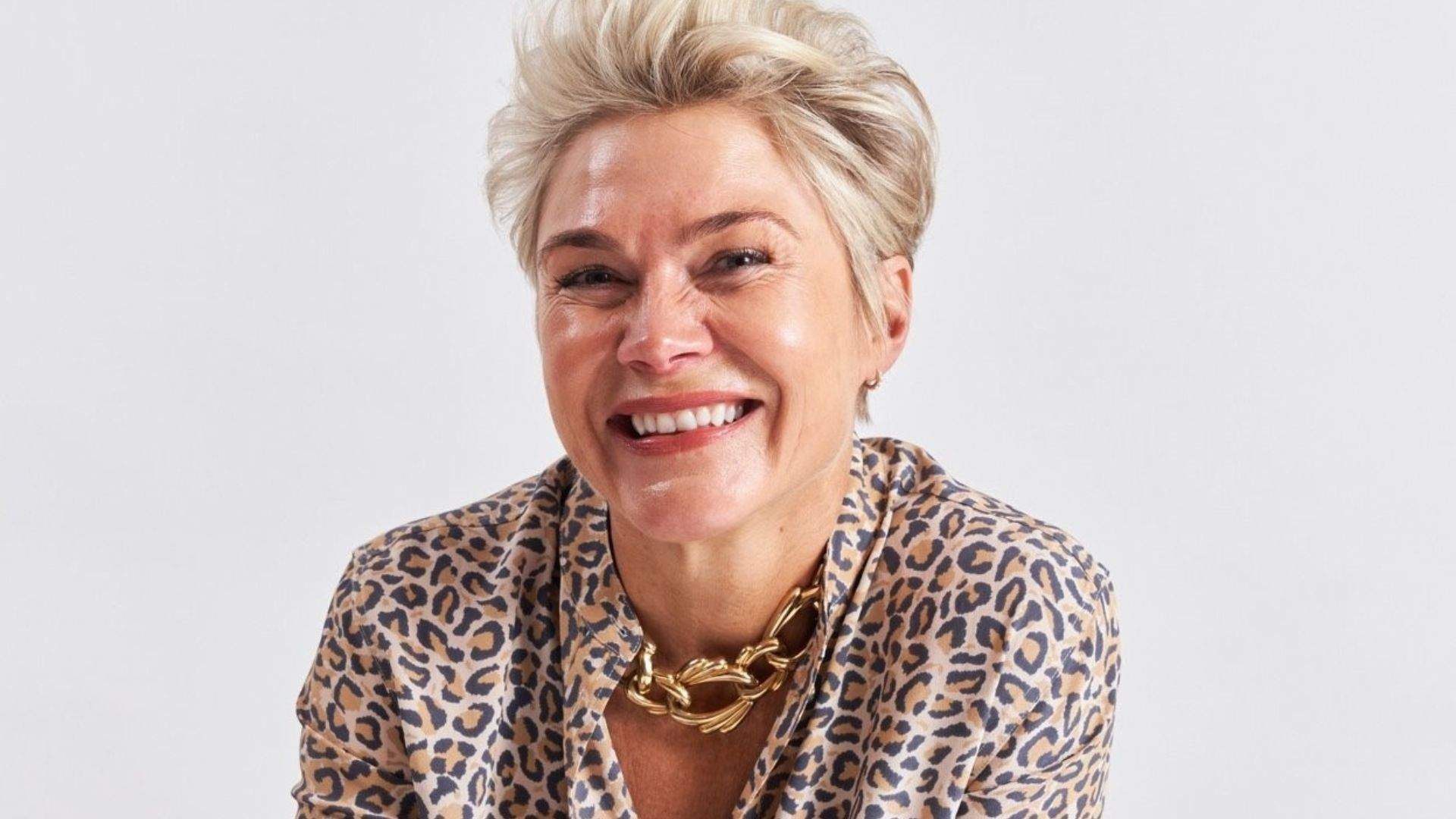
MECCA's Chief Purpose Officer, Lisa Keenan
"You live in the world that is constructed for you, and often you don't see what you don't see," she reflects. As a child, the structures around her were ambient rather than explicit. It was only later, with distance, that she began to understand how deeply those environments had impacted her. Even without naming it, she was observing how authority is distributed and how systems resist or respond to change. While she initially trained as an accountant, it quickly became clear that numbers were not what interested her most — it was influence.
After moving to London, Keenan began working in corporate communications before founding her own consultancy. Corporate affairs gave her something accounting did not: access. It offered a window into boardrooms and decision-making rooms, into how companies rationalised strategy and how reputational risk could force operational change. When asked how she ended up in corporate affairs, Keenan admits she was drawn to complexity.
"I've worked in tobacco, I've worked in gambling, I've worked in booze — I've done it all," she says. When questioned about her penchant for 'sin stock' (as she puts it), Keenan explains that systems rarely change from the outside. "The people who have that strong bent to do better in society often start with places that feel broken," she says. "You have to be in it. And sometimes that can be uncomfortable." Inside, she focused on integrity, helping organisations "say what they mean and do what they say," and influencing decisions before they required damage control. It was less about spin and more about substance; change, in her view, is achieved through participation.
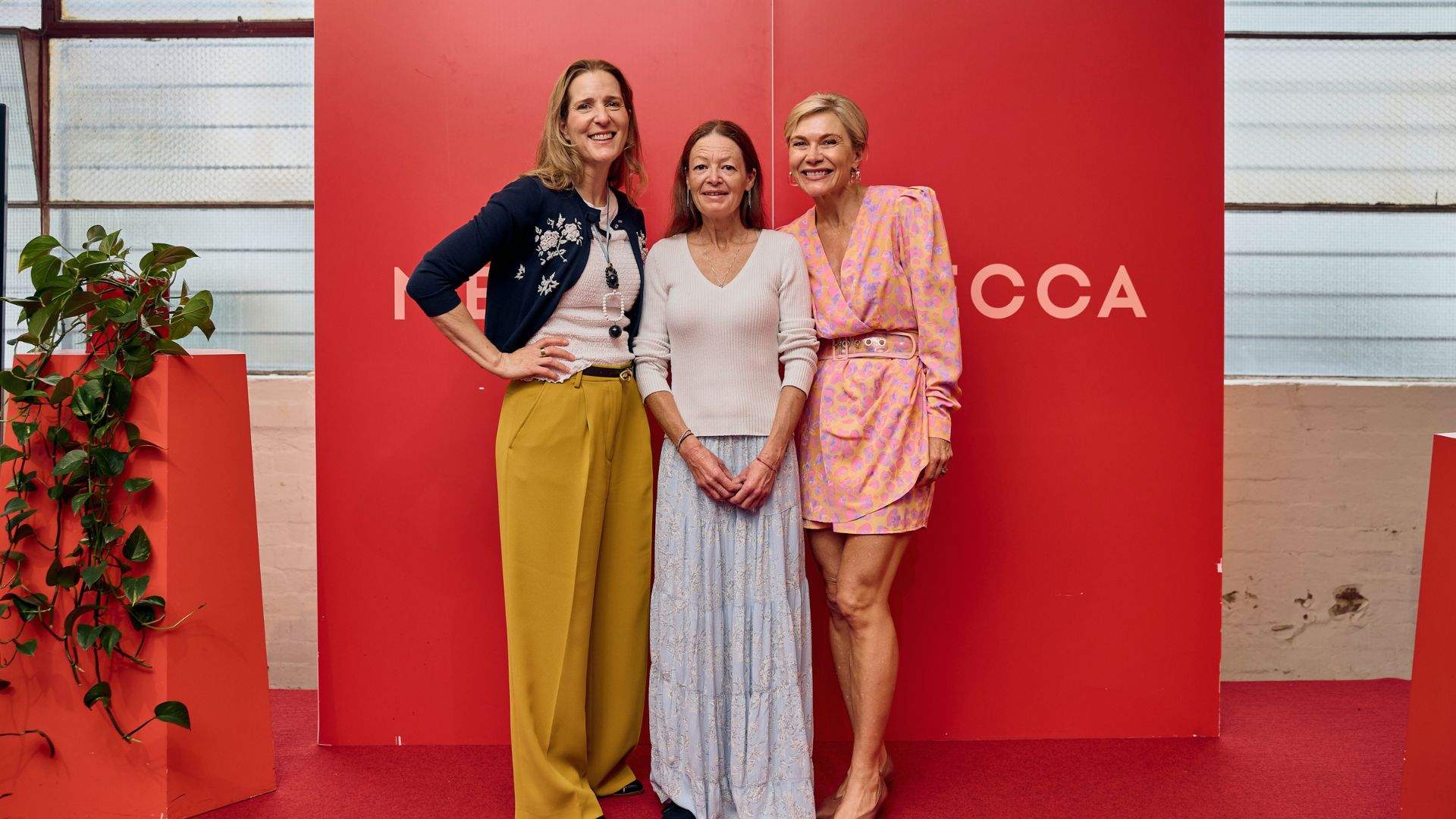
MECCA Founder Lisa Horgan (left), Remedii Founder Angie Poller (middle), Lisa Keenan (right)
Keenan had been working with Australian beauty retailer, MECCA, for a number of years as a consultant when the opportunity to join the business in a more permanent capacity presented itself. As the company was approaching its 25-year milestone, Keenan and founder Jo Horgan began reflecting on the next chapter. The philanthropic arm — named M-POWER (get it) — then focused primarily on girls' secondary education and had already supported 10,000 young women through school. It was meaningful work, but Keenan saw an opportunity to go further — something bolder and more embedded in MECCA's DNA.
What followed was the evolution of M-POWER into a fully integrated, long-term commitment to gender equality; the growth of M-POWER as a philanthropic endeavour to match the kind of ambition that Jo had when building the original MECCA brand. In 2026, almost every MECCA team member knows about M-POWER, and nearly half of all (five million) customers are aware of the brand's purpose. Around a third of Australian beauty shoppers now see MECCA as a force driving positive social change — not just simply selling products to women, but actively advocating for them.
View this post on Instagram
M-POWER, according to MECCA.com, "...curates and empowers a collective of social change makers working towards a world in which gender doesn't limit anyone's rights, freedoms or opportunities." The projects undertaken span health, education and arts and culture — areas that are aligned to the business, but also intentionally systemic. The organisation works with more than 20 not-for-profits and is one of the few corporate funders providing unrestricted, long-term funding. "We back leaders," Keenan says. "We get behind them in terms of skill building and capability building because we want them to have impact long after we're not funding them anymore."
One partnership particularly close to her is with The Man Cave, which works with boys to redefine masculinity through respect and emotional literacy. In a country grappling with gendered violence, the approach is preventative rather than reactive. "We're thinking about Australia's domestic and family violence crisis differently," she says. "How do we bring men into this conversation constructively and in a non-judgemental way?"
In its 11-year history, The Man Cave has reached 100,000 boys. Of those who attend, 91 percent say they want to be men who treat others with care and respect, and 84 percent report feeling empowered to build healthy relationships."When you think about the knock-on effects of investing in young men early in life — and what that could mean for my daughter, who's 17 — I feel really proud of that," she says.
View this post on Instagram
If empowerment is about power imbalance, then redistribution begins with culture. The arts, too, form part of that long game. Through its partnership with the National Gallery of Victoria, MECCA funds the Women in Design Commission, now in its fifth year. The globally unique commission supports mid-career female artists, architects and designers to create major works for the NGV's permanent collection. The 2026 commission is 'Bamboo Theatre' by Chinese architect Xu Tiantian, an architectural-scale installation that draws on the landscape, material knowledge and building traditions of Songyang County.
"[The Women in Design Commission] has given each of those women this massive step up in their careers," Keenan says. "It's usually the biggest work they will ever do."Beyond visibility, it addresses a legacy imbalance in permanent collections worldwide, where women remain underrepresented. Three of the four commissioned designers have explicitly centred women's experiences in their installations, embedding gender equality within cultural storytelling itself. "That's legacy building," Keenan says. "Once the new [The Fox NGV Contemporary] opens, those works will live there permanently.
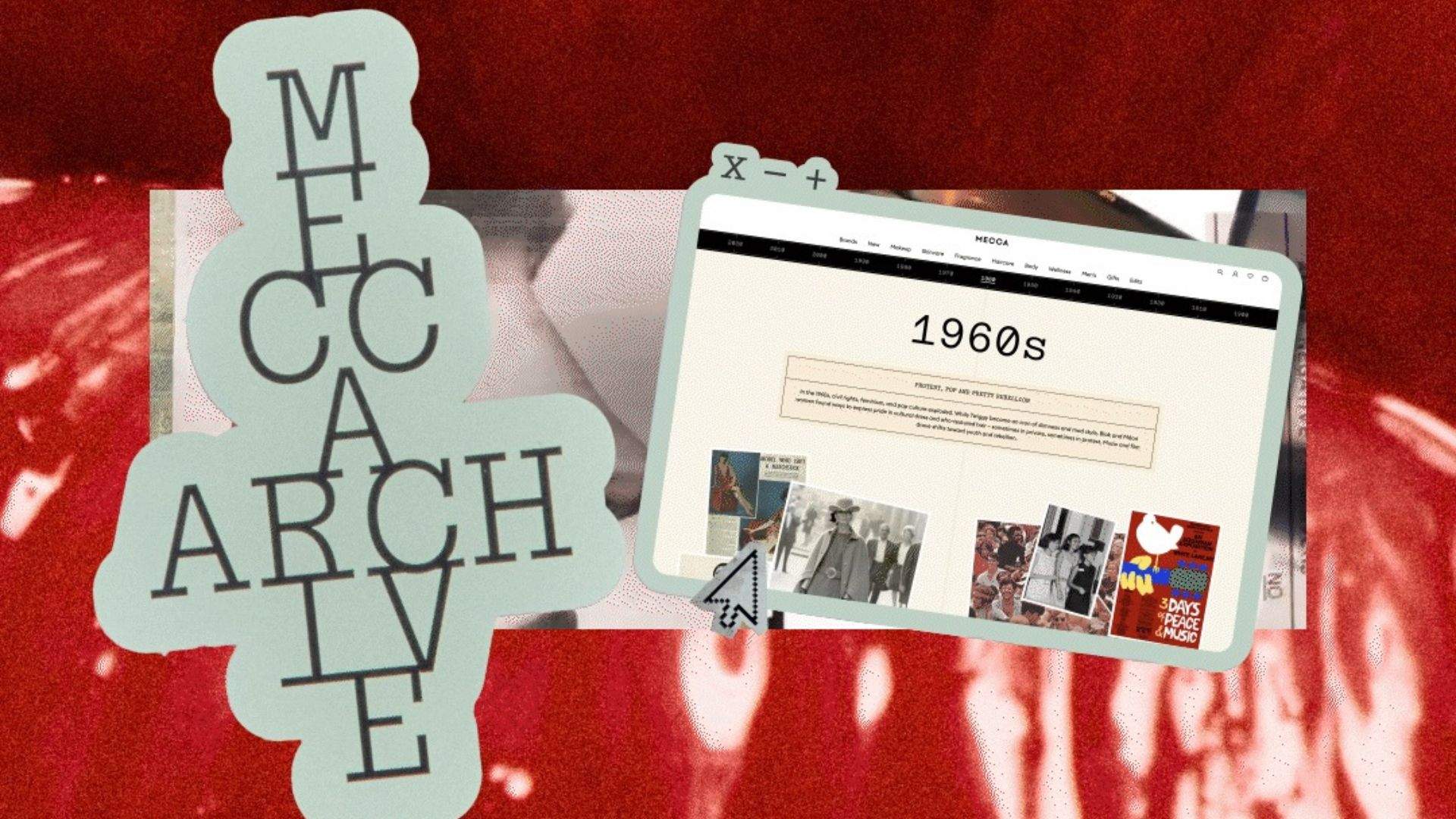
Last year, MECCA also launched the MECCA Archive — an evolving digital record of women's stories told through the lens of beauty. In a world of fleeting feeds, it seeks to preserve what is often lost. "Women's voices represent less than one percent of recorded history," Keenan says. "So how do we change that?"
The Archive invites authors, brand partners, team members and customers to contribute to a living record. It has already revealed gaps in representation, particularly for First Nations and migrant women. "It's about piecing together what the history of women might look like if told through this lens," she explains. "And that's going to be an ongoing project."
When asked what empowerment truly means — stripped of buzzwords — Keenan is deliberate. "I'm going to say something a bit controversial," she laughs. "When we were articulating our purpose at MECCA, we chose the word 'embolden' for the business as a whole. Empowerment in the gender equality space is about power imbalances; it's about who has it and who doesn't."
From her perspective, empowerment is not a thing you do, so much as a foundation that you build from. "It's about agency," she says. "It's about the ability to make choices about your body, about your life partner, about your career that are yours to make and are not imposed upon you." Emboldening follows empowerment. Confidence follows agency — "If you are empowered, you are able to be emboldened."
If she could change one thing tomorrow in Australian culture to improve systemic gender inequality? "It would be to do more to encourage boys and men to embody values of respect," she says. "How do you turn the trajectory away from power being imposed to power being shared?" For Keenan, this ethos goes beyond the boardroom and starts with her most personal project of all, raising her 14-year-old son. "He gets so bored of me talking about this stuff," she says. "It's one of the most important roles I will ever play," she says. "Raising a great boy, a great man."
In an industry often accused of selling confidence as a product, Keenan's work reframes beauty as a platform. Five million customers, six and a half thousand team members, 95 percent of whom are women — scale, when harnessed thoughtfully, becomes influence. "It's about building a movement," she says. The M-POWER movement (and, consequently, the MECCA movement) is one built on infrastructure, commitment and the clear-eyed interrogation of power itself — who holds it, who lacks it and how we can rebalance the scales.
Find out more about MECCA's M-POWER initiative and read about the MECCA x NGV Women in Design Commission 2026.
Images: Supplied


- From Cosy Mysteries to AI-Era Satire: The Best New Australian Books to Curl Up With This August
- The Best Restaurants in Sydney to Take Your Dad This Father's Day (or Any Day)
- The Best Australian Shoe Brands to Know Right Now
- Dark Arts, Hedonism and Exploration: A Weekender's Guide to Visiting Hobart for Dark Mofo
- The Best Australian Fashion Brands to Know Right Now
- The 12 Best Walks In and Around Sydney