CP On: How Do We Future-Proof the Hospitality Industry?
With crisis after crisis piling on costs for venue owners and operators, how is the hospo world preparing for whatever the future may hold?
Disclaimer: I've never been a hospitality operator. But I've spoken to hundreds in my time as a food journalist, and one thing is clear — life on the tools is rarely straightforward. It's a rocky industry at the best of times, and survival depends on staying adaptable.
We've seen it through COVID, recessions and supply chain breakdowns. Now, in the wake of global conflict and rising fuel costs, operators are being pushed to recalibrate again. There's no rulebook when there's no precedent. But across the industry, people are finding ways to stay afloat — sometimes by design, sometimes by accident.
Take the shift to electric kitchens, long considered the bane of many chefs' existence. Cooking without flame lacks the romance, and often the responsiveness, of gas, but it's fast becoming the default. The 203 in Brisbane, Elchi and Rumi in Melbourne, and Rockpool Bar & Grill in Sydney have made the switch, while Trinity St Kilda is planning an all-electric setup as part of its $2 million overhaul. Originally driven by environmental targets and practicality — electric stoves are easier to clean and maintain — the move is now proving financially beneficial as gas prices rise.
Climate pressure is also reshaping the industry in other ways — particularly in wine, where one bad season can wipe out a year's income. As temperatures climb higher in parts of Australia, producers are trialling clay-based "sunscreen" to protect grapes and preserve flavour. And in regions hit with unseasonal cold, vineyards are being lit with anti-frost candles overnight — an old-world fix for a new-world problem. France was the first to popularise this approach but as climates shift worldwide, Australia may follow.
Back in the kitchen, constantly rotating menus and one-off specials allow venues to respond to fluctuating supply and minimise waste. While most restaurants change their menus seasonally, Little Black Pig & Sons in Heidelberg updates theirs fortnightly based on availability, while Henry Sugar in Carlton North runs low-waste Mondays designed to clear excess stock.
What's happening behind the scenes is just as telling. Staffing shortages and rising overheads are forcing operators to rethink the basics, embracing shorter menus, tighter service and more sustainable rostering. Take the rise of highly specialised venues like Melbourne's Yang Thai or Gamja Hotteok, which focus on a single core product and reduce the need for excess staff or ingredients.
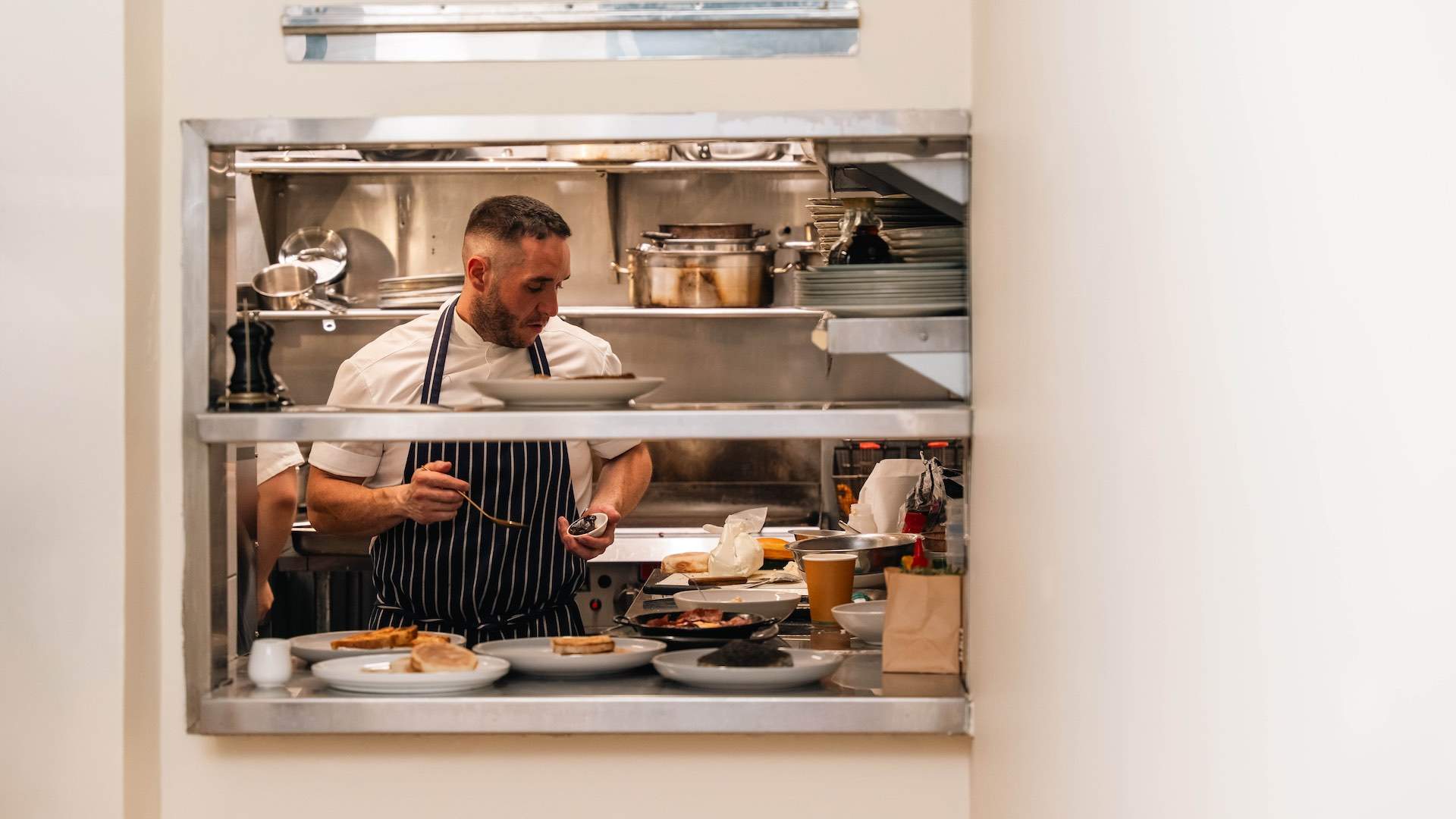
Manteiga Darlinghurst
These shifts aren't just about sustainability; they're about staying viable. Diners are more selective, more price-conscious, and more easily swayed by novelty. Venues need a reason to stay in rotation, which has driven a wave of pop-ups, chef takeovers and limited-run offers. Even Attica is leaning into it, with a midweek Chef's Table that offers a lower-commitment entry point while filling quieter nights.
For other operators, viability can come down to rethinking the space itself. At Gemini, that means opening during the day for coworking, positioning the venue as a third space rather than a single-use destination.
Maintaining longevity in hospitality has never been easy, even in a city full of institutions. The venues that last aren't the ones clinging to tradition — they're the ones that build around change and treat it as part of the model.
Like what you see? Subscribe to the Concrete Playground newsletter to get stories just like these straight to your inbox.